

Round, posy, hand-tied, cascade, nosegay, pomander, hoop, composite, crescent, presentation, and oversized asymmetrical bouquets cover nearly every bride’s brief a florist will ever hear. This guide breaks down what each style actually looks like, which dress and venue it flatters, and where the cost climbs. You’ll also get a simple framework for narrowing your choice before you sit down with a florist like Lafleurel, plus notes on seasonal availability, preservation, and the newer non-floral trends showing up in wedding bouquet accessories.
Key Takeaways
Bouquet style should follow dress silhouette and venue formality first, with cost driven mainly by construction complexity rather than size alone.
| Point | Details |
|---|---|
| Match shape to silhouette | Ballgowns carry cascades well; sheath dresses suit round or crescent shapes. |
| Complexity drives cost | Pomanders, composites, and cascades cost more due to wiring and 360-degree coverage. |
| Ask about seasonality | In-season blooms cost less and look fresher than imported substitutes. |
| Plan for handling | Water tubes and a repair kit prevent day-of bouquet mishaps. |
| Lafleurel builds to your brief | Locally sourced blooms and same-day delivery support both classic and custom bouquet styles. |
Table of Contents
- Wedding Bouquet Styles, One by One
- How to Choose Your Bouquet Shape and Size
- Trending Bouquet Alternatives Worth Considering
- What Your Bouquet Costs You in Time and Money
- How La Fleurel Approaches a Bouquet Brief
- What Actually Matters When You Pick a Bouquet Style
- Bring Your Bouquet Idea to Life With Lafleurel
- Frequently Asked Questions
- Sources
Wedding Bouquet Styles, One by One
Wedding flower budgets vary enormously by region and season, and the style you choose is one of the biggest levers on that number. A tight, structured pomander can cost more per stem than a loose armful of garden roses, simply because of the labor involved. Treat the descriptions below as a menu, not a hierarchy.
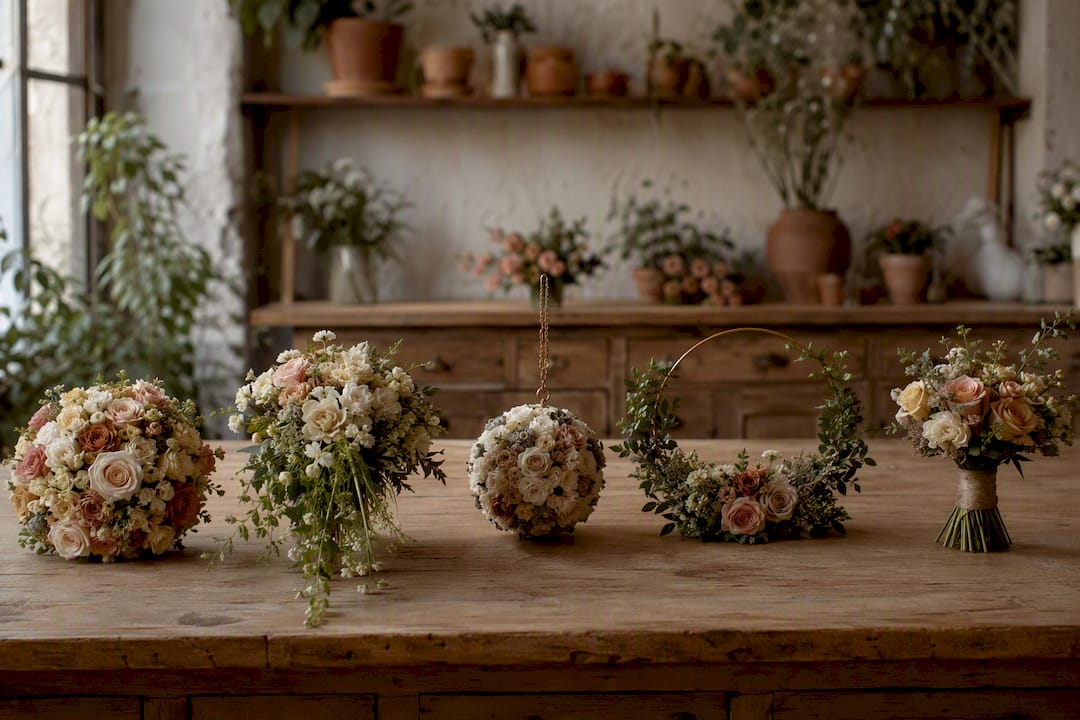
Pro Tip: Bring photos of three styles you like to your florist consultation, not just one. It gives them room to blend elements and match your actual budget.
1. Round bouquets
The round bouquet is the classic dome shape, built from tightly clustered blooms like roses, peonies, or ranunculus. It works for nearly any formality level, which is why it’s the default at most weddings.
- Best for: Traditional and formal ceremonies, ballroom or hotel venues.
- Cost & complexity: Medium. Dense stem count adds up, but the technique itself is straightforward.
2. Posy bouquets
A posy is a smaller, rounder cousin of the classic dome, usually held one-handed. Despite the compact size, tightly packed stems require more skilled labor per square inch than looser arrangements.
- Best for: Petite brides, bridesmaids, or micro wedding flowers where scale needs to stay modest.
- Cost & complexity: Medium, despite the smaller size.
3. Hand-tied bouquets
Hand-tied bouquets look gathered straight from a garden, with stems left visible and wrapped in ribbon. They’re a go-to for boho and rustic wedding bouquets because of that loose, fresh-picked feel.
- Best for: Garden weddings, rustic barns, outdoor elopement bouquet ideas.
- Cost & complexity: Low to medium. Fewer mechanics, more reliance on beautiful, in-season stems.
4. Cascade bouquets
Cascades trail downward, sometimes a foot or more, and read as pure drama in photos. They suit formal, dramatic ceremonies where the bouquet becomes part of the silhouette rather than an accessory to it.
- Best for: Cathedral weddings, ballrooms, statement gowns with clean lines.
- Cost & complexity: High. Internal wiring and water retention for trailing stems drive both price and prep time.
5. Nosegay bouquets
Similar to a posy but often flatter and rounder, the nosegay is a Victorian-era staple that’s made a comeback in vintage-themed weddings.
- Best for: Vintage or tea-length dress weddings.
- Cost & complexity: Medium.
6. Pomander bouquets
A pomander is a flower ball, sometimes carried by a handle, sometimes hung from the wrist. It requires 360-degree coverage, which is more finicky than it looks.
- Best for: Flower girls, but increasingly brides at beach or garden ceremonies want one too.
- Cost & complexity: High, for a surprisingly small final size.
7. Hoop bouquets
Hoop bouquets wrap flowers and greenery around a circular frame, leaving open space in the center. The Knot flags these as a newer trend that gives a lightweight, modern silhouette.
- Best for: Boho weddings, bridesmaids, budget-conscious brides.
- Cost & complexity: Low to medium. Less floral volume than a round bouquet of the same visual size.
8. Composite (glamelia) bouquets
Composite bouquets use individual petals wired together to form one giant “flower,” usually a rose or peony blown up to the size of a dinner plate.
- Best for: Editorial-style weddings, brides who want one unforgettable focal bloom.
- Cost & complexity: High. This is the most labor-intensive style on the list.
9. Crescent bouquets
Crescent bouquets curve horizontally rather than cascading down, creating an asymmetrical arc that photographs beautifully from the side.
- Best for: Modern, editorial weddings with a strong photography focus.
- Cost & complexity: Medium to high.
10. Presentation (pageant) bouquets
Long-stemmed flowers, often calla lilies or roses, cradled in the arms rather than held upright. Pageant-style bouquets skip a lot of the wiring other styles need.
- Best for: Formal weddings, brides who want an old Hollywood look.
- Cost & complexity: Medium.
11. Oversized and asymmetrical bouquets
Big, wild, and deliberately uneven, these bouquets mix textures, trailing greenery, and sometimes non-floral elements for a sculptural look.
- Best for: Bold, fashion-forward brides; garden or vineyard venues with room for scale.
- Cost & complexity: Medium to high, depending on stem count and materials.
How to Choose Your Bouquet Shape and Size
Matching bouquet shape to dress silhouette isn’t guesswork. A few rules cut the guesswork fast:
- A ballgown carries a cascade or oversized bouquet without being overwhelmed by it.
- A sleek sheath or column dress usually looks best with a round, posy, or crescent shape that doesn’t compete with the dress’s clean line.
- A-line and tea-length dresses pair well with hand-tied or nosegay styles.
- Boho and rustic looks lean toward hand-tied, hoop, or oversized asymmetrical arrangements.
For scale, think in a rough 3:5:8 ratio: a petite bride might carry something closer to the “3,” a taller bride can carry the “8” without it looking like a costume prop. If you’re 5’4" or under, a large cascade can visually swallow you in photos; if you’re 5’9" or taller, a tiny posy can look lost against a big gown.
Season matters more than most brides expect. Peonies peak in spring, dahlias in fall, and a florist working outside those windows will either import at a premium or substitute. Ask directly what’s in season and let your florist suggest swaps that keep the look you want without the import markup.
Pro Tip: Walk into your consultation with dress photos, your venue name, two or three favorite flowers, and an honest budget range. Florists design faster and better with constraints than with a blank slate.
Trending Bouquet Alternatives Worth Considering
Dried bouquets, once a niche choice, have grown in popularity, largely because they double as a keepsake that lasts well past the wedding day. The tradeoff is look: dried textures are softer and more muted than fresh blooms, which won’t suit every color palette.
- Dried bouquets: Great for brides who want a lasting memento; muted tones over vivid color.
- Hoop bouquets: A budget-friendly boho pick that uses fewer stems than a round bouquet of similar visual size.
- Brooch and keepsake bouquets: Incorporate heirloom jewelry; add weight, so confirm handle comfort.
- Single-stem statement pieces: Dramatic and photogenic, but less forgiving if the one flower wilts.
- Grasses, branches, and shells: Add texture and a personalized feel, but increase both handling care and price.
What Your Bouquet Costs You in Time and Money
Complexity, not size, drives most of the price tag. Pomanders, composites, and cascades need 360-degree coverage or internal wiring, which is exactly why those three styles run higher than a same-sized hand-tied arrangement.
On the day, decide who carries the bouquet during the ceremony versus photos, and ask your florist for a water tube if there’s a long gap between delivery and walking down the aisle. A small emergency kit, spare pins, floral tape, and extra ribbon, solves most last-minute mishaps.
- Confirm who transports the bouquet from florist to venue.
- Ask for a water tube if there’s more than an hour between pickup and ceremony.
- Pack a mini repair kit: pins, tape, ribbon.
- Decide on preservation (pressing, air-drying, or freeze-drying) before the big day, not after.
Pro Tip: If preservation matters to you, ask specifically whether your florist offers freeze-drying versus air-drying. Colors shift differently with each method, and freeze-dried keepsakes are more fragile to display.
How La Fleurel Approaches a Bouquet Brief
Lafleurel builds every bouquet from locally sourced, naturally grown blooms, with same-day delivery available across Valley Village and the surrounding Los Angeles area. That matters most when a bride wants a specific seasonal flower on short notice.
- Handcrafted arrangements, not assembly-line production
- Classic designs alongside fully custom builds
- Same-day delivery for last-minute changes or add-ons
A hand-tied brief and a cascade brief get handled very differently in-house. The hand-tied bouquet leans on gathering technique and stem selection, letting a garden-style arrangement breathe naturally. A cascade brief shifts the focus to mechanics: internal wiring, water retention for trailing stems, and a rehearsal for handling before the ceremony itself.
Bouquet mechanics decide whether a design survives the aisle walk and the reception, not just how it looks in the mock-up photo.
What Actually Matters When You Pick a Bouquet Style
Most bouquet guides rank styles by trend rather than by fit, which sends brides chasing a cascade because it’s dramatic on Pinterest, even when their dress and venue call for something quieter. The better question isn’t “what’s popular this year,” it’s “what does my silhouette and setting actually need.” A ballgown at a cathedral can carry drama; a slip dress on a beach cannot, and forcing the mismatch usually shows up in photos more than it does in person.
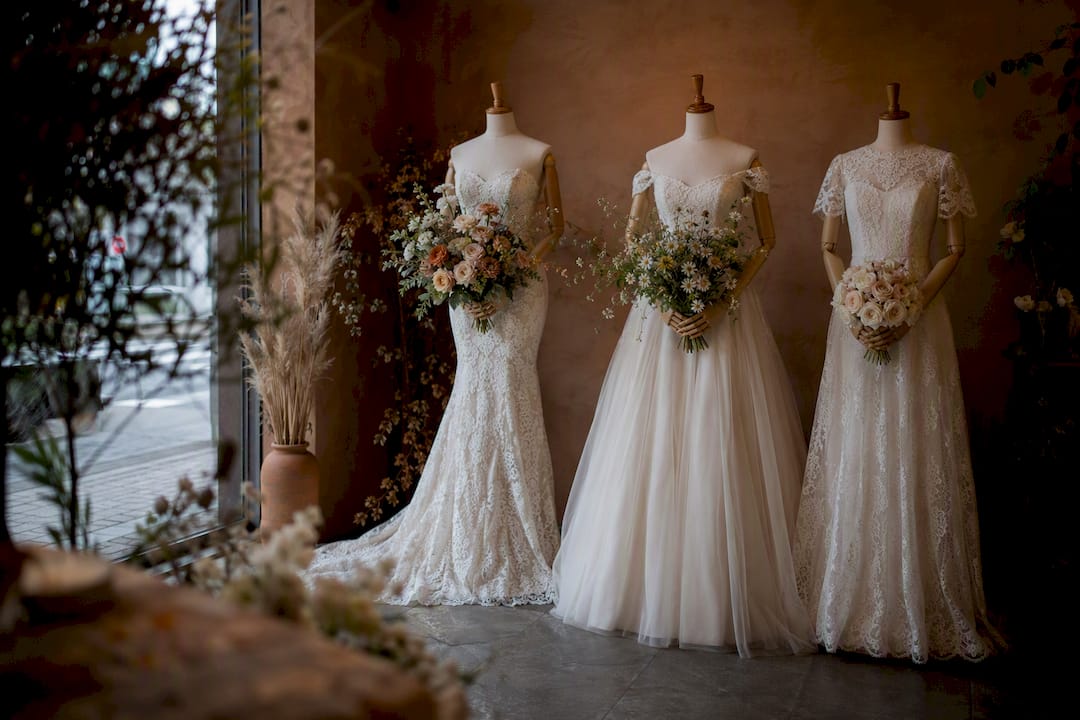
The most overlooked variable is mechanics, not aesthetics. Brides fixate on flower choice and color palette, but a cascade or composite bouquet lives or dies on wiring and water retention, details a Pinterest board never mentions. Ask your florist about handling before you ask about blooms.
If there’s one place conventional advice falls short, it’s seasonality. Too many style guides show a photo and never mention that the exact flower in it might be unavailable, or triple the price, depending on when you’re getting married. Start with what’s in season, then pick your style around it. You’ll get a better bouquet and a smaller invoice.
Bring Your Bouquet Idea to Life With Lafleurel
If you’ve settled on a style, whether that’s a loose hand-tied garden bunch or a structured round bouquet, Lafleurel builds it from locally sourced, naturally grown blooms rather than pre-ordered stock that sat in a cooler for a week.

That freshness shows up most in delicate styles like pomanders and composites, where wilted edges are impossible to hide. Same-day delivery across Valley Village and the surrounding Los Angeles area also means you can adjust your order right up until the week of the wedding if your color palette shifts or a seasonal bloom becomes available. Brides who want something completely their own can start with a custom arrangement consultation, while those drawn to a garden aesthetic can browse the romantic garden arrangement with peonies for a sense of Lafleurel’s hand-tied styling. If your bridal party wants coordinated glam beyond flowers, pairing with a bridesmaid beauty package rounds out the look. Head to Lafleurel to book a consultation and get a same-day quote for your date.
Frequently Asked Questions
What is the most popular wedding bouquet style? Round bouquets remain the most common choice because the dome shape suits nearly any dress silhouette and formality level, from ballroom weddings to garden ceremonies.
What’s the difference between a posy and a nosegay bouquet? Both are compact, hand-held bouquets, but a nosegay tends to sit flatter and rounder, with roots in Victorian-era design, while a posy is a more general term for a small round bouquet.
Which bouquet style works best for a beach or elopement wedding? Hand-tied and hoop bouquets suit beach ceremonies and elopement bouquet ideas well, since their looser, lighter structure holds up better in wind and doesn’t compete with a minimal setting.
Are dried bouquets a good option for a wedding? Dried bouquets work well for brides who want a lasting keepsake and prefer muted, textured tones over vivid fresh color, though they won’t match every dress or palette.
How far in advance should I book my wedding bouquet? Most florists recommend booking three to six months ahead for standard bouquets, though tighter timelines are often possible for simpler styles or when working with a florist offering same-day delivery.
Sources
- Bridal Bouquet Styles: 15 Types Every Bride Should Know (2026) - Bespoke-Bride
- 11 Different Types of Wedding Bouquets: Styles, Shapes & Sizes - The Knot
- Wedding bouquets: The most common types, explained - Brides
- 7 accessories to add to your bouquet that aren’t flowers - Inside Weddings