

Build your Thanksgiving centerpiece low and long, with natural materials and one deep accent color repeated three times. Keep it under 12 inches tall so guests can see each other across the table, and leave a third of the surface clear for serving dishes. From there, you’re choosing between a handful of easy DIY builds and how much foraged or grocery-store material you want to use. The step-by-step below gets you a finished runner in under an hour.
TL;DR:
- Dried stems, foraged materials, and grocery-store flowers can last the entire week, allowing for early assembly without wilting concerns.
- Using heirloom pumpkins and faux gourds provides texture and durability, with sizes carefully chosen to avoid overwhelming the table.
- Centerpieces should remain under 12 inches tall, with one deep accent color repeated three times, to maintain clear sightlines and facilitate conversation.
- A dough bowl runner with greenery, pumpkins, and candles offers a simple, scalable DIY option that takes about 30 minutes to assemble.
- For hosts pressed for time, professional arrangements with same-day delivery can deliver a styled look without DIY effort.
Table of Contents
- Thanksgiving Centerpiece Ideas: The Design Rules That Make Them Work
- 10 Easy DIY Thanksgiving Centerpiece Ideas
- Where to Find Materials and What to Budget
- Build a Dough Bowl Runner Step by Step
- How Long Your Centerpiece Will Last
- When to Call a Florist Instead of DIYing
- Sources
- FAQ
Thanksgiving Centerpiece Ideas: The Design Rules That Make Them Work
Before picking a project, know the four rules that separate a styled table from a cluttered one. They’re simple enough to apply to almost any material you already have.
- Keep centerpiece objects low enough for conversation to flow over the top.
- Build on a warm neutral base (cream linen, natural wood, kraft paper) and repeat one deep accent color multiple times, whether that’s burgundy, moss, or rust.
- Run a linen table runner of medium width down wood or a bare table, and leave roughly a third of the table clear for platters.
- Group focal items in odd numbers, three pumpkins instead of two, five candles instead of four, since odd-number repetition and layered textures read as intentional rather than accidental.
Designers behind this year’s fall tables lean toward a warm neutral base with one repeated deep accent, keeping arrangements low and the runner narrow enough that platters still fit. That single combination, tested against dozens of fall tablescapes, does more visual work than any amount of extra decoration.
Candles matter more than most hosts think. Cluster several tapers at varied heights, then add a few pillar candles for contrast. Sit down where your guests will sit and check that nothing blocks eye contact before you call it finished.
Pro Tip: Swap bright orange tapers for burgundy, moss, or amber ones. The color reads as intentional fall styling instead of a craft-store impulse buy, and it plays nicer with the muted 2026 palettes showing up in home decor this year.
10 Easy DIY Thanksgiving Centerpiece Ideas
Each of these works with materials you can find at a grocery store, a craft shop, or your own backyard. Pick one that matches your timeline and your table length.
-
The Dough Bowl Runner. A wooden dough bowl (or any long, shallow tray) filled with mini pumpkins, dried florals, and loose greenery. Materials: dough bowl, 3 mini pumpkins, dried hydrangea stems, eucalyptus. Time: 30 minutes. Budget: cheap if you already own a bowl.
-
Grocery-Store Bouquet Trio. Buy two bunches of seasonal grocery-store flowers, split the stems into three low glass jars spaced evenly down the table. Time: 15 minutes. Budget: cheap, under $20 for both bunches.
-
Heirloom Pumpkin Cluster. Group three heirloom pumpkins of varying color (Cinderella, Fairytale, white) directly on the runner with no vessel at all. Time: 10 minutes. Budget: mid, heirloom varieties run higher than standard pie pumpkins.
-
Edible Harvest Bowl. Fill a shallow bowl with apples, pomegranates, and clementines. This one doubles as part of the meal once dinner starts, which cuts food waste and decor cost at once. Time: 15 minutes. Budget: cheap.
-
Wheat and Pinecone Bundle. Tie dried wheat stalks and pinecones into three small bundles, laid horizontally down the runner. Time: 20 minutes. Budget: cheap, especially if foraged.
-
Pillar Candle Trio with Greenery. Three pillar candles of the same height, wrapped at the base with eucalyptus or magnolia leaves. Time: 15 minutes. Budget: mid.
-
Faux Pumpkin Topiary. Stack faux pumpkins in graduated sizes for a reusable centerpiece with no rot risk. Time: 20 minutes. Budget: mid, but reusable for years.
-
Gourd and Candle Runner. Alternate small gourds with taper candles down a 16 inch linen runner, three gourd clusters to two candle clusters. Time: 30 minutes. Budget: cheap to mid.
-
Hydrangea and Berry Low Bowl. A single low bowl of dried hydrangea heads mixed with faux berry stems for texture. Time: 25 minutes. Budget: mid.
-
Thrifted Vessel Trio. Three mismatched thrifted bowls or vases, unified by filling each with the same dried material. Time: 30 minutes. Budget: cheap, thrift store finds are usually under $5 each.
Where to Find Materials and What to Budget
Most of these builds pull from the same short shopping list: a runner, low vessels, tapers and votives, dried stems, and a handful of mini pumpkins. You likely already own half of it.
- Runner: linen or burlap, 14 to 20 inches wide.
- Low vessels: dough bowls, glass jars, shallow bowls.
- Candles: tapers plus votives or pillars for the two-height rule.
- Dried or fresh stems: hydrangea, wheat, eucalyptus, or grocery-store bouquets.
- Pumpkins or gourds: mini, heirloom, or faux.
Grocery-store flower bunches work as a direct substitute for florist-bought stems, and thrifted bowls save you from buying new vessels outright. Dried stems and grocery-store flowers hold up just as well visually as pricier options once they’re arranged with the same layering rules.
| Budget tier | What’s included | Typical price range | Where to shop |
|---|---|---|---|
| Cheap | Foraged stems, thrifted bowls, one grocery bouquet | $10 to $25 | Backyard, thrift store, grocery store |
| Mid | New runner, mini pumpkins, dried florals, tapers | $30 | Craft store, home decor shop |
| Splurge | Heirloom pumpkins, beeswax candles, florist-grade stems | $70 | Farm stand, florist, specialty candle shop |
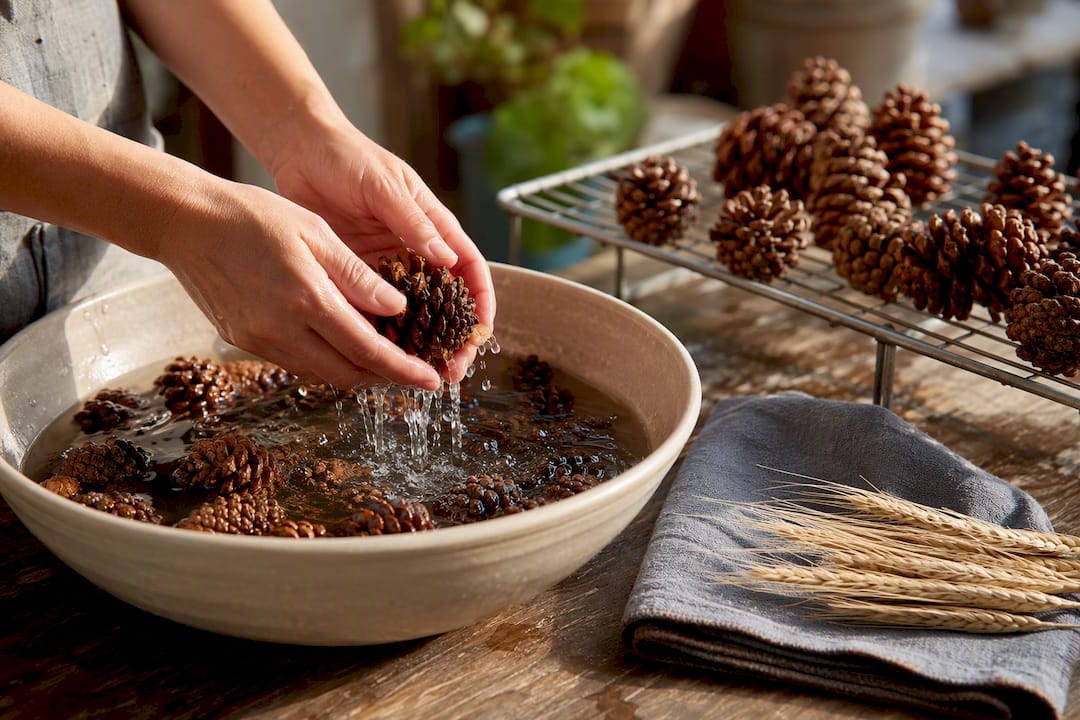
Before you build, rinse foraged stems and pinecones to knock off dirt and bugs, then let them dry fully. If you’re using real pumpkins as vessels, scoop the cavity and seal the cut edge with a light coat of clear spray sealant so it doesn’t collapse mid-week.
Build a Dough Bowl Runner Step by Step
This is the single most reproducible project on this list, and it scales to almost any table length.
Materials: one dough bowl or long shallow tray, a bundle of eucalyptus or magnolia greenery, 3 mini pumpkins (or heirloom gourds), 3 to 5 taper candles, a handful of dried hydrangea or wheat stems. No dough bowl on hand? A wooden cutting board or a wallpaper tray works as a substitute.
- Lay the bowl or tray at the center of the table, on top of your runner if you’re using one.
- Line the base with greenery, letting a few stems spill over the edges for movement.
- Nest the pumpkins into the greenery in a loose odd-numbered cluster, not a straight row.
- Tuck dried hydrangea or wheat stems into the gaps between pumpkins.
- Position taper candles at two heights, either inside the bowl at one end or just outside it, keeping flames at least 3 inches from any dried material.
- Step back, sit in a guest’s chair, and adjust anything blocking sightlines.
Total time runs 30 to 45 minutes. If the arrangement looks too full, pull one pumpkin. If it looks sparse, add a second greenery layer rather than more pumpkins, since odd-numbered focal points read cleaner than even ones.
Pro Tip: Assemble this 20 to 30 minutes before guests arrive so greenery stays fresh in photos, and snap your picture before candles are lit; flame glare tends to wash out phone camera photos.
How Long Your Centerpiece Will Last
Fresh flowers and greenery look their best for one day, so build those elements the morning of or the night before. Dried stems, faux pumpkins, and heirloom gourds last for weeks, which means you can assemble those parts up to three days ahead without any wilting risk.
- Faux pumpkins and dried florals: build any time in the three days before, store in a cool, dry spot if assembled early.
- Fresh flowers and fresh greenery: assemble same-day or the night before at the earliest.
- Real pumpkins with sealed cavities: last through the week if kept out of direct heat.
- After the holiday, wrap dried stems in paper and store flat to reuse next fall; faux pumpkins nest inside each other for compact storage.
- Extinguish candles with a snuffer rather than blowing them out near dried material, and never leave lit tapers unattended near foliage.
When to Call a Florist Instead of DIYing
Not every host has an hour to spare between grocery runs and gravy. If you’re hosting a large formal table, or you’d rather hand off the styling entirely, a professional arrangement solves the time problem without sacrificing the look.
- Same-day delivery covers last-minute hosting decisions.
- Larger, formal tables often need a scale and durability that a quick DIY build can’t match.
- A professional arrangement arrives styled, so there’s no assembly time at all.
- Custom consultations let you match an arrangement to your existing table palette instead of guessing.
Using pumpkins and gourds as vessels or accents
Pumpkins and gourds do double duty as both centerpiece and vessel, which is part of why they show up in nearly every fall table idea. A hollowed pumpkin can be used as a vase for a small bouquet by placing a jar of water and stems inside its cavity. Heirloom varieties like Cinderella or Fairytale pumpkins bring texture and unusual color, ribbed skin, blue gray tones, that a standard pie pumpkin can’t match.
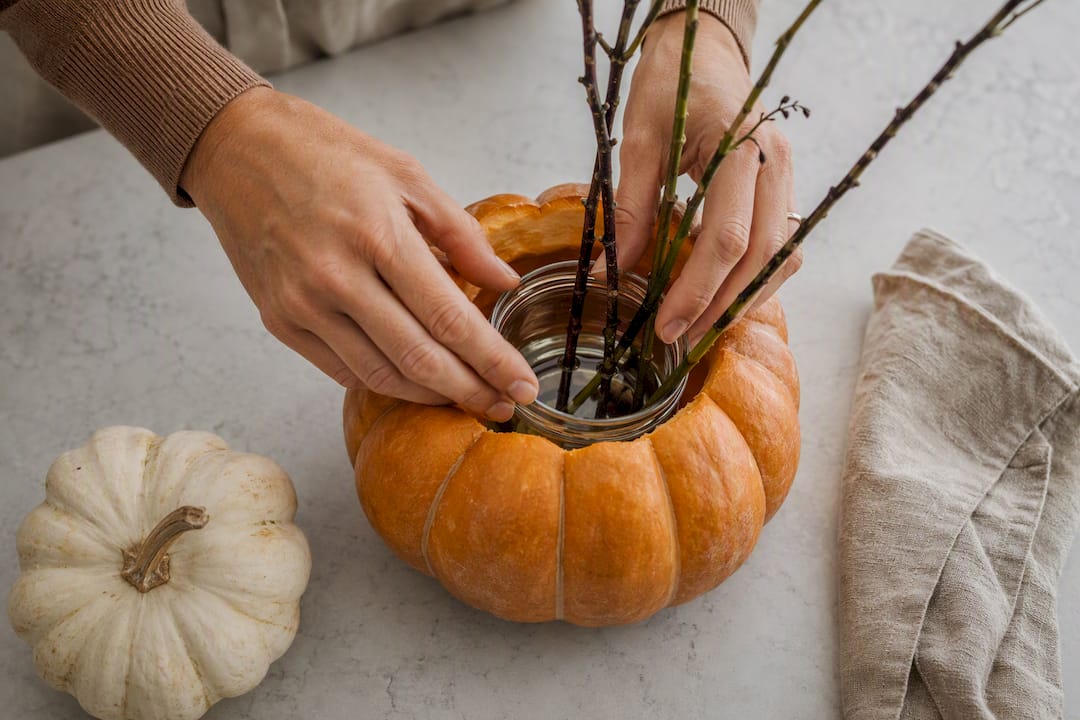
Faux pumpkins solve the durability problem entirely. They hold their shape for years, never need sealing, and can be reused every fall without buying new ones. If you’re set on real pumpkins, choose smaller varieties (baby boo, mini munchkin) for a tablescape rather than the large carving kind, since scale matters more than most hosts expect. A pumpkin the size of a soccer ball dominates a table; one the size of a fist just adds texture.
Mix textures within the pumpkin family itself. Pair a smooth orange pumpkin with a warty green gourd and a pale white one to create layered texture without adding extra materials. Group an odd number of pumpkins tightly for an intentional look.
Foraged and dried materials that hold up all week
Wheat stalks, pinecones, dried hydrangea, and eucalyptus form the backbone of nearly every long-lasting centerpiece on this list, and all four can often be gathered for free. Dried materials carry a practical advantage fresh flowers can’t: foraged and dried arrangements last longer without water and hold up better across a multi-day display than fresh-cut stems.
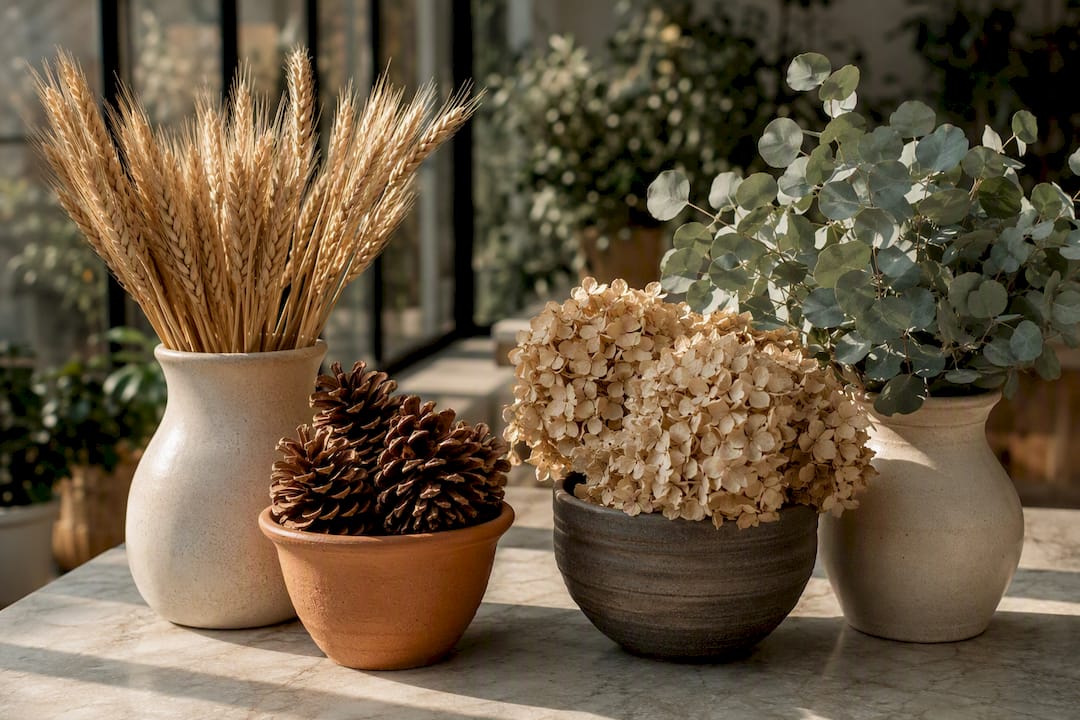
Wheat stalks add height and movement without adding bulk, and they’re often available at craft stores in preserved bundles if you can’t forage them locally. Pinecones bring texture and a neutral brown tone that works with nearly any accent color you pick. Dried hydrangea heads add volume, their papery petals holding shape for months once fully dried. Eucalyptus, whether fresh or preserved, contributes a soft blue green that tones down a warm palette without fighting it.
Clean anything foraged before it touches your table. Rinse pinecones and let them dry completely, since damp pinecones can carry insects. Wipe down wheat stalks with a dry cloth rather than water, which can cause mold in the stalks. Foraged materials cut cost dramatically while adding a texture that store-bought silk greenery rarely matches.
A quick checklist before your guests sit down
For anyone short on time, the fastest path to a table that looks styled instead of thrown together comes down to six checks: runner down, sightlines clear, one accent color repeated, candles trimmed, one item per place setting, and a third of the table left open for platters.
— Ovannes
A Professional Option When You’d Rather Not DIY
DIY centerpieces trade your time for control over every detail. If you’d rather skip the shopping trip and the assembly, handcrafted, locally-sourced arrangements with same-day delivery services can make a styled table happen in a single afternoon instead of a weekend project.

For a ready-made centerpiece alternative, the Romantic Garden arrangement with peonies works as a low, full focal piece for a formal table, while the Quicksand Beige Roses arrangement fits the muted, warm palette this year’s fall tables lean toward. Custom consultations are available for hosts who want an arrangement sized to their exact table. Visit Lafleurel to check same-day availability for your Thanksgiving table.
Sources
- Stunningly Simple Thanksgiving Centerpieces — Whole Foods Market
- Fall tablescape ideas that look expensive — 101HomeDecor
- Fall table centerpieces — StoneGable
- 13 Stunning DIY Thanksgiving Centerpiece Ideas — PartyBloomIdeas
FAQ
What are popular Thanksgiving centerpiece ideas?
Low dough bowl runners, pumpkin clusters, dried wheat and hydrangea bundles, and edible fruit bowls rank among the most popular because they’re low-cost and quick to assemble.
What are some easy centerpiece ideas?
A grocery-store bouquet split across three low jars, or a bowl of apples and pomegranates, both come together in 15 minutes with items you can buy on one shopping trip.
What should be on the table for Thanksgiving?
Beyond the food, aim for a low centerpiece under 12 inches, a runner, and candles at two heights, leaving roughly a third of the table clear for serving dishes.
What are some good ideas for decorating for Thanksgiving?
Stick to a warm neutral base with one deep accent color repeated three times, layer in dried or foraged materials for texture, and if time runs short, a professional arrangement from a florist like Lafleurel covers the same look without the assembly.