

Red roses remain the one flower nobody misreads. They mean passionate, committed love, full stop. Red tulips come in close behind as a bolder, slightly less expected way to say the same thing. Beyond those two, the right choice depends on how serious the relationship is and what the recipient actually likes. This guide breaks down the rest, plus how to pick without sending the wrong signal.
TL;DR:
- Red roses are suitable for all relationship stages and can be expanded into large arrangements for milestones or proposals.
- Red tulips symbolize perfect love and can serve as a confident, less predictable alternative to roses in romantic gestures.
- Flower colors significantly influence the message, with white indicating purity, pink expressing admiration, and yellow often implying friendship unless paired with red.
- Choosing the right flower depends on the relationship stage, tone, and recipient preferences, with cultural context and timing affecting the gesture’s effectiveness.
- Modern floral symbolism favors color-based choices, especially red, which drives flower markets around Valentine’s Day and reflects ongoing cultural associations.
Table of Contents
- What Do Romantic Flowers Actually Mean?
- How Do You Choose the Right Romantic Flower for the Moment?
- Does Color Change What a Flower Means?
- Where Did Flower Symbolism Actually Come From?
- A Florist’s Take on Making Flowers Mean Something
- Sources
- FAQ
What Do Romantic Flowers Actually Mean?
Twelve blooms carry the bulk of romantic symbolism worth knowing, and each one sends a slightly different message depending on how long you’ve been together, how intense you want the gesture to feel, and how much subtlety you’re going for.
Red rose. The default for a reason. It signals deep romantic love and desire, and it works at every relationship stage from a third date to a 30th anniversary. A classic red rose bouquet is the safest bet if you’re not sure what else to send. For a bigger statement, a dozen scales up to a full box of 100 for milestone anniversaries or a proposal.
Red tulip. Red tulips signify “perfect love” and work as a confident, direct declaration, arguably more unexpected than a rose because fewer people think to send them. They’re a strong pick for someone who finds roses a little predictable.
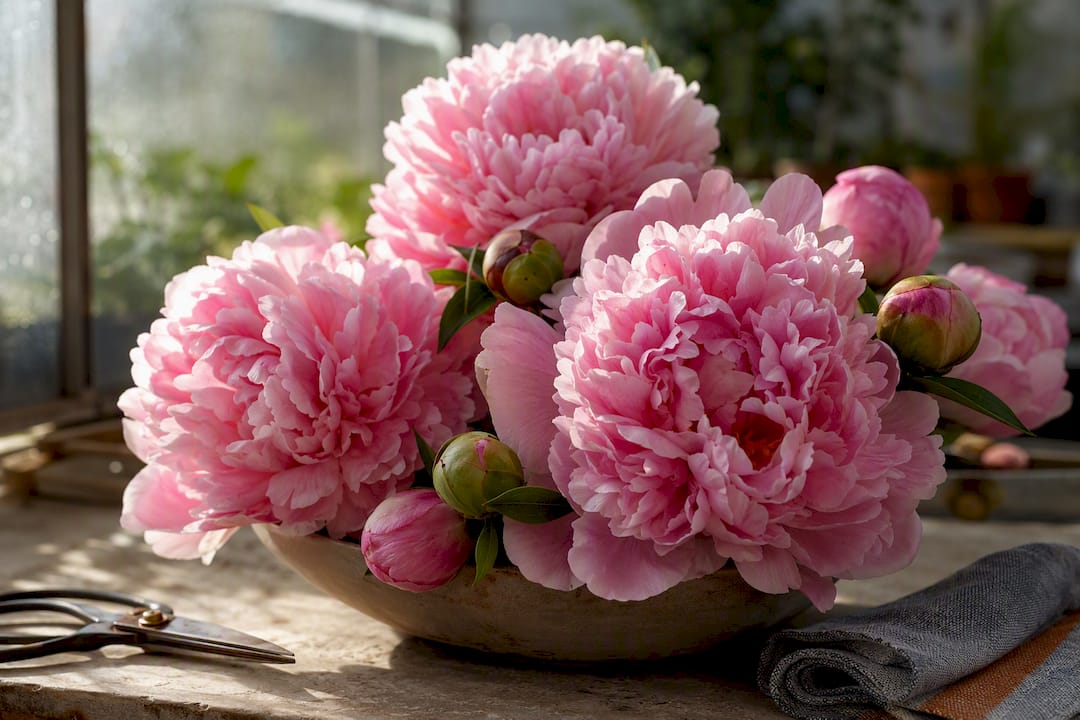
Peony. Peonies read as romance, prosperity, and a touch of bashfulness, which makes them ideal for a relationship that’s serious but still has some shy, early energy to it. They’re also genuinely gorgeous in a way that photographs well, so they’re popular for engagement announcements. A peony bouquet is seasonal, generally best in late spring, so expect higher prices or limited stock outside that window.
Orchid. Orchids symbolize refined, exotic beauty and a love that’s mature rather than impulsive. They suit long-term partners or someone with sophisticated taste, and they last far longer than most cut flowers, which adds practical value to the sentiment.
Gardenia. Gardenia carries the meaning of secret love, the flower to send when you’re not ready to say something out loud yet, or when the relationship is private for other reasons. Its heavy, sweet scent also makes it a memorable choice for anyone sensitive to fragrance.
Lavender. Lavender leans toward devotion and calm, enduring affection rather than fireworks. It fits a long relationship, a quiet apology, or a partner who prefers understated gestures over big bouquets.
Sunflower. Sunflowers represent adoration and unwavering loyalty, tied to the way they turn to follow the sun. They read as cheerful rather than intensely romantic, so they suit a playful relationship stage or a partner who finds classic red roses too formal.
Lily of the valley. This one means a return to happiness and sweet, humble devotion. It’s traditionally tied to French May Day tradition and works well for a spring anniversary or as a nod to someone who values tradition and quiet gestures.
Forget-me-not. The forget-me-not stands for true love and faithful memory, which makes it a natural fit for long-distance relationships or an anniversary tied to remembrance, like the date you first met.
Carnation. Carnations, particularly in deep red, mean deep love and admiration, and they’ve historically been a budget-friendly stand-in for roses. Pink carnations carry a maternal, gentler affection, useful if you want warmth without the intensity of red.
Anemone. Anemones symbolize anticipation and excitement about what’s ahead, a good match for a new relationship or the early stage where everything still feels a little uncertain in the best way.
Calla lily. Calla lilies signal magnificent beauty and can also carry a note of purity, which makes them a strong option for a wedding-adjacent romantic gesture or a partner who prefers sleek, modern arrangements over traditional bouquets.
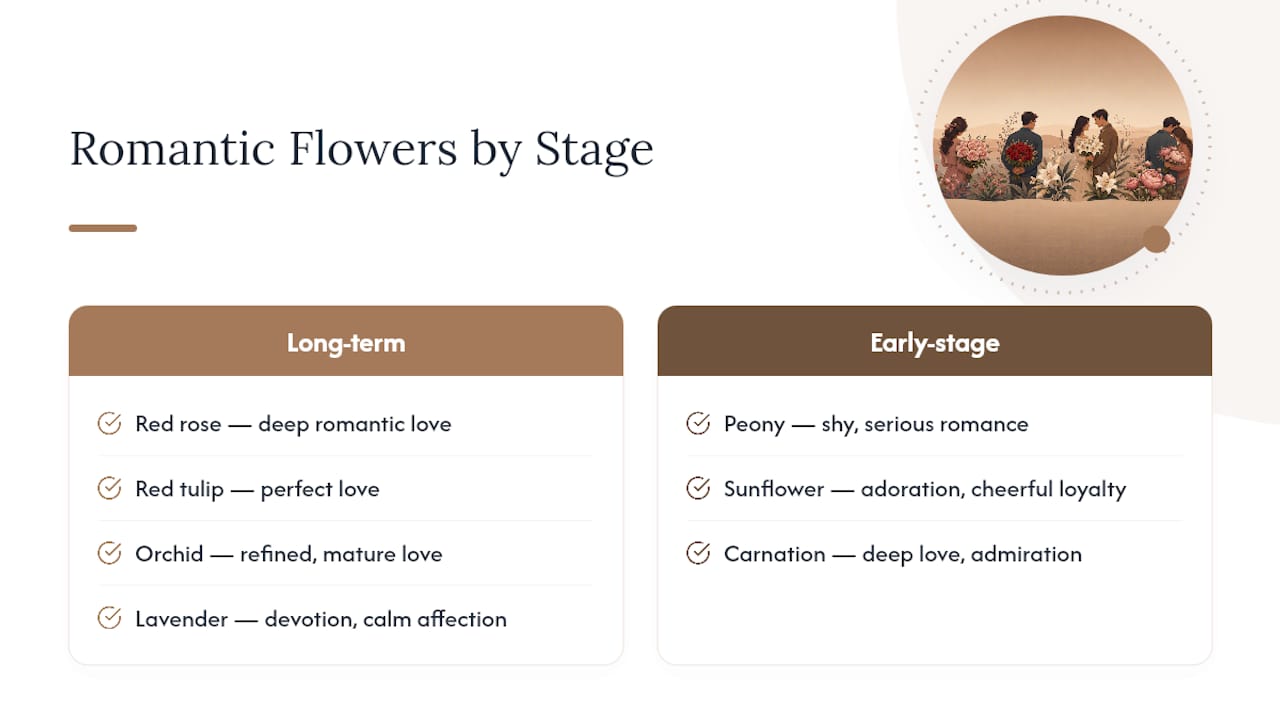
Roses, tulips, orchids, and lavender tend to carry the most weight for long-term devotion. Anemones, sunflowers, and carnations work better for flirtier, earlier-stage romance where you don’t want to overstate things yet.
How Do You Choose the Right Romantic Flower for the Moment?
Matching a flower to a relationship takes three steps, in this order:
- Identify the relationship stage. New, established, or long-term, since intensity should track how far along things are.
- Decide the tone. Passionate, tender, playful, or apologetic, since a mismatched tone can undercut the gesture.
- Pick the flower and color together. A red rose reads differently than a pink one; a mixed bouquet reads differently than a single-variety one.
Before ordering, run through a short checklist: does the recipient have any flower allergies, do they have a known favorite bloom or color, and do they have display space for a large arrangement versus a compact one. Skipping this step is how well-meaning gestures land flat.
Watch for cultural mismatches, too. A flower that reads as romantic in one tradition can carry a completely different, sometimes funereal, association elsewhere, so when you’re not sure of someone’s cultural background, a short handwritten note explaining your choice removes all ambiguity.
Timing matters as much as symbolism. Growers hold back rose stock specifically to bloom in time for Valentine’s Day, which drives prices up and availability down every February. Order at least a few days ahead of any major date, and expect to pay a premium for red roses specifically during that window.
Pro Tip: If you’re stuck between overthinking the symbolism and sending nothing, go with three stems of one flower and a single line on the card explaining why you picked it. A trio of red tulips with a short note beats a large, generic bouquet almost every time.
Does Color Change What a Flower Means?
Yes, and it’s often the bigger signal than the species itself.
- Red means passion and romantic desire, the most direct message a flower can send.
- Pink softens that into admiration and gentle affection. Pink roses and tulips suit early relationships better than red does, since pink reads as warm without declaring anything too intense too soon.
- White points to purity and devotion, common in wedding-adjacent gifts.
- Purple carries a note of enchantment, a good fit for a relationship that still feels a little magical or new.
- Yellow is trickier. It traditionally means friendship, so a yellow rose can send mixed signals in a romantic context unless it’s paired with red or another clearly romantic color.
A monochrome bouquet, all one color, sends the cleanest signal. Mixed-color arrangements, like red and white roses together or a pink and red mix, tend to read as warmth and unity rather than one specific emotion, which works well when you want something a little softer than a single dramatic color.
Where Did Flower Symbolism Actually Come From?
Floral symbolism didn’t start as marketing. Floriography took off in the 19th century, when Victorians used floral dictionaries and small hand bouquets called nosegays to send emotional messages they couldn’t say out loud in a famously buttoned-up era. A specific arrangement could communicate rejection, jealousy, or devotion without a single spoken word.
Meanings shift by culture and era, though, and nothing here is fixed the way a dictionary definition is. If you’re gifting someone from a different cultural background, a short note explaining the choice does more work than the flower alone.
Interest in floriography has come back in recent years, and modern buyers often choose blooms by color first, with red the clear favorite, rather than working from a strict symbolic list. That shift explains why roses spike so hard around Valentine’s Day: growers plan for the demand months ahead, and the flower’s meaning and its market price move together every February.
A Florist’s Take on Making Flowers Mean Something
The strongest bouquets tell a story rather than just following a dictionary. We build arrangements around what a couple actually values, not just which stem technically means what. When a customer tells the relationship stage, the tone they want, and a favorite color, something can be built that reads as personal rather than generic. That briefing, more than any single flower’s official meaning, is what makes a gift land.
— Ovannes
Sources
- Flowers and their meanings — language of flowers | Iowa State University Extension and Outreach
- Flower meanings: Language of flowers | The Old Farmer’s Almanac
- Language of flowers — Wikipedia
- The secret Victorian language that’s back in fashion — BBC
- Flowers That Mean Love — BloomingExpert
Ready to put this into an actual bouquet instead of just reading about one? Lafleurel’s romantic garden arrangement with peonies pairs the classic romance symbol with the softer, prosperity-tinged meaning of peonies, and it ships same-day around Valley Village and the greater Los Angeles area. If you want something more curated and ready to go, Romance in a Box takes the guesswork out of matching flower, color, and presentation. Browse the full range at Lafleurel and place your order early if you’re aiming for Valentine’s Day, since rose prices and availability get tight fast that week.
FAQ
What flowers symbolize romance?
Red roses, red tulips, peonies, and gardenias are the flowers most consistently tied to romantic love, with roses signaling passion, tulips signaling perfect love, peonies signaling romance and prosperity, and gardenias signaling secret love.
Which is the most romantic flower?
The red rose is the most universally recognized romantic flower, largely because Victorian floriography cemented it as the symbol of passionate love and modern culture never moved away from that meaning.
What three flowers mean “I love you”?
Red roses, red tulips, and forget-me-nots each carry a version of that message on their own: roses for passionate love, tulips for perfect love, and forget-me-nots for true, faithful love, which makes them a natural combination in one bouquet.
What flower means “will you marry me”?
There’s no single universal flower for a marriage proposal, but calla lilies and white roses are commonly chosen for their association with purity and devotion, while a large red rose arrangement is the traditional choice for a dramatic, unmistakable romantic gesture.