

Send lilies, tulips, sunflowers, orchids, daisies, or hydrangeas, and let one rule decide between them: match the flower to the setting and the person, not just the occasion. Hospital rooms call for low-scent, low-pollen picks; home recovery gives you more room to go bright. Keep the note short and warm, skip anything demanding “get better fast,” and let the details below guide the rest.
TL;DR:
- Low-pollen, low-scent flowers such as lilies, hydrangeas, and white roses are safest for hospital rooms and allergy sufferers.
- Bright, cheerful flowers like sunflowers and tulips suit short-term recovery moods, while orchids or succulents are better for long-term support.
- Delivery timing matters, with morning arrivals preferred to provide early visual uplifting and freshness.
- Arrangements should be simple, with minimal care needs, and include practical extras like sturdy vases or small comfort items.
- Always specify hospital-safe requests, including pollen-reduction and scent adjustments, when ordering to ensure suitability.
Table of Contents
- Best Get Well Flowers Ideas: Calming, Cheerful, and Long-Lasting Picks
- Matching Flowers to the Recovery Setting
- Presentation and Care: Keeping the Flowers Fresh Longer
- Small Add-Ons Worth Pairing With Flowers
- How Lafleurel Designs a Get Well Bouquet
- Order a Get Well Bouquet That Actually Fits the Moment
- Sources
- FAQ
Best Get Well Flowers Ideas: Calming, Cheerful, and Long-Lasting Picks
Not every recovery calls for the same mood. A friend home with the flu after a rough week wants something different than a coworker facing a longer hospital stay, and matching the bouquet to that difference is the whole game.
Calming, hospital-appropriate choices work best when someone is dealing with pain, fatigue, or sensory overload. White roses, hydrangeas, and low-pollen lilies read as gentle rather than celebratory. Soft, natural palettes in white, cream, and blush are widely recommended for get well arrangements precisely because they don’t compete with a room that already feels loud with monitors and visitors. A stem or two of seeded eucalyptus adds texture without adding scent.
Cheerful-but-gentle options fit short home recoveries or a mood boost for someone who’s mostly bored, not in pain. Sunflowers bring energy without shouting. Tulips feel fresh and a little playful. Daisies read as casual and easy, which suits a coworker or neighbor rather than a close family member facing something serious.
Long-lasting, low-maintenance options solve a real problem: fresh-cut flowers need daily attention that a recovering person, or their exhausted caregiver, may not have. Orchids and succulents last for weeks with almost no upkeep, which makes them a smarter pick for anyone facing a longer stretch of treatment rather than a two-day cold.
Allergy and fragrance notes matter more here than in a typical bouquet order. Lilies and other heavily pollinated flowers can trigger or worsen respiratory symptoms in people with asthma or seasonal allergies, so ask your florist to remove anthers or swap in a pollen-free variety when in doubt.
Quick combos by category:
- Calming: white roses, hydrangea, and eucalyptus in a low vase.
- Cheerful: sunflowers, tulips, and daisies in a hand-tied bunch.
- Long-lasting: a single potted orchid or a small succulent trio.
Pro Tip: If you’re not sure which category fits, default to the calming group. It’s rarely wrong, and it never reads as too much.
Matching Flowers to the Recovery Setting
Where someone is recovering changes what you should send more than any other factor.
- Hospital stays: Call ahead and check the facility’s flower policy. Many units restrict strongly scented or pollen-shedding blooms, so low-scent, compact arrangements travel better than tall, dramatic ones. A short note like “Thinking of you, no rush to reply” fits the tone.
- Short home recovery: You have more latitude here. Brighter tulips or a small mixed bouquet work, paired with something like “Hope you’re feeling more like yourself soon.”
- Long-term treatment: Potted plants or orchids outperform cut flowers because they don’t need replacing every week. Keep the message simple: “Sending steady, quiet support your way.”
Research on recovery environments and social support suggests that mood-boosting gestures like flowers genuinely help well-being during recovery, though the effect depends heavily on context. A cheerful bouquet sent into a quiet, exhausted hospital room can land wrong even with good intentions.
Presentation and Care: Keeping the Flowers Fresh Longer
How the flowers arrive matters almost as much as which ones you pick. A hand-tied bouquet needs no vase hunting, which helps in a cramped hospital room, while a basket arrangement stands on its own and skips the water-spill risk entirely. A vase arrangement looks the most finished but only works if someone’s actually able to manage it.
- Trim an inch off each stem at an angle before placing them in water.
- Add the flower food packet that comes with the bouquet. It genuinely extends bloom life.
- Change the water every 2 to 3 days, even if it still looks clear.
- Keep the arrangement away from direct heat, sunny windowsills, and drafty vents.
- Ask your florist to include a sturdy, spill-resistant vase if the flowers are headed to a hospital room.
Morning deliveries tend to work best. They give the recipient something bright to see early in the day rather than an arrangement waiting outside a locked office at 6 p.m.
Pro Tip: Ask the florist directly to remove pollen-heavy anthers before delivery. It’s a thirty-second request that meaningfully lowers the allergy risk.
Small Add-Ons Worth Pairing With Flowers
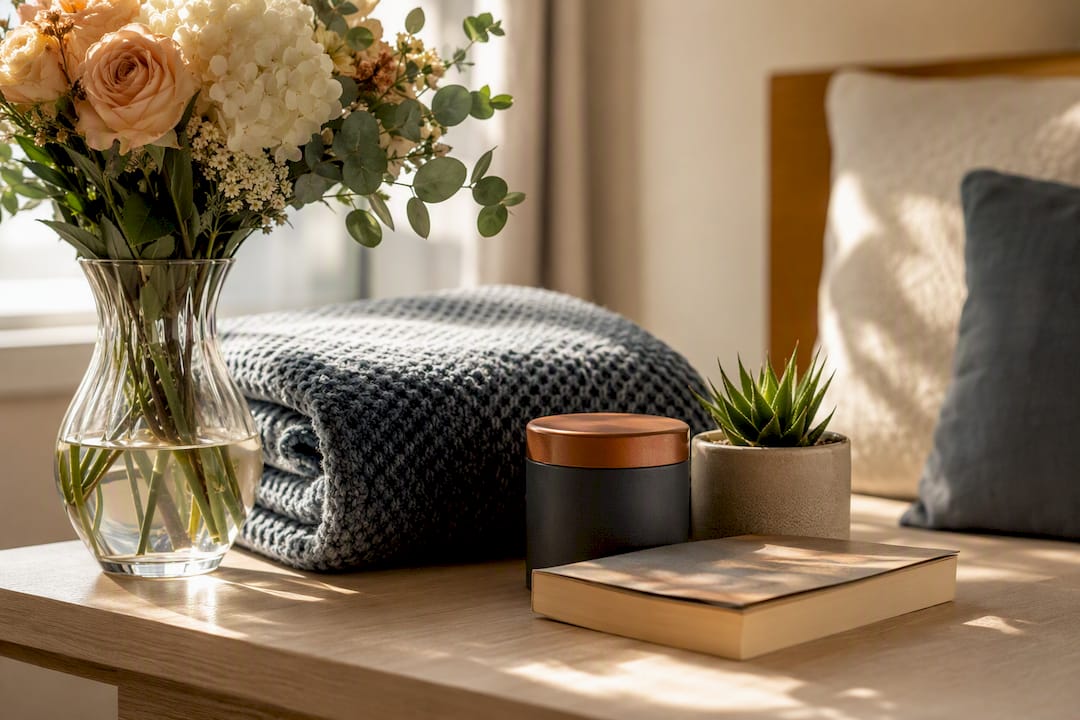
A few thoughtful extras round out a get-well gift without turning it into a production. A durable vase means the recipient never has to hunt for one. A soft throw blanket, a tin of herbal tea, or a small potted succulent all add comfort without demanding attention. A simple puzzle or paperback book gives someone something to do during long, boring recovery hours.
Skip perishable or strongly scented add-ons. Many hospitals and treatment centers restrict outside food entirely, and dietary restrictions make snack gifts risky guesswork anyway. For kids or teens, a stuffed animal, a craft kit, or approved snacks tend to land better than flowers alone.
How Lafleurel Designs a Get Well Bouquet
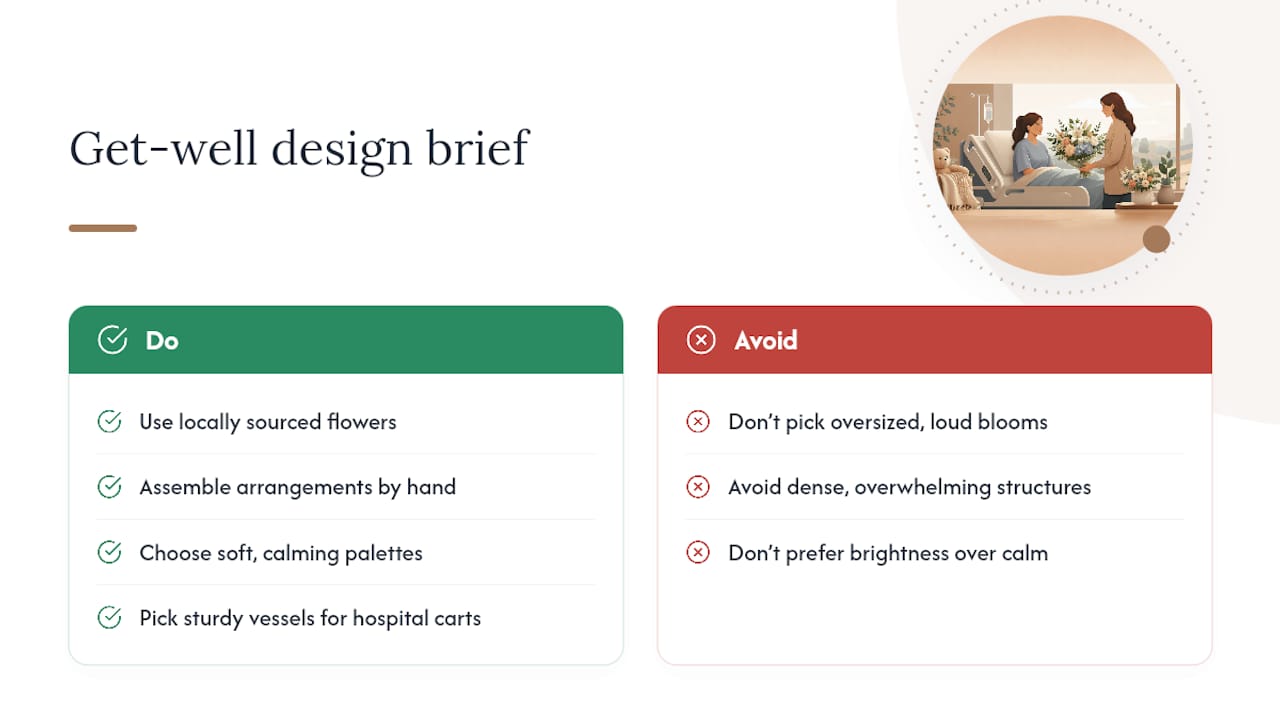
Every arrangement mentioned here starts with locally sourced, naturally grown flowers, put together by hand and can be delivered the same day in the local area. For get-well designs specifically, that means leaning on soft palettes, breathable structures that don’t overwhelm a small room, and vessel choices sturdy enough to survive a hospital cart ride without tipping.
The instinct across the industry is to default to “bright and big” for anyone who’s sick. That instinct is often backwards. A recovering person doesn’t need a bouquet that demands energy they don’t have. They need one that sits quietly in the room and says someone’s thinking of them, which is exactly the design brief behind Lafleurel’s calmer arrangements.
— Ovannes
Order a Get Well Bouquet That Actually Fits the Moment
Skip the guesswork on which arrangement suits which situation. Lafleurel’s A Beautiful Day Arrangement uses a calm, vase-ready design built for hospital rooms and quiet home recovery alike. For someone closer to you, the Quicksand Beige Roses Arrangement offers a soft, neutral palette that reads as elegant rather than celebratory. If the recipient is home and mobile, the Peonies Bouquet brings a fuller, more uplifting color range that still avoids feeling over the top.

These arrangements can be shipped with same-day delivery locally, and can be made with hospital-safe requests, including reduced pollen and lower-scent stems, if you mention it when ordering. Head to the order page to pick a design, or reach out through Lafleurel’s site if you want a custom arrangement built around a specific room or recovery timeline.
Sources
- PMC article on recovery environment and social support
- Pollen allergy — Asthma and Allergy Foundation of America
- Get Well Soon Flowers: Recovery Support for Home or Hospital | DigiBouquet
- How to choose the best flowers to say ‘get well soon’ | Appleyard London
FAQ
What flower symbolizes “get well soon”?
Yellow roses and sunflowers are commonly tied to cheerful get-well wishes, while white lilies and hydrangeas symbolize calm, quiet support for someone in a more fragile state.
Which flowers are best to send for a speedy recovery?
Tulips, daisies, and sunflowers work well for short-term recoveries where a bright mood lift fits, while orchids and hydrangeas suit longer or more serious recoveries.
Are there flowers I should avoid sending to a hospital?
Yes. Strongly fragrant or heavily pollinated flowers, like standard lilies, can worsen allergy or asthma symptoms, so ask your florist to choose low-pollen varieties or remove the anthers.
What should I write in a get-well card?
Keep it short and calm. Something like “Thinking of you, no rush to reply” respects the recipient’s energy far better than a message pushing them to feel better fast.
Can Lafleurel make a hospital-safe arrangement?
Yes. Mention it when ordering an arrangement like the Quicksand Beige Roses Arrangement, and Lafleurel can adjust for low scent and reduced pollen.