

For most offices, the best reception desk flowers are a low, brand-aligned fresh arrangement in a stable vase, no taller than the desk’s own accessories, refreshed weekly. If your front desk sits unstaffed for stretches or nobody has time for water changes, a realistic faux orchid is the better call. Either way, the arrangement should support conversation across the desk, not block it, and the rest of this guide walks through exactly how to pick, place, and maintain it.
TL;DR:
- Orchids can bloom for six to eight weeks and shed almost no debris, making them a cost-effective long-term solution for frequently used reception desks.
- Carnations, chrysanthemums, and alstroemeria last longer without daily attention, while roses and peonies are better suited for short-term displays or seasonal upgrades.
- Arrangements should be under 12 inches high for face-to-face interactions, with size and shape chosen according to desk width and style.
- Fresh flowers require weekly maintenance, but preserved or faux options are ideal for unattended desks or long weekends, reducing ongoing labor costs.
- Ordering from a local, handcrafted florist and providing key details like room lighting and brand colors simplifies matching and ensures a polished, consistent look.
Table of Contents
- Best Flowers and Plants for a Reception Desk
- Arrangement Style, Size, and Color for the Front Desk
- Fresh vs. Artificial vs. Preserved: What Each Actually Costs You
- Placement, Daily Care, and a Simple Maintenance Checklist
- Budget and Replacement Frequency for Office Flowers
- How to Choose a Florist and What to Ask Before You Order
- Why Handcrafted, Locally Sourced Arrangements Beat a Generic Order
- Corporate Flower Service That Fits Your Front Desk
- Sources
- FAQ
Best Flowers and Plants for a Reception Desk
Orchids top most florists’ lists for good reason. A well-cared-for phalaenopsis orchid can bloom for six to eight weeks, which makes it one of the most cost-effective long-term picks for a desk that gets heavy foot traffic and light maintenance attention. It also sheds almost nothing, a real advantage when the arrangement sits inches from paperwork and keyboards.
Below orchids on the reliability scale sit a handful of workhorse flowers:
- Carnations, chrysanthemums, and alstroemeria — commonly recommended for office desks because they hold up well without daily attention and last far longer than delicate blooms.
- Roses and peonies — stunning for a week or a special event, but plan on replacing them sooner; they’re best treated as a short-term statement piece rather than a permanent fixture.
- Lilies — beautiful, but skip them if scent complaints are a concern, and always snip the pollen-heavy stamens before they stain a visitor’s blazer.
- Succulents and small potted plants — the lowest-maintenance option for low-light desks, since they need infrequent watering and tolerate the dim corners many reception areas have.
If your desk sees zero daily oversight, or the arrangement has to survive a long weekend without anyone checking on it, a preserved arrangement or a high-quality faux orchid closes the gap between “looks expensive” and “requires no labor.”
Arrangement Style, Size, and Color for the Front Desk
Height is the first decision, and it’s usually the one offices get wrong. A tall, dramatic centerpiece looks great in photos and terrible in practice if it blocks eye contact between your receptionist and a visitor. Keep arrangements under 12 inches when the desk is used for face-to-face check-ins, and reserve taller pieces for side tables or credenzas where sightlines don’t matter.
Scale to the desk itself: a narrow reception counter needs a compact compote or a slim bud vase, not a sprawling centerpiece that eats half the surface. On a wider desk, designers suggest balancing a lower arrangement with an occasional taller accent nearby to create visual rhythm without cluttering the workspace.
Color strategy matters more than most office managers realize. A monochromatic palette (all white, all blush) reads as polished and calm; a two-color combination tied to your brand’s logo colors reinforces identity every time a visitor walks in.
- Stable, weighted low vases prevent tipping near busy foot traffic.
- Compact compotes work well for round or curved desks.
- Narrow bud vases suit slim, modern counters where space is tight.
Pro Tip: Photograph your current desk setup and send it to your florist along with your brand’s hex codes. It takes two minutes and eliminates almost every back-and-forth about color matching.
Fresh vs. Artificial vs. Preserved: What Each Actually Costs You
The real tradeoff isn’t beauty. It’s who has time to manage the arrangement, and how long it needs to look presentable without help.
- Fresh flowers last roughly one to two weeks depending on species, look and smell the most alive, but need someone checking water levels and trimming stems regularly. Mild scent can bother sensitive visitors, so avoid heavily fragrant lilies or hyacinths near a check-in counter.
- Preserved arrangements hold their appearance for months with zero watering, split the difference on cost, and work well for offices that want a “living” look without weekly upkeep.
- High-quality faux stems are the go-to for 24/7 lobbies or desks with no consistent staff coverage, holding their look for years with nothing more than occasional dusting.
If your reception desk is staffed and visible most of the day, fresh wins on impression. If it’s unattended for long stretches, faux or preserved wins on sanity.
Placement, Daily Care, and a Simple Maintenance Checklist
Where you put the arrangement matters almost as much as what’s in it. Keep flowers away from HVAC vents, direct sunlight, and radiators. Heat and dry air shorten vase life fast, so a shaded corner of the desk beats a sunny window ledge every time.
- Daily: Check water levels and pull any wilted or browning blooms immediately. One dying flower makes the whole arrangement look neglected.
- Weekly: Change the water fully, re-trim stems at an angle, and rinse the vase to prevent bacterial buildup that clouds water and shortens bloom life.
- As needed: Mist foliage and keep arrangements clear of direct heat sources, two habits that extend vase life significantly with almost no extra effort.
Assign this to one person, not “whoever notices.” A five-minute Monday and Thursday check, written into someone’s job description, prevents the slow slide into wilted stems nobody owns.
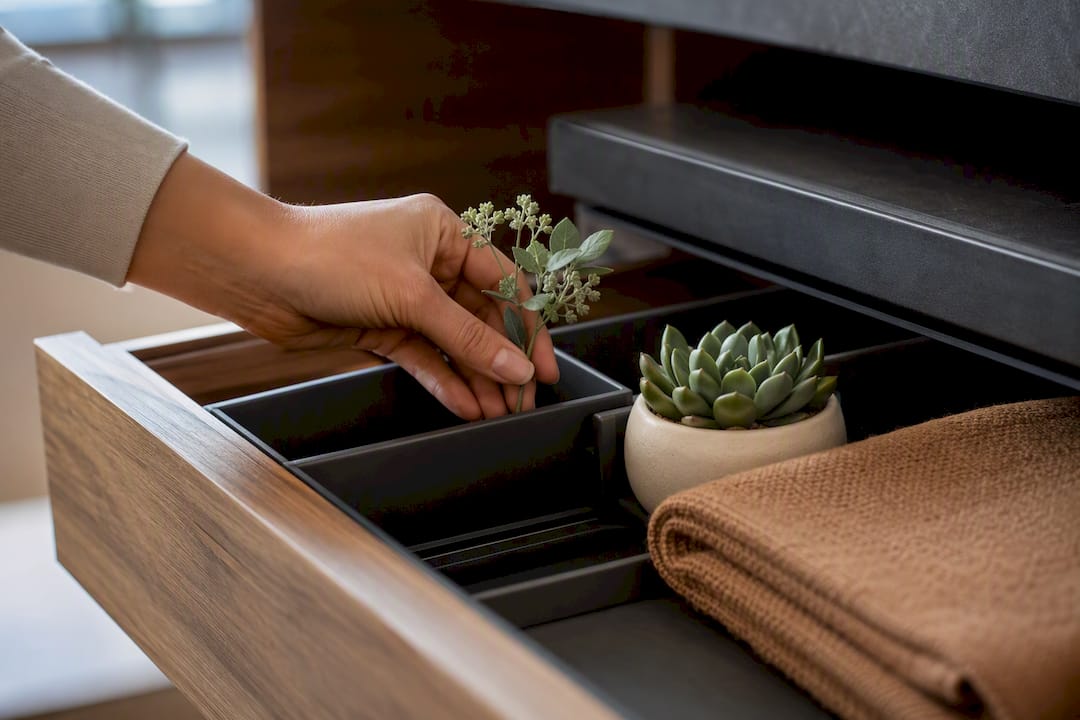
Pro Tip: Keep one small faux stem or a backup succulent in a drawer. When fresh flowers wilt faster than expected, you have an instant swap instead of an empty vase during business hours.
Budget and Replacement Frequency for Office Flowers
Weekly refreshes keep an arrangement looking its best but cost more over a year than biweekly or monthly service. Most offices land on weekly for high-traffic lobbies and monthly for lower-visibility desks, adjusting based on how quickly the specific flowers you chose actually fade.
- Long-lived choices like orchids or preserved arrangements stretch your replacement cycle and lower the total annual spend even if the upfront piece costs more.
- Frequent fresh swaps (weekly roses, for example) cost more over time but deliver the biggest visual impact for a lobby that hosts frequent client visits.
- A corporate floral subscription locks in a consistent look, simplifies budgeting into one recurring line item, and removes the ordering task from your to-do list entirely.
How to Choose a Florist and What to Ask Before You Order
Before you contact anyone, measure the desk, photograph the space in its actual lighting, note your brand colors, and flag any scent sensitivities. Florists design better when they understand the room, not just the occasion, so the more context you hand over, the fewer revisions you’ll need.
Once you’re talking to a florist, ask directly:
- What’s the delivery and setup window, and do you handle placement or just drop-off?
- What’s your substitution policy if a specific bloom isn’t in season?
- Can I approve a photo before delivery, and who’s responsible for ongoing maintenance?
- Do you offer recurring corporate accounts, and can you match our brand palette consistently?
Treat vague answers as red flags. A florist unwilling to send a photo, commit to a delivery window, or discuss color matching probably isn’t set up for repeat corporate business.
Why Handcrafted, Locally Sourced Arrangements Beat a Generic Order
Lafleurel builds every reception arrangement by hand from locally sourced, naturally grown blooms, which is why the flowers tend to hold their color and structure longer than mass-shipped stock. A steady florist partnership also takes the weekly water-and-trim routine off your staff’s plate entirely. Ask for sample photos before your first order.
— Ovannes
Corporate Flower Service That Fits Your Front Desk
Most office managers juggling reception flowers on top of everything else just want one less recurring task, not another vendor relationship to manage. Lafleurel handles that by building handcrafted arrangements around your actual desk, not a generic template, with same-day delivery when your current setup needs an emergency refresh before a client visit.

For desks that call for a bigger visual statement, the Pure Elegance large arrangement shows how scale and vessel choice work together in a lobby setting, while the Romantic Garden arrangement with peonies illustrates a seasonal, high-impact option for offices that rotate their displays. Every order can be customized to brand colors, and corporate accounts can set up recurring delivery so nobody has to remember to reorder. Visit Lafleurel to view current arrangements and request a consultation for your reception area.
Sources
Guidance in this article draws on florist design advice from Blevior Design, planning frameworks from Sortra, bloom-life data from Inside Weddings, and maintenance tips from OFC Flower’s reception guide.
- An elevated garden reception that feels soft, intentional, and timeless
- How to Plan Reception Flowers: A Practical Guide
- Tall Flower Arrangements to Inspire Your Reception Centerpieces
- The Complete Guide To Reception Flowers 2026 | OFC Flower
FAQ
What are the best flowers for an office reception desk?
Orchids, carnations, chrysanthemums, and alstroemeria top the list because they last the longest with minimal upkeep. Roses and peonies look striking but fade faster, so they work best as a short-term or seasonal swap rather than a permanent choice.
What is the 3:5:8 rule for flowers?
It’s a common floral design guideline suggesting arrangements look most balanced with odd-numbered groupings, often with three stems of a given type, since odd numbers avoid the overly symmetrical look even pairs create. It’s a starting point for proportion, not a strict formula every florist follows.
What flowering plants work well on a desk with low light?
Succulents and small potted plants are the most reliable option for dim reception corners, since they tolerate infrequent watering and low sunlight far better than cut flowers do. If you want blooms instead of foliage, a faux orchid holds its color in low light indefinitely.
How much should a reception desk flower arrangement cost?
Pricing depends on size, flower type, and delivery frequency, so it’s best to check current arrangement pricing directly with your florist. Lafleurel’s current collections list available designs, and custom quotes are available for corporate or recurring orders.
How often should reception flowers be replaced?
Most offices refresh weekly for high-traffic lobbies and monthly for lower-visibility desks, based on how fast the chosen flowers fade. Long-lasting choices like orchids or preserved arrangements let you stretch that cycle without the desk ever looking tired.