

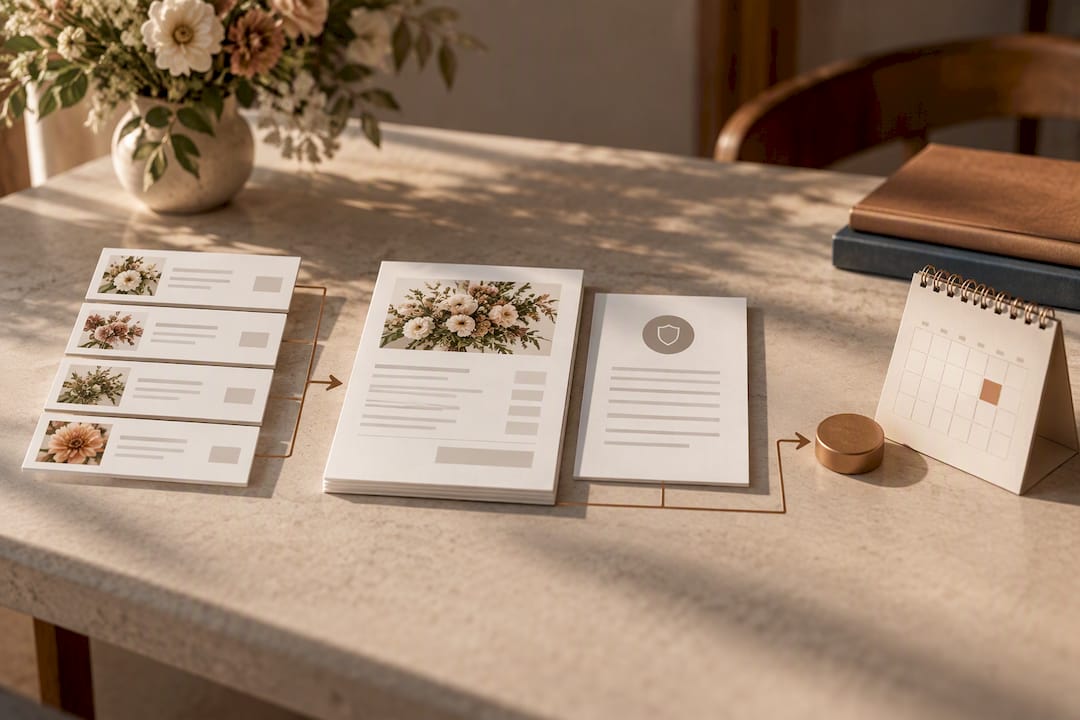
A flower consultation produces a written proposal listing the pieces, suggested blooms, likely seasonal substitutions, pricing, and a delivery and setup plan. The sequence runs in a predictable order: you send an initial inquiry, sit through a consult where you talk vision and pieces, get a proposal back, confirm final counts, then the florist sources and installs. Reach out four to six weeks ahead for a small order, two to three months out for a full wedding or large installation.
TL;DR:
- Florists need your event date, venue, guest count, budget range, and style inspiration before providing accurate quotes or scheduling consultations.
- During the consultation, detailed discussions cover color palettes, floral pieces, venue logistics, and potential weather impacts, typically within 30 to 60 minutes.
- A written proposal should itemize all costs, include substitution policies, and specify delivery and setup fees to prevent misunderstandings.
- Final guest counts and adjustments are required two to three weeks before the event, with last-minute changes potentially incurring extra charges.
- Ordering stems 7 to 10 days prior ensures freshness and price stability, while verifying weather contingency plans reduces last-minute scrambling.
Table of Contents
- What Information Does a Florist Need for the Initial Inquiry?
- What Happens During the Flower Arrangement Consultation?
- What Should Be in Your Written Flower Proposal?
- How Do You Finalize and Confirm Your Order?
- What Happens in the Week Before Your Event?
- What Happens on Setup Day?
- How Should You Prepare for Your Flower Consultation?
- Lafleurel’s Approach to the Consultation Process
- Ready to Book Your Flower Consultation?
- Sources
- FAQ
What Information Does a Florist Need for the Initial Inquiry?
Before anyone talks colors or flower types, a florist needs the bones of your event. Skimping on this step is the number one reason first quotes come back vague or wildly off from what you actually wanted.
Send these details in your first message:
- Date and venue name (or venue location if it’s not booked yet)
- Guest or table count, even a rough estimate
- Budget range, not a single number
- Style inspiration, two or three images max, not a 40 pin Pinterest board
Each of these does specific work. The date tells the florist whether your flowers will even be in season or need special sourcing. The venue shapes everything from arch rentals to whether candles are allowed. Guest count drives centerpiece quantity, and budget range keeps the whole conversation grounded instead of aspirational. Florists that book out months in advance for wedding season will often ask for these basics before they’ll even schedule a call, so having them ready speeds up how fast you land a consult slot.
What Happens During the Flower Arrangement Consultation?
This is where your Pinterest board turns into an actual order. A good florist walks you through the same core questions every time, whether the meeting happens over video or in a studio with sample stems in hand.
- Mood and palette first. Expect questions about color families, texture (garden roses versus tight, structured blooms), and three or four descriptive words for the overall feel: romantic, wild, modern, moody.
- Piece by piece walkthrough. You’ll go through bridal party flowers, ceremony focal pieces, centerpieces, escort or welcome table arrangements, and any extras like cake flowers or a flower crown.
- Format and length. Most florist consultations run 30 to 60 minutes, whether virtual or in person. Some studios also offer paid design sessions in the $150 to $225 range for clients who want a more focused working session rather than a general intro call.
- Venue logistics that change design. Outdoor heat affects which flowers hold up past 2pm, photo timing determines whether the bouquet needs to survive four extra hours, and some venues restrict candles or ban certain installation hardware entirely.
If travel makes an in-person visit hard, virtual consult options with moodboard reviews work well as a substitute, especially for couples planning from out of state. Anyone thinking hard about scent pairings alongside color palette might also find it useful to look at how floral notes combine without clashing, the same logic that governs a good bouquet applies to how fragrance layers in a room.
What Should Be in Your Written Flower Proposal?
The proposal is the document that actually protects you. If a florist won’t put pricing in writing, treat that as your answer and move on.
A solid proposal includes:
- Itemized pieces with per-piece or per-table pricing
- Delivery and setup fees listed separately from flower costs
- Tax and any applicable service fees
- Deposit amount and payment schedule
- A written substitution policy
That last point matters more than most people expect. Peonies, garden roses, and other seasonal favorites can spike in price or disappear entirely depending on the week, and a common design heuristic like the 3:5:8 rule (three focal flowers, five supporting stems, eight fillers) helps florists keep an arrangement’s proportions consistent even when the exact bloom changes. A proposal should spell out that substitutions of equal or greater value will be made if a flower becomes unavailable, and name who makes that call.
Watch for red flags: pricing that’s a single lump sum with no breakdown, no mention of a cancellation policy, or language like “we’ll figure out the details later.” “Tentative” or “on hold” status usually means your date isn’t locked until a deposit clears, so ask directly what secures your stems.
How Do You Finalize and Confirm Your Order?
Most florists ask for final guest or table counts two to three weeks before the event. Changes made after that window often come with a rush fee or get declined outright if the flowers are already ordered.
Before you sign off, confirm:
- Final headcount and any last minute add ons or cuts
- Whether your revision round is included or billed separately
- Deposit already paid versus balance due, and when
- Exact delivery address, an on site contact person, and parking or loading dock access
A normal contract includes one or two rounds of revisions before extra changes get charged hourly or per piece. Ask for a receipt at each payment milestone, not just at the final balance.
What Happens in the Week Before Your Event?
Florists typically order stems 7 to 10 days out for standard flowers, and further ahead for anything imported or out of season. That lead time is what protects both freshness and price. Order too late and you either pay a rush premium or get whatever the wholesaler has left.
In the final week, confirm with your florist:
- Any last substitutions and why they’re being made
- Exact delivery time windows for both ceremony and reception sites
- Who at the venue will receive and sign for deliveries
- How your florist is coordinating with the caterer, planner, or venue coordinator on timing
Pro Tip: Ask your florist about their backup plan for extreme heat or a sudden cold snap. A florist who orders certain blooms with a weather contingency built in will not be scrambling the morning of your event.
What Happens on Setup Day?
Setup crews generally arrive two to four hours before your ceremony start time, and reception spaces get worked separately depending on when the room becomes accessible. Florists coordinate arrival windows directly with venue staff to avoid overlapping with catering or rental deliveries.
Once everything is placed:
- Expect a quick photo confirmation sent to you or your planner showing final placement
- Bridal party flowers usually arrive last, closer to getting-ready time, to stay fresh
- Take-down responsibilities and any rented vessel or arch returns should be spelled out in writing beforehand, not assumed day-of
How Should You Prepare for Your Flower Consultation?
Walking in prepared turns a 30 minute call into a genuinely productive one. Bring these items and you’ll leave with a far more accurate proposal:
- Venue photos or a floor plan, so the florist can picture scale and light
- A dress or suit photo, since fabric and silhouette influence bouquet shape
- Guest estimate and budget range, not a single fixed number
- Two or three inspiration images, plus a short list of must-have flowers and anything you want avoided (allergies count)
Ask direct questions: what’s your availability on my date, how do you handle substitutions, what are delivery and setup fees separately from flowers, and does the venue require insurance or have restrictions I should know about.
Pro Tip: State a budget range instead of a single number when you first sit down. Florists often note that Pinterest inspiration photos frequently represent arrangements priced well above what people expect, and giving a range upfront lets your florist tell you honestly what that range can realistically deliver.
Lafleurel’s Approach to the Consultation Process
Florist consultations generally follow the core sequence: inquiry, conversation, written proposal, confirmation, sourcing, and setup, built around locally sourced, naturally grown blooms and same-day delivery capability in certain areas. Every proposal spells out pieces, suggested flowers, and how substitutions get handled if a specific bloom isn’t available that week. Day-of logistics, from delivery windows to setup coordination, get confirmed in writing before anything gets ordered, not left as a verbal understanding.
— Ovannes
Ready to Book Your Flower Consultation?
Skip the guesswork and go straight to a proposal you can actually plan around. Send your date, venue, and guest count, schedule a short consult, and you’ll get a written proposal back with pieces, pricing, substitution notes, and a delivery plan, all before you commit a dollar.

Booking is simple: submit your event details through the Lafleurel site, walk through your vision on a quick call, and review your proposal at your own pace. If you already know you want something built around peonies or garden roses, browse the Peonies collection or start a custom arrangement request directly, and Lafleurel’s team will fold it into your full event proposal from there.
Sources
- 3-5-8 rule for floral arrangements
- How much do wedding flowers cost? (Brides)
- Wedding Flower Consultation Process | Floral Concepts - Houston
FAQ
How Do I Prepare for a Floral Consultation?
Bring your event date, venue details or photos, guest count, a budget range, and two or three inspiration images rather than a full mood board. Having a short list of must-have and must-avoid flowers ready also speeds up the conversation and helps your florist give you realistic pricing on the spot.
What Is the 3:5:8 Rule for Flowers?
The 3:5:8 rule is a design guideline using three focal flowers, five supporting stems, and eight filler stems to keep a single arrangement visually balanced. It’s meant as a proportion heuristic for individual pieces, not a formula for calculating total stem counts across a full wedding order.
What Are Common Mistakes Florists Make?
The most common issues are vague pricing with no line item breakdown, no written substitution policy, and unclear timelines for final counts or delivery windows. Asking for an itemized proposal upfront, the kind Lafleurel provides at the consultation stage, avoids most of these problems before they happen.
Is $5,000 Enough for Wedding Flowers?
It depends entirely on guest count, venue size, and how many pieces you need beyond centerpieces and a bouquet. Stating your budget range early lets your florist tell you exactly what that range can realistically cover, since inspiration photos often reflect higher-end looks than a given budget supports.
How Long Does the Process Take From Consultation to Event Day?
Small orders can move from inquiry to delivery in four to six weeks, while full weddings or large installations typically need two to three months of lead time. That window gives the florist room to source seasonal stems and lock in your date before availability fills up.