

Condition stems, keep the water clean with a preservative, display the bouquet in a cool spot, and do a few minutes of daily upkeep. That routine, built on the same four steps florists rely on, reliably adds several extra days to a bouquet’s vase life. Using recut stems, a commercial flower food packet like the ones included with most delivery orders, and cool placement away from ethylene sources gets you most of the way there.
TL;DR:
- Conditioning stems immediately upon arrival, including recutting and stripping submerged leaves, significantly extends a bouquet’s vase life from three to up to ten days.
- Using commercial flower food with a biocide, carbohydrate, and acidifier is more effective than homemade substitutes, which risk feeding bacteria and shortening lifespan.
- Keeping bouquets away from heat sources, direct sunlight, and ripening fruit with ethylene gas can dramatically slow wilting and petal drop.
- Regular water changes, vase cleaning, and recutting stems every two to three days prevent bacterial buildup and ensure efficient water uptake.
- Recognizing early signs of stress, such as drooping, thin petals, or yeasty smells, allows timely intervention to revive flowers before irreversible decline.
Table of Contents
- Flower Care Tips: What To Do In The First 24 Hours
- Conditioning Stems On Arrival Makes The Biggest Difference
- Water And Preservatives: Store-Bought Vs. Homemade
- Where You Place Your Bouquet Matters More Than People Think
- Building A Simple Water Change And Vase Hygiene Routine
- Species-Specific Flower Care: What Changes By Variety
- Reviving Wilted Flowers Before You Give Up On Them
- Picking Flowers That Will Actually Last At The Shop
- Cleaning Vases And Tools Without Overcomplicating It
- Optimal Water Temperature For Cut Flowers
- Ideal Humidity Levels For Flower Longevity
- Common Pests And Diseases Affecting Cut Flowers
- Arranging Flowers To Maximize Vase Life
- Preservatives Beyond The Commercial Packet
- Recognizing Flower Stress Before It Becomes Flower Death
- The Real Gap Between Florist Advice And What Home Arrangers Actually Do
- Sources
Flower Care Tips: What To Do In The First 24 Hours
The first day sets the tone for everything after it. Unpack the bouquet right away, even if you’re not ready to arrange it yet, since flowers left sealed in plastic sleeve wrap get warm fast.
- Inspect each stem and remove any damaged or bruised petals.
- Recut every stem at a 45 degree angle with sharp shears.
- Strip any leaves that would sit below the waterline.
- Fill a clean vase with water and mix in the preservative packet.
- Let stems sit in cool water for an hour or two before final arranging.
After that, the daily routine is short: pull any wilting blooms and top off the water. Every two to three days, do a full water change and a fresh recut on each stem.
Pro Tip: Keep a small bottle brush next to your vase supplies. Vase walls collect a bacterial film you can’t always see, and a quick scrub during every water change stops it from creeping back onto stem ends.
Conditioning Stems On Arrival Makes The Biggest Difference
Florists condition every stem the moment it arrives, and that single habit is what separates a bouquet that dies in three days from one that lasts ten. It’s the step most home arrangers skip entirely, and it’s the biggest difference between amateur and professional results.
Conditioning has three parts:
- Cut at an angle. A 45 degree cut increases the surface area exposed to water, so the stem drinks faster instead of resting flat against the vase floor.
- Clean your tools. Wipe blades with rubbing alcohol between bouquets. Dull or dirty shears crush stem tissue instead of slicing it, which invites bacteria in.
- Strip submerged foliage. Any leaf sitting in water rots and feeds bacteria that clog the stem’s vascular pathways.
Once stems are cut and stripped, give them a rest. Set them in a bucket or vase of cool water, somewhere dark and out of the sun, for one to four hours. Overnight works even better if you’re not in a rush. This resting period lets stems recover from the stress of shipping or transport before they go on display.
Water And Preservatives: Store-Bought Vs. Homemade
Bacteria are the real enemy here, more than age or temperature. A stem sitting in water clouded with bacterial growth can’t absorb water efficiently no matter how fresh it was when cut, and that’s why recutting stems and refreshing water every two to three days matters so much.
Commercial flower food, the small packet that comes with most delivered bouquets, isn’t filler. It combines three things:
- A carbohydrate (usually sugar) that feeds the bloom the way soil nutrients would.
- An acidifier, typically citric acid, that lowers the water’s pH so stems absorb it more efficiently.
- A biocide that keeps bacteria from multiplying in the vase.
That combination is engineered to balance food, pH, and bacteria control at once, which is hard to replicate with kitchen ingredients alone. A commonly repeated homemade substitute is a teaspoon of sugar, a few drops of bleach, and a splash of lemon juice per quart of water. Treat that mix as a fallback, not a proven formula, and err on the side of less concentrated rather than more. Too much sugar without enough biocide just feeds bacteria faster.
Where You Place Your Bouquet Matters More Than People Think
Cut flowers are still respiring and losing water even after they leave the plant, and heat speeds that process dramatically. Cooler storage, including a spell in the refrigerator overnight, can measurably extend how long a bouquet lasts.
A few placement rules cut down on unnecessary stress:
- Keep bouquets off windowsills and out of direct sun, which dries petals and heats the water inside the vase.
- Avoid heating vents, air conditioning drafts, and ceiling fans, all of which pull moisture out of petals faster than stems can replace it.
- Never set flowers near a fruit bowl or compost bin. Ripening fruit releases ethylene gas, which accelerates petal drop and wilting.
A cool hallway, a shaded dining table, or a spot away from the kitchen stove all work better than a sunny windowsill. If you have the fridge space and a bouquet you want to stretch across a big event, an overnight chill genuinely helps.
Building A Simple Water Change And Vase Hygiene Routine
Two tasks handle most of what a bouquet needs: a quick daily check and a deeper routine every couple of days.
- Daily: glance at the water level and top it off if it’s dropped. Pull any bloom that’s browning or drooping. One dying flower releases ethylene and speeds up decline in the flowers around it.
- Every 2 to 3 days: dump the water completely, rinse the vase, and recut each stem by about half an inch to an inch. Full water changes and vase cleaning at this interval prevent biofilm from building up and blocking water uptake.
Cloudy water is your warning sign. If the water looks murky or smells off within a day of changing it, the vase itself may have residue in it, and a fresh vase is sometimes the fix rather than another rinse. Keep a bottle brush, a pair of clean secateurs, and a spare preservative packet or two somewhere handy so this routine takes two minutes instead of ten.
Species-Specific Flower Care: What Changes By Variety
Not every stem behaves the same way in water, and a few common flowers need adjustments to the standard routine.
- Daffodils release a sap that shortens the life of other flowers in the same vase, so condition them separately in their own container before mixing them into a mixed arrangement.
- Tulips keep growing after they’re cut and tend to do better in cooler water than most other flowers. Expect them to stretch and bend toward light, which is normal, not a sign of decline.
- Hydrangeas wilt fast if they dry out, but they respond unusually well to full rehydration, more on that below.
- Roses benefit from a fresh diagonal cut and, for older or woody stems, a short vertical slit up the base to open more surface for water uptake.
- Woody or sap-heavy stems like euphorbia occasionally benefit from a brief dip in near-boiling water to seal the cut end and stop sap loss, though this calls for care and gloves.
Roses and carnations tend to be the longest-lived cut flowers in a typical bouquet, often lasting a week or more with good care, while tulips, daffodils, and hydrangeas usually run shorter.
Pro Tip: Never hammer or crush woody stems to “help” water uptake. It feels intuitive, but it destroys the internal vascular tissue and actually invites bacteria in faster than a clean cut would.
Reviving Wilted Flowers Before You Give Up On Them
A drooping bouquet isn’t always a dead one. Dehydration and age look similar at first glance, but they respond very differently to rescue attempts.
- Full submersion. For hydrangeas, roses, and lilies showing limp heads, submerge the entire stem and bloom in cool water for 30 to 60 minutes. This rehydration method has a surprisingly high success rate when the flower is dehydrated rather than simply old.
- Recut and warm water forcing. For woody stems that seem to have an airlock, recut the base underwater and place it briefly in warm, not hot, water to encourage the stem to draw fluid up faster.
- Return to fresh water. Once color and firmness return, move the stem back into a vase with clean, preservative-treated water.
If petals are translucent, brown at the edges, or dropping on their own, that’s age, not thirst, and no amount of soaking will bring the bloom back. Save the rescue effort for flowers that look merely tired.
Picking Flowers That Will Actually Last At The Shop
The bouquet’s fate is partly decided before it ever reaches your vase. A few checks at purchase time save a lot of frustration later.
- Press gently on the stem near the base. It should feel firm, not soft or slimy.
- Look for buds that are just beginning to open rather than fully blown flowers, since partially open buds have more life ahead of them.
- Check the water in the shop’s display buckets. It should look clear and smell neutral, not stale or sour.
- Ask if the stock is newly arrived and whether it’s already been conditioned. Freshly delivered flowers that haven’t rested yet will benefit even more from your own conditioning step at home.
Once your order arrives, whether it’s a grocery store bunch or a professionally arranged bouquet, the same post-delivery routine applies: unwrap, recut, strip, and let the stems rest in cool water before final display.
Cleaning Vases And Tools Without Overcomplicating It
Bacteria don’t need much of a head start. A vase that looks clean can still carry a thin film that recontaminates fresh water within a day, so occasional deep cleaning matters as much as daily topping off.
- Wash vases in hot, soapy water with a bottle brush, focusing on the base where residue collects.
- If a vase develops a persistent film even after washing, switch to a different one rather than fighting the same buildup repeatedly.
- Wipe cutting tools with rubbing alcohol before use, and avoid crushing stems when cutting, since crushed stem tissue speeds decay and bacterial spread.
If you have pets at home, a quick safety note is worth remembering: several common bouquet flowers, including lilies and daffodils, are toxic to cats and dogs. The ASPCA maintains a full list of toxic and non-toxic plants worth checking before flowers go on a low table.
Optimal Water Temperature For Cut Flowers
Most cut flowers do best in cool, not cold, water, generally in the range of room temperature or slightly below. Water that’s too cold slows the biochemical activity stems need to draw fluid upward, while water that’s warm to the touch encourages faster bacterial growth and speeds up wilting.
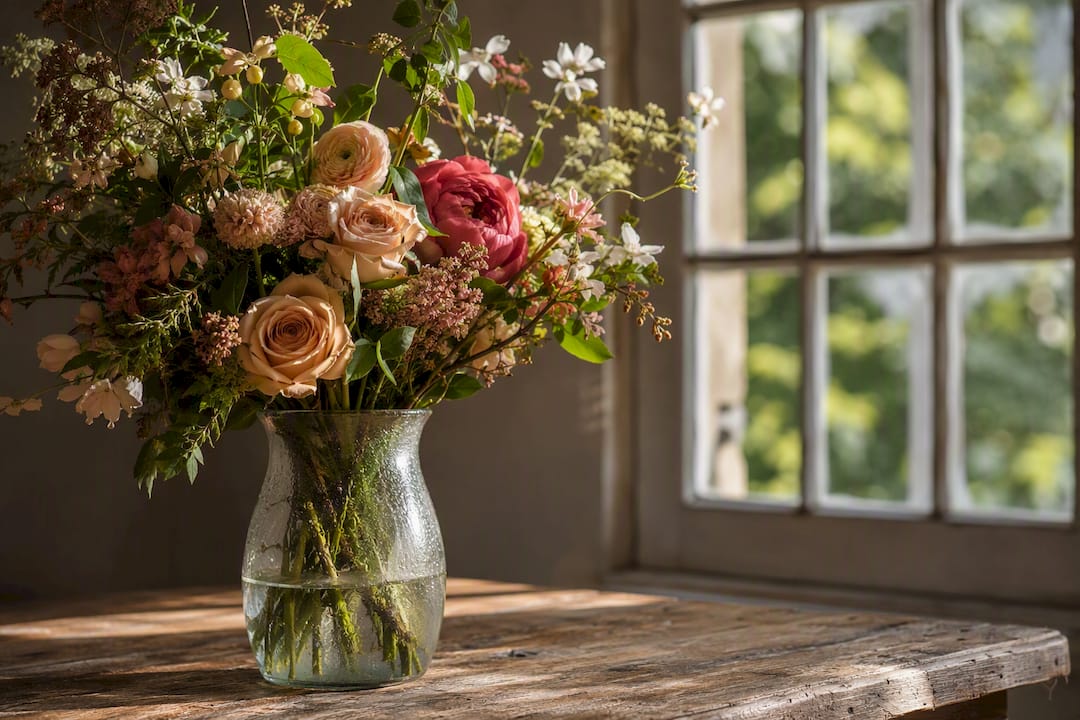
Tulips and daffodils are something of an exception. Both tend to hold up longer in cooler water than roses or carnations do, partly because cooler conditions slow their tendency to keep growing and stretching after the cut. Woody-stemmed flowers, on the other hand, sometimes benefit from a brief warm-water treatment right after cutting, since warmer water can move through a stubborn stem faster during that first critical uptake window.
The practical rule for most home bouquets: use water straight from the tap at a temperature that feels cool but not cold to your hand, somewhere in the neighborhood of 65 to 75 degrees Fahrenheit. Skip water that’s been sitting in a hot pipe or a kettle. If you’re specifically working with tulips, daffodils, or hydrangeas, err slightly cooler than that range.
One detail people miss: softened water, the kind that’s been through a home water softener system, often contains salt levels that stress cut stems over time. If your tap water is softened, filtered or bottled water is a better choice for the vase, even though it seems like an unnecessary extra step.
Ideal Humidity Levels For Flower Longevity
Cut flowers lose moisture through their petals and leaves constantly, and dry indoor air pulls that moisture out faster than the stem can replace it through the water below. A relative humidity somewhere between 80 and 90 percent is close to ideal for maximizing vase life, which is part of why refrigerated flower storage in shops includes humidity control, not just cold temperatures.
Most homes run drier than that, especially in winter when heating systems strip moisture from indoor air, or in summer when air conditioning does the same thing. That mismatch is one of the quieter reasons bouquets fade faster at home than they did in the shop.
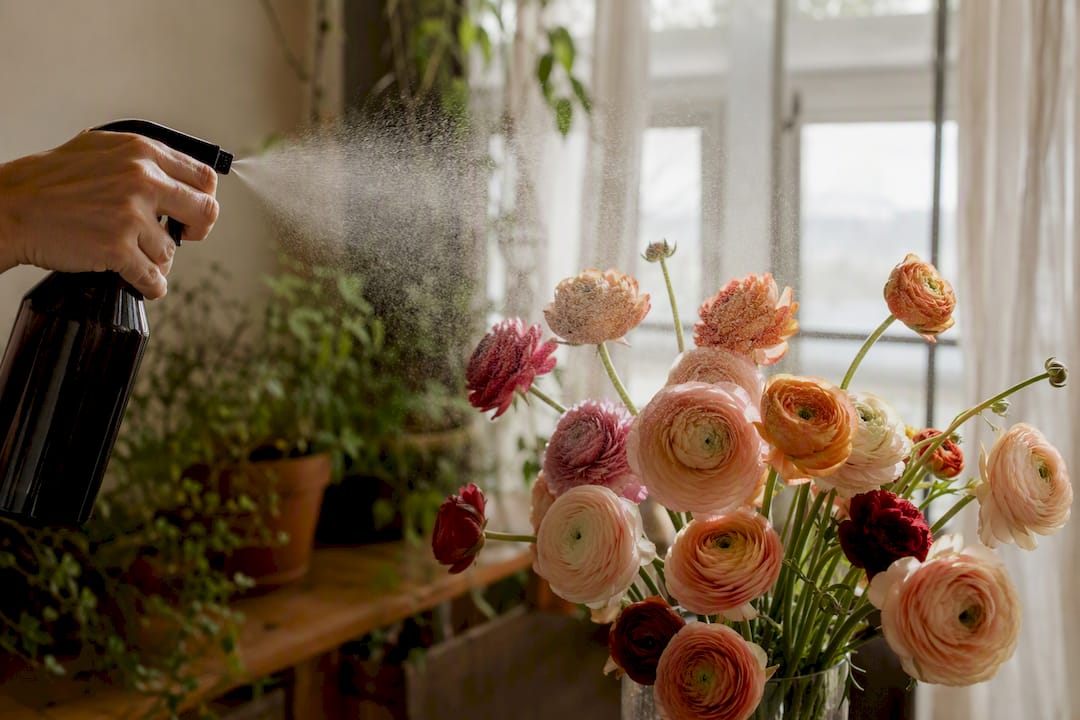
You don’t need a humidifier dedicated to your flowers, but a few adjustments help close the gap. Keep bouquets away from heating vents and air conditioning units, both of which create pockets of especially dry air nearby. A light misting of the petals, not the water in the vase, once a day can offset some of that moisture loss, particularly for flowers with thinner petals like ranunculus or peonies. Bathrooms and kitchens, which tend to run more humid than living rooms, can be reasonable short-term spots for a stressed bouquet if you don’t mind moving the vase for display later.
Avoid the opposite extreme too. A closed, damp space with no air movement at all encourages mold and bacterial growth on stems and leaves, so the goal is moist air, not stagnant air.
Common Pests And Diseases Affecting Cut Flowers
Cut flowers can carry problems that started in the field or greenhouse, and a few show up often enough to watch for. Aphids and thrips sometimes hitch a ride on stems and buds, especially on flowers like roses and chrysanthemums, and you’ll usually spot them as tiny clusters near the bud base or the underside of leaves.
Botrytis, a gray fungal mold, is the more common issue at home. It thrives in the same humid, still air that helps flowers last longer, which creates a real tension: enough moisture to prevent petal drying, but not so much stagnant humidity that mold takes hold. Botrytis typically shows up as fuzzy gray or brown spots on petals, particularly on roses and peonies, and it spreads fast once it starts.
A few preventive habits handle most of these issues before they become a problem. Inspect stems and buds when you first unwrap a bouquet, and remove any bloom already showing spotting or insect activity rather than leaving it in the arrangement to spread. Keep some air circulation in the room rather than sealing flowers into a closed, humid corner. Clean vase water is itself a defense, since bacterial buildup in the water is what most often causes stems to rot from the bottom up rather than any airborne pest.
If you do spot aphids on a stem, a quick rinse under lukewarm water before placing it in the vase usually clears them without needing any spray or treatment.
Arranging Flowers To Maximize Vase Life
How you physically arrange a bouquet affects how long it lasts, not just how it looks. Stems packed too tightly together compete for space in the vase and can crush against each other, which damages the same vascular tissue you worked to keep clean during conditioning.
Give each stem room to breathe in the vase, even in a dense arrangement. A wider vase mouth, or a grid of clear tape across the opening, lets you space stems out without needing to overcrowd them into a narrow neck. Cut a variety of stem lengths rather than trimming everything to the same height. Shorter stems reach fresher water lower in the vase, and varied heights also happen to look more natural.
Mixing flowers with very different water needs in one vase creates its own problem. A single daffodil dropped into a rose and peony arrangement can shorten the life of everything else through its sap, so if you’re combining varieties, condition anything unusual separately first and check for compatibility issues before committing to a single container.
Keep any foliage or greenery you add trimmed the same way you’d treat the flowers themselves. Leafy filler left with stems sitting in water rots just as fast as flower stems do, and it’s an easy detail to overlook since it’s not the star of the arrangement.
Preservatives Beyond The Commercial Packet
Commercial flower food remains the most reliable option because it balances carbohydrate, acidifier, and biocide in one measured dose. When you’re out of packets, a few natural additives can help in a pinch, though none match that same balance.
A small amount of sugar, roughly a teaspoon per quart, supplies the carbohydrate flowers would otherwise get from photosynthesis. A splash of lemon juice or a pinch of citric acid lowers the water’s pH, similar to what commercial acidifiers do. A drop or two of household bleach, well diluted, works as a rough biocide substitute to slow bacterial growth.
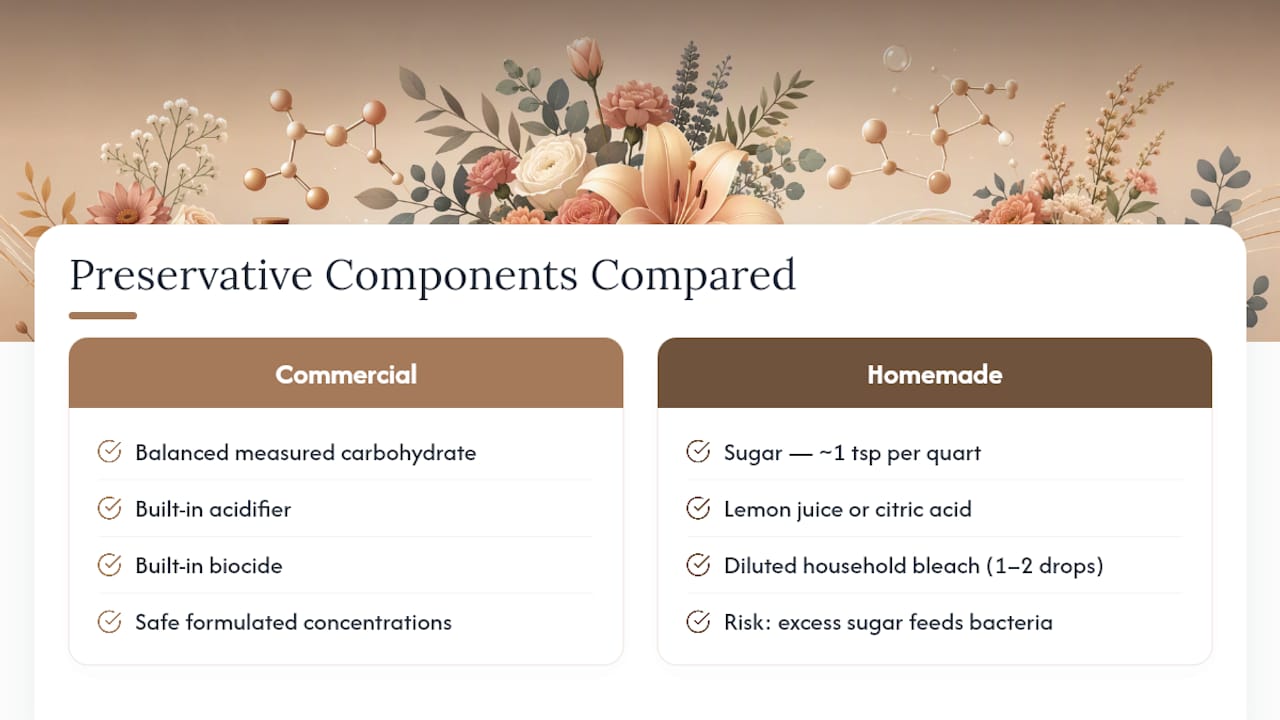
The catch with any homemade combination is concentration. Too much sugar without enough biocide simply feeds bacteria faster than it feeds the flower, which can shorten vase life rather than extend it. Treat homemade mixes as a stopgap between store runs, not a long-term replacement, and lean toward using less of each ingredient rather than more.
Recognizing Flower Stress Before It Becomes Flower Death
Catching stress early is usually the difference between a bouquet you can rescue and one that’s already past saving. Petals that feel slightly soft or a stem that bends more than it should are early signs, well before wilting becomes visible.
Watch for these signals:
- Drooping or bowing necks on flowers like roses and gerbera daisies, often the first visible sign of water uptake trouble.
- Petals that feel thin or papery to the touch rather than crisp.
- A sour or musty smell from the vase water, which usually means bacterial buildup has already started.
- Leaves yellowing or curling at the edges before the flower itself shows any change.
Most of these respond well to the same fixes: a fresh recut, a full water change, and a move to a cooler spot. Catching stress at the drooping stage, rather than waiting for full wilt, is what makes rehydration techniques actually work. Once petals turn brittle or translucent, you’re past the point where any intervention helps much.
The Real Gap Between Florist Advice And What Home Arrangers Actually Do
Most flower care advice isn’t wrong, it’s just incomplete in a way that sets people up to fail. Every guide tells you to change the water and keep flowers cool, but almost none of them explain that conditioning on arrival, the recut, strip, and rest step, does more work than everything else combined. Skip that one step and even perfect water changes afterward are managing a deficit you created on day one.
The other gap is honesty about homemade preservatives. Sugar and bleach recipes circulate constantly online, and they’re not useless, but they’re a compromise, not an upgrade. Commercial flower food is formulated to balance three functions at once, and no kitchen substitute replicates that as reliably.
If there’s one thing worth prioritizing over everything else in this article, it’s the first hour after a bouquet arrives. Recut, strip, rest in cool water, then arrange. Everything after that, the water changes, the cool placement, the daily deadheading, matters, but it’s maintenance on a foundation you either built correctly or didn’t.
— Ovannes
Some bouquets are worth the extra care because they were built to last from the start. La Fleurel conditions every stem before it ever leaves the shop, using locally sourced blooms and same-day delivery across Valley Village and the surrounding Los Angeles area, so the arrangement you receive has already had the professional head start most home flowers never get. If you want a bouquet designed around that same longevity, from classic roses to a romantic garden arrangement with peonies, explore the full collection at La Fleurel for your next birthday, anniversary, or quiet gesture of condolence.
Sources
- How to Keep Cut Flowers Fresh and Alive Longer | The Old Farmer’s Almanac
- Bright blooms: How to care for flower bouquets | Good Growing | Illinois Extension
- How to Keep Flowers Fresh — a florist’s care guide | Lacy Bird
- The DOs and DON’Ts of Fresh Cut Flower Care & Handling - FloraLife