

The safest choice is a sympathy bouquet or a muted-color vase arrangement, sized to your relationship with the deceased. If you want something that lasts beyond the service, a peace lily or another potted plant works just as well. Before you order anything, take three steps:
- Read the obituary carefully. Many families note where to send flowers, or ask for donations instead.
- Call the funeral home. Confirm delivery hours, the exact service location, and whether flowers are even accepted that day.
- Match arrangement size to your relationship. Immediate family typically sends larger pieces like casket sprays; friends, coworkers, and acquaintances send bouquets or smaller standing arrangements.
If the family has requested “no flowers” or “donations preferred,” honor that request. It’s not a suggestion, and sending flowers anyway can come across as inattentive rather than kind.
TL;DR:
- Confirm the funeral home’s flower intake hours, service location, and delivery window before placing an order to ensure timely arrival.
- Match arrangement size and type to your relationship, with immediate family typically ordering casket sprays and friends or coworkers choosing bouquets or small arrangements.
- Follow the obituary’s specific flower or donation requests, since ignoring these can be seen as inattentive or disrespectful.
- Use durable flowers like carnations, chrysanthemums, and orchids for services that last multiple days or in warm environments, and ask for substitutes if the preferred blooms are out of season.
- When in doubt, send a modest sympathy bouquet or potted plant, respecting space constraints and cultural customs, and coordinate delivery details directly with the funeral home.
Table of Contents
- Why Flowers Matter at a Memorial Service
- Which Flowers Say the Right Thing?
- Types of Memorial Arrangements and When to Use Them
- How to Choose Flowers Based on Relationship and Venue
- What Not to Send (and Cultural Notes to Keep in Mind)
- Getting the Timing and Delivery Right
- How La Fleurel Handles Memorial Deliveries
- Key Takeaways
- An Editorial Take on Getting This Right
- Send an Arrangement Lafleurel Can Deliver on Time
- Sources
Why Flowers Matter at a Memorial Service
Flowers do something words often can’t at a memorial: they show up physically, they stay visible through the service, and they tell a grieving family that someone outside their immediate circle noticed and cared enough to act. That’s the whole function, really. Not decoration, not tradition for tradition’s sake. A gesture that says “I’m thinking of you” without asking anything back.
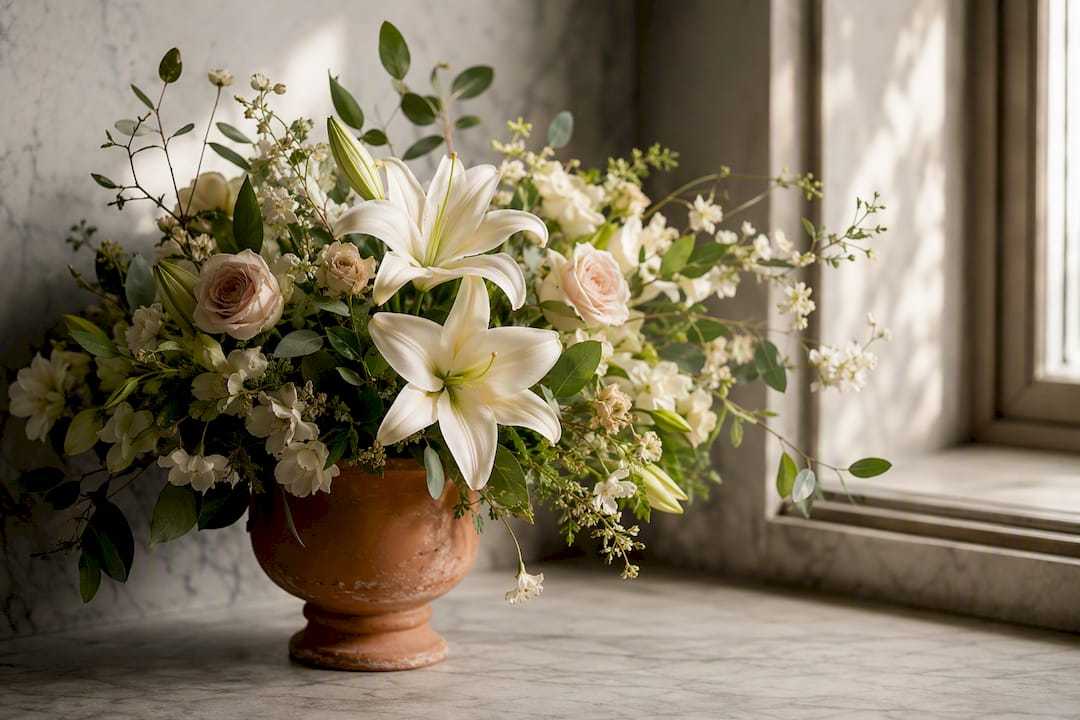
Color carries meaning here, even if most people never think about it consciously. White reads as pure and peaceful, which is why it dominates traditional sympathy arrangements. Soft pastels feel gentle without drawing attention to themselves. Deep reds signal intense love or passion, which can feel exactly right for a spouse or parent, and slightly heavy for a coworker’s arrangement.
Timing has also shifted in ways worth knowing. As cremation becomes more common, many families hold memorials weeks or even months after death, and flower delivery increasingly goes to the home rather than a funeral chapel. That’s worth checking before you assume the service and the flower delivery happen on the same day, in the same place.
A few quick guidelines on where flowers go:
- Immediate family often prefers home delivery after a private cremation, especially when the public service comes later.
- A traditional funeral with a viewing usually wants flowers at the funeral home before the visitation hours begin.
- If both a service and a reception are listed, the funeral home can typically tell you which location expects floral deliveries.
Which Flowers Say the Right Thing?
Certain blooms have carried sympathy meaning for so long that most people register it instinctively, even without knowing the backstory. Here’s what shows up most often in memorial arrangements, and why:
- Lilies, especially white ones, symbolize the restored innocence of the soul and read as peaceful rather than showy. They’re a default for good reason.
- Roses flex with color. White suggests reverence, pink suggests gentleness and admiration, and deep red suggests profound love, best reserved for close family.
- Carnations hold up remarkably well over multiple days, which matters when a wake stretches from morning through evening.
- Chrysanthemums signal grief and honor in many Western traditions, though in some European and Asian cultures they’re reserved exclusively for funerals, which is worth knowing if you’re sending flowers to a family with different cultural roots.
- Orchids bring quiet elegance and a longer vase life than most cut flowers, making them a smart plant option.
On durability: if a service runs long or spans multiple days, ask your florist to lean on carnations, chrysanthemums, and orchids over softer blooms like hydrangea or peony, which wilt faster in warm rooms. Peonies and hydrangeas are also seasonal, typically peaking in late spring, so a florist may need to substitute similar-toned blooms outside that window.
Pro Tip: If you love the look of a specific flower but it’s out of season, ask your florist for a same-tone substitute rather than forcing the original bloom. A skilled arranger can match the mood of peonies with garden roses almost exactly.
Color choice still comes down to closeness. Neutral palettes (white, cream, soft green) work for anyone, including coworkers, distant relatives, or acquaintances. Personal color choices, like a favorite shade the deceased loved, work best when you knew them well enough to know that detail mattered.
Types of Memorial Arrangements and When to Use Them
The format matters almost as much as the flower choice, because each type signals a different relationship and fits a different setting.
- Casket sprays drape directly over the casket and are almost always ordered by immediate family, since funeral homes typically limit who can place them.
- Standing sprays sit on an easel near the casket or podium, visible to the whole room. These work well for close friends, extended family, or a group of coworkers pooling funds.
- Wreaths carry circular symbolism, tied to eternity and the continuation of life. They suit a graveside service or a memorial with a more formal, traditional tone.
- Sympathy bouquets, sent to the home or funeral home in a vase, are the most flexible option and the safest choice for friends, acquaintances, or anyone unsure what else to send.
- Potted plants, like peace lilies or small orchids, make sense when the family has limited space, when the service is small and private, or when you want the gift to outlast the week.
A rough rule: the closer you were to the deceased, the larger and more prominent the arrangement can be. A coworker sending a towering standing spray to a small private service risks looking out of step with the room, no matter how good the intention.
How to Choose Flowers Based on Relationship and Venue
Run through this short checklist before you place an order:
- Read the obituary. Look for delivery instructions, a preferred charity, or a direct request for no flowers.
- Call the funeral home. Ask about intake hours, whether they accept walk-in deliveries, and where flowers should be dropped off.
- Pick your arrangement type by relationship. Casket sprays typically go to immediate family, while friends and extended family send bouquets, standing sprays, or wreaths.
- Watch for cultural or religious cues in the obituary or from someone close to the family. Some traditions have specific customs around flower color or type.
On the relationship question specifically: immediate family (spouses, children, parents) generally coordinates the casket spray, sometimes as a joint order among siblings. Close friends and extended family lean toward standing sprays or larger vase arrangements. Coworkers and acquaintances do best with a modest bouquet or a card signed by the group, paired with a smaller arrangement.
Venue rules deserve their own attention because they vary more than people expect:
- Funeral homes often have a specific delivery window, sometimes just one to two hours before the service starts, to allow time for setup.
- Cemeteries frequently restrict what can be left graveside long term, particularly glass vases or anything not biodegradable.
- Churches may have their own policies about where arrangements can sit during the service, especially if the sanctuary is also used for other events that week.
Pro Tip: When in doubt about size or type, call the funeral home directly and ask what they’re already expecting. They coordinate deliveries daily and can tell you exactly what fits the space and the family’s wishes.
What Not to Send (and Cultural Notes to Keep in Mind)
Skip flowers entirely if the obituary explicitly requests donations or says “no flowers.” A charitable gift or a meal for the family honors that request without feeling like you did nothing.
A few other cautions:
- In some Asian and European traditions, chrysanthemums are strictly funeral flowers and would feel strange in any other context, so check before sending them to a celebratory event for the same family.
- Avoid oversized arrangements for small, private, or intimate services. A towering spray in a living room feels out of place fast.
- If space is tight, a small plant or a modest vase arrangement respects the setting better than a large standing display.
What to Write on the Sympathy Card
Address the message to the family, not the person who died, and keep it short and sincere.
- Immediate family: “We’re holding you close during this impossible time. We love you.”
- Close friend: “There aren’t enough words, but I’m here for you, whatever you need.”
- Coworker: “Thinking of you and your family. Please let us know if there’s anything the team can do.”
- Acquaintance: “My deepest condolences to you and your family during this difficult time.”
If you’re offering something practical, like meals or errands, say so directly: “I’ll drop off dinner Thursday” reads warmer than a vague offer buried in sympathy language.
Getting the Timing and Delivery Right
Order at least one day ahead whenever possible. Same-day delivery is often doable, but only if the funeral home confirms they can accept flowers on short notice. Some locations have strict intake windows, and a delivery outside that window may sit in a lobby instead of reaching the service room.
Give your florist every detail up front:
- Full name of the deceased and the service
- Exact address, including room or chapel name if it’s a larger facility
- A contact person at the funeral home or family
- The time you need the arrangement to arrive
Florists typically confirm these details directly with the funeral home to make sure the piece lands in the right room at the right time, since flowers usually need to arrive one to two hours before the service begins to allow for setup. If you find out about a service late, call the florist and explain the timeline. Many can still make same-day delivery work if the funeral home’s hours allow it.
How La Fleurel Handles Memorial Deliveries
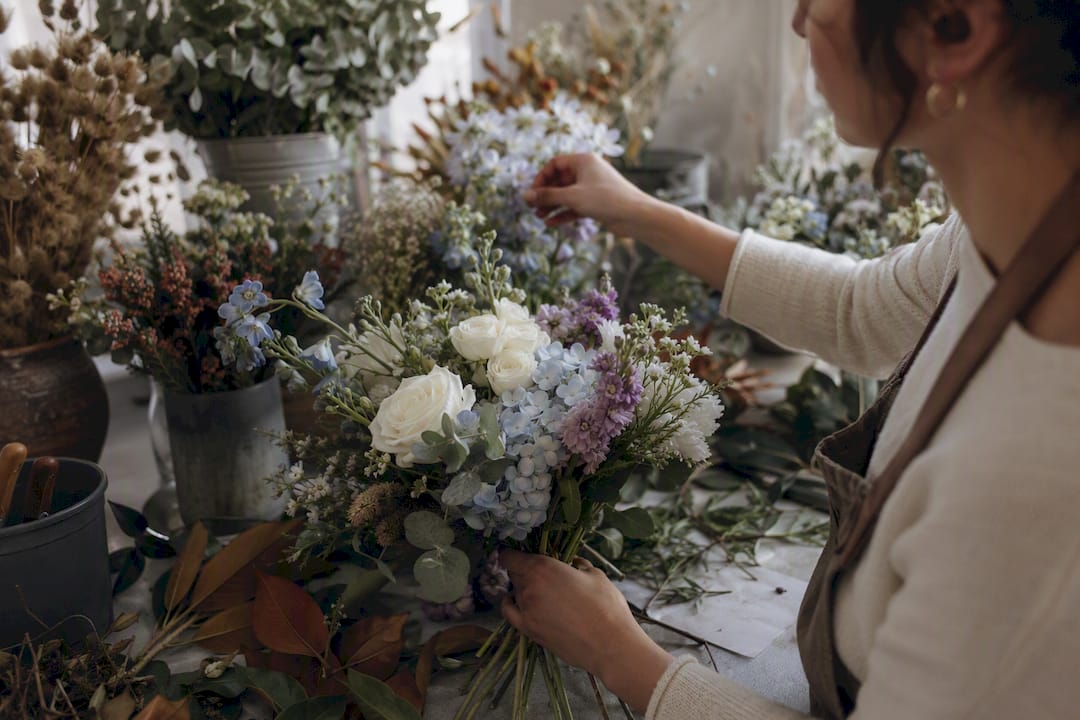
Every memorial arrangement Lafleurel builds starts with locally sourced blooms, hand assembled the same day it ships, not pulled from a cooler of pre-made stock. That matters most for memorial orders, where timing is unforgiving and there’s no room for a wilted arrangement showing up late.
Coordinating a memorial delivery isn’t just about picking pretty flowers. It’s about confirming the service name, the exact room, a contact person, and the arrival window, then building the arrangement to survive the hours between the shop and the chapel.
Lafleurel’s team confirms those logistics directly with funeral homes across Valley Village and the surrounding Los Angeles area before a single stem gets cut, which is the difference between an arrangement that arrives on time and one that doesn’t.
Key Takeaways
The right memorial flower choice comes down to matching arrangement type and size to your relationship with the deceased, then confirming delivery logistics with the funeral home before you order.
| Point | Details |
|---|---|
| Default safe choice | A sympathy bouquet, muted-color vase arrangement, or plant works for most relationships and settings. |
| Follow the obituary | Honor requests for “no flowers” or “donations preferred” instead of sending an arrangement anyway. |
| Match size to relationship | Immediate family typically orders casket sprays; friends and coworkers send bouquets or standing sprays. |
| Confirm logistics early | Call the funeral home for intake hours, exact room, and delivery windows before ordering. |
| Order through Lafleurel | Lafleurel coordinates directly with funeral homes near Valley Village for same-day, properly timed delivery. |
An Editorial Take on Getting This Right
Most guides to memorial flowers spend too much time on symbolism and not enough on logistics. Knowing that white lilies mean peace doesn’t help you if your arrangement arrives after the viewing ends because nobody called the funeral home. The etiquette that actually matters here is procedural, not poetic.
The conventional wisdom oversells arrangement type as a moral statement, when it’s really a relationship signal. A friend sending a modest bouquet instead of a casket spray isn’t showing less love. They’re following a convention that exists so families aren’t overwhelmed with duplicate oversized pieces.
If I had to rank priorities for someone reading this in a hurry: check the obituary first, call the funeral home second, and worry about which flower “means” what a distant third. The logistics are what prevent an arrangement from becoming a problem instead of a comfort.
— Ovannes
Send an Arrangement Lafleurel Can Deliver on Time
Lafleurel builds memorial arrangements the same day they ship, sourcing blooms locally rather than pulling from a warehouse, which matters when a funeral home’s delivery window is only an hour or two wide. For readers coming out of this guide with a specific relationship and venue in mind, that’s the practical advantage: an arrangement matched to the moment, delivered when the funeral home actually expects it.

If you need something quiet and dignified, the Romantic Garden arrangement with peonies fits a close-family order well, while the Quicksand Beige Roses arrangement suits a coworker or acquaintance looking for something more understated. Visit Lafleurel’s Valley Village site to check same-day availability, share the funeral home’s contact details, and get the arrangement moving today.
Sources
- Funeral Flower Etiquette: What to Send, When to Send It, and What It Means
- Funeral Flowers | Dignity Memorial