

Roses, sunflowers, orchids, gerbera daisies, zinnias, alstroemeria, petunias, and African violets are all safe cat-friendly flowers you can bring home without worry. The one exception that overrides everything else: true lilies (Lilium and Hemerocallis) are lethal to cats, even from pollen dust or a sip of vase water. If you suspect any lily exposure, skip the wait-and-see approach and call an emergency vet immediately.
TL;DR:
- True lilies and daylilies cause severe kidney failure in cats, with symptoms appearing within 24 to 72 hours and requiring emergency veterinary care.
- Many common flowers like roses, orchids, gerbera daisies, and petunias are safe for cats, but ingestion can still upset their stomachs.
- Always verify floral species by scientific name before bringing plants or flowers into a cat household to prevent accidental poisoning.
- Remove toxic fillers like baby’s breath, carnations, and chrysanthemum from bouquets before display, as they can cause mild to moderate toxicity.
- Proper placement, trimming, and regular water changes minimize risks, with a quick call to a vet necessary if your cat chews or eats any suspicious plant material.
Table of Contents
- The Verified List of Cat-Safe Flowers
- Flowers and Fillers That Don’t Belong in a Cat Home
- Confirming a Flower Is Safe Before It Comes Home
- Placing and Maintaining Bouquets Safely
- If Your Cat Chews or Eats a Flower
- How Professional Florists Prevent Risk
- Planning Around Seasonal Availability
- Houseplants Often Mistaken for Flowers
- Growing Cat-Safe Flowers Indoors and Outdoors
- Recognizing Flower Poisoning Symptoms Early
- Choosing Beauty That Doesn’t Compromise Safety
- Order a Cat-Safe Bouquet With Confidence
- Where to Verify Flower Safety Yourself
- Sources
The Verified List of Cat-Safe Flowers
The ASPCA’s plant database is the reference point most veterinarians point to when a client asks “is this safe for my cat?” It’s searchable by common and scientific name, and it’s the closest thing the industry has to a shared safety standard. The flowers below all appear on that list as non-toxic to cats.
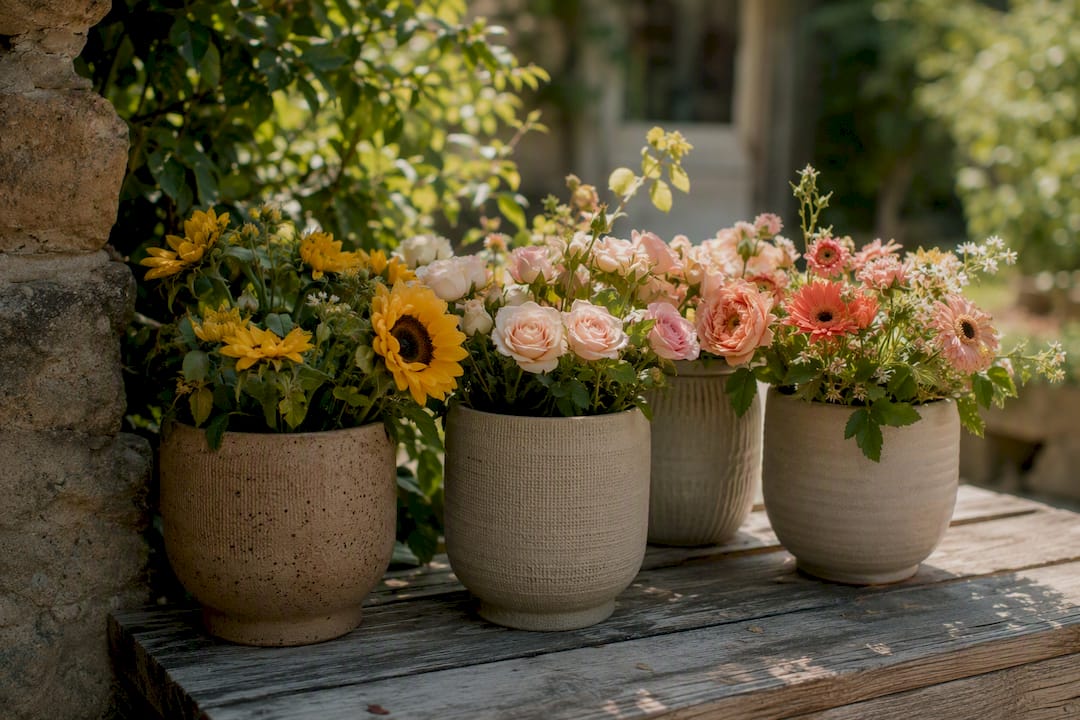
- Roses (Rosa spp.) — Classic, romantic, and genuinely safe. Trim the thorns before placing an arrangement anywhere a cat can jump.
- Sunflowers (Helianthus spp.) — Sturdy stems and bold color make these a low-fuss bouquet choice for busy households.
- Phalaenopsis orchids — Elegant and long-lasting, with minimal pollen shed compared to lilies or tiger lilies.
- Gerbera daisies (Gerbera jamesonii) — Bright, cheerful, and a common substitute for toxic mums in mixed arrangements.
- Zinnias (Zinnia spp.) — Hardy garden and cut flowers that hold up well in warm rooms.
- Alstroemeria (Peruvian lily) — Despite the name, this is not a true lily and carries none of the kidney risk. It’s one of the most common name mix-ups in floristry.
- Petunias (Petunia spp.) — Popular in outdoor beds and window boxes; safe if a cat nibbles a leaf outdoors.
- African violets (Saintpaulia spp.) — A safe flowering houseplant option for cat owners who want year-round color indoors.
None of this means unlimited snacking is fine. PetMD notes that “non-toxic” doesn’t mean “edible.” A cat who eats a mouthful of petals can still get an upset stomach or mild vomiting, even from something as harmless as a rose. Cut-flower preservative packets are worth watching too. Some poison centers flag the chemical additives in floral food as a minor irritant risk, so when in doubt, skip the packet and just change the water daily.
Flowers and Fillers That Don’t Belong in a Cat Home
True lilies are the flower every cat owner needs to recognize on sight. Lilium species (Easter lilies, tiger lilies, stargazer lilies) and Hemerocallis (daylilies) cause acute kidney failure in cats, and the FDA’s warning on lily toxicity is blunt about how little exposure it takes. A cat that brushes against the pollen and grooms it off, or drinks from the vase water, can be in kidney failure within 24 to 72 hours.
Other flowers and bouquet fillers to remove before they enter a cat household:
- Tulips (Tulipa spp.) — Toxic bulbs and stems; the bulb is the most concentrated risk.
- Daffodils (Narcissus spp.) — All parts contain toxic alkaloids, with the bulb again being the worst offender.
- Baby’s breath (Gypsophila) — A common filler that causes mild GI upset.
- Carnations (Dianthus) — Frequently mislabeled as “safe” on other lists, but the ASPCA classifies them as toxic, according to independent cross-checks of ASPCA data.
- Chrysanthemums — Contain pyrethrins, which can cause drooling and incoordination.
- Oleander and azalea/rhododendron — Both are severely toxic to cats and appear in some outdoor floral arrangements.
Severity guide: GI upset from mild toxins (baby’s breath, chrysanthemum) usually means a call to your regular vet during business hours. Anything involving a true lily, tulip bulb, oleander, or azalea warrants an emergency vet visit the same hour, not the same day.
Confirming a Flower Is Safe Before It Comes Home
- Read the tag for a scientific name, not just the common one. “Peruvian lily” (Alstroemeria) is safe. “Easter lily” (Lilium) is not. Common names vary by region, which is exactly how mix-ups happen, according to UC Davis Veterinary Medicine.
- Cross-check that name against the ASPCA list or Pet Poison Helpline. Search the genus, not the marketing name, e.g. “Lilium” rather than “stargazer.”
- Tell your florist directly what you need. A simple script works: “Can you leave out lilies, baby’s breath, and carnations, and confirm the scientific names of what’s in this arrangement? I have a cat at home.”
That last step matters more than people expect. Florists build bouquets for visual balance, not species safety, unless asked.
Placing and Maintaining Bouquets Safely
Even a verified safe bouquet needs smart placement. Cats are drawn to movement and height, so a vase on a windowsill or open shelf invites exactly the kind of jumping and pawing you’re trying to avoid.
- Set arrangements on a stable, heavy base away from counters cats use as launch points.
- Change vase water every one to two days and skip the preservative packet if your cat likes to drink from vases.
- Trim thorns off roses and remove heavy pollen stamens from orchids and lilies-in-name-only before displaying.
- Anchor tall arrangements so a curious paw can’t tip the whole vase over.
Pro Tip: Keep a small pot of cat grass near the bouquet. It gives your cat something safe to chew, which often redirects attention away from the flowers entirely.
If Your Cat Chews or Eats a Flower
- Remove access immediately and photograph the plant or bouquet tag so you can identify the exact species.
- Save a sample of the chewed material in a bag. Do not induce vomiting unless a vet specifically instructs you to.
- Call an emergency vet or the Pet Poison Helpline right away if there’s any chance the plant was a true lily, tulip, or another high-risk species. Have the plant name, the amount eaten, and your cat’s weight ready when you call.
- Expect urgency, not observation. Lily exposure treatment works best within hours, not days, so don’t wait to “see if symptoms show up.”
How Professional Florists Prevent Risk
Florists who work regularly with pet owners build habits around species labeling and substitution. La Fleurel handles rose arrangements and other cut-flower designs with scientific names on request, and excludes fillers like baby’s breath when a customer flags a cat at home. If you’re ordering from any florist, ask directly: “Can you confirm the scientific names in this bouquet and swap out any lilies or baby’s breath?” A florist who works with pet safety regularly will answer that without hesitation.
Planning Around Seasonal Availability
Cat-safe flowers aren’t equally available year-round, which matters if you’re planning a birthday bouquet or replanting a garden bed. Roses and gerbera daisies are available through most florists nearly every month, since both are grown in climate-controlled greenhouses. Sunflowers peak in late summer and early fall but often carry a premium in winter months when they’re shipped in from warmer growing regions.
Zinnias are strictly a warm-weather flower outdoors, blooming from early summer through the first frost, though florists can source them for arrangements slightly outside that window. Alstroemeria is one of the more consistent year-round cut flowers because it’s grown commercially at scale and ships well, which is part of why it shows up so often in mixed bouquets as a lily substitute. African violets, being houseplants rather than cut flowers, sidestep the seasonal question entirely. Petunias are a spring-through-fall outdoor bloomer and don’t hold up as cut flowers, so they’re better suited to a planter than a vase.
If you’re planning a garden bed specifically for a cat household, timing your planting around these windows means you’re not stuck reaching for a toxic filler flower just because it’s the only thing in season. Ask your florist ahead of a holiday rush (Valentine’s Day and Mother’s Day both drive heavy demand) which safe options they’ll actually have in stock, since availability tightens fast during those weeks.
Houseplants Often Mistaken for Flowers
Some of the most dangerous plants in a cat household aren’t cut flowers at all. They’re leafy houseplants people assume are decorative and harmless. Peace lilies are a prime example. Despite the name, a peace lily isn’t a true lily botanically, but it still contains insoluble calcium oxalate crystals that cause painful mouth and throat irritation if chewed, according to Gardenia’s guidance on peace lily toxicity. It’s a different mechanism than the kidney failure caused by true lilies, but it’s still a trip to the vet.
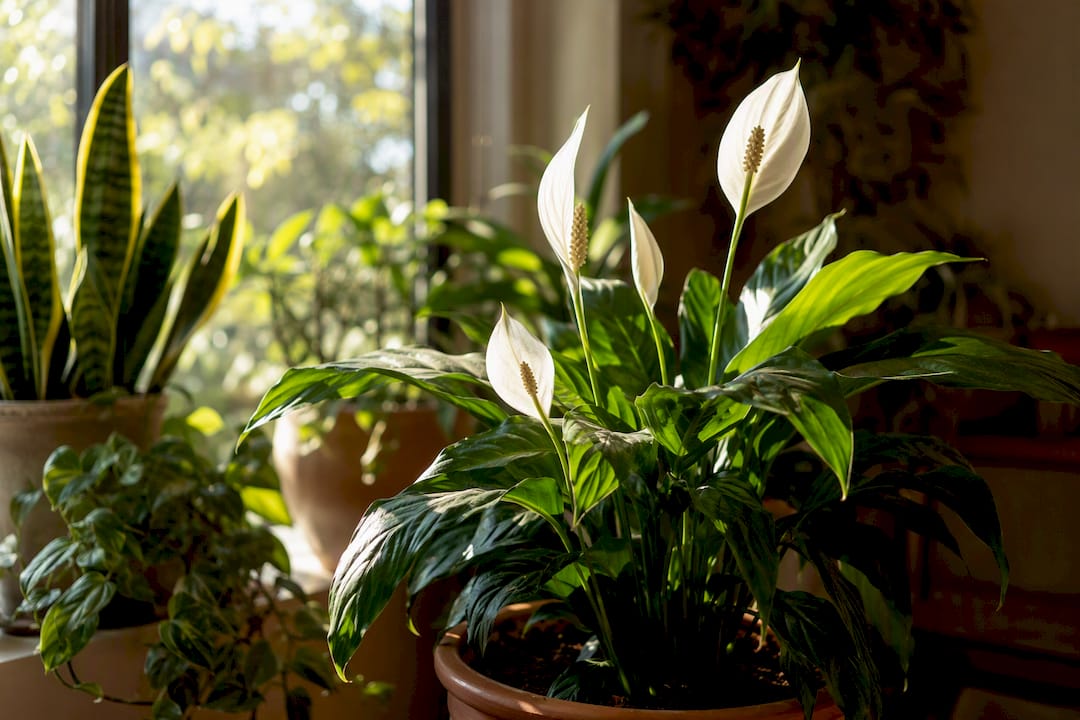
Calla lilies fall into the same trap. They’re not true lilies either, but they carry the same oxalate irritant that peace lilies do. On the safe side of this confusion, spider plants, Boston ferns, and areca palms are all commonly kept houseplants that pose no toxicity risk and can sit near a bouquet without adding danger.
The pattern worth remembering: any plant with “lily” in its common name deserves a scientific-name check before it enters your home, because the family tree splits wildly between “mildly irritating” and “kidney failure.” Snake plants and pothos, both extremely common in offices and homes, are toxic to cats and often get mistaken for harmless greenery simply because they’re everywhere.
Growing Cat-Safe Flowers Indoors and Outdoors
Growing your own reduces the guesswork that comes with bouquet shopping, but only if you plant with the same species-level scrutiny. Indoors, African violets are close to ideal: they stay compact, tolerate indirect light, and don’t produce the pollen volume that draws curious noses. Miniature roses grown in pots also work indoors if you have a bright window, though the thorns still need occasional trimming if your cat likes to bat at low branches.
Outdoors, sunflowers and zinnias are forgiving for beginner gardeners and both check out as safe on the ASPCA list. Petunias fill in garden borders well and tolerate the occasional curious nibble without consequence. If your cat has outdoor access, walk the perimeter of your yard and check for existing plantings of daffodils, tulips, azaleas, or oleander, since these are common in older landscaping and easy to forget about once established. Raised beds or hanging baskets add a physical barrier for outdoor cats who like to graze, while indoor plant stands placed away from furniture cats use to climb reduce access without sacrificing the display.
Recognizing Flower Poisoning Symptoms Early
Symptoms differ depending on what your cat ate, and catching the pattern early can shorten treatment time significantly. True lily poisoning typically starts with vomiting and lethargy within a few hours, progressing to loss of appetite and increased or decreased urination as the kidneys are affected. This progression can happen within 24 to 72 hours, which is why any lily exposure gets treated as an emergency regardless of how mild the cat seems at first.
Oxalate-containing plants like peace lilies, calla lilies, and philodendrons cause a different picture entirely: immediate drooling, pawing at the mouth, and difficulty swallowing from the physical irritation of the crystals. Mild GI toxins like baby’s breath or chrysanthemum tend to cause vomiting or diarrhea within a few hours and usually resolve without long-term damage, though a vet call is still warranted if symptoms persist past a day.
Watch for behavioral cues too. A cat that suddenly stops eating, hides more than usual, or seems unusually quiet after time spent near a bouquet is telling you something even before the more obvious symptoms show up.
Choosing Beauty That Doesn’t Compromise Safety
Cat owners shouldn’t have to choose between a beautiful bouquet and a safe home. The verified list above proves you don’t have to, as long as you check scientific names before anything toxic gets past the door. Florists who label species and remove risky fillers as a standard practice, the way La Fleurel does, make that choice easier. If you want a custom arrangement built entirely around what’s safe for your household, ask directly. It’s a fair request, and a good florist will treat it as one.
— Ovannes
Order a Cat-Safe Bouquet With Confidence
Skipping the guesswork on flower safety means working with a florist who already builds cat-friendly practices into every order. Lafleurel labels arrangements by species, removes lilies, baby’s breath, and other risky fillers on request, and offers same-day adjustments if you need something swapped before delivery within Valley Village and the surrounding Los Angeles area.

Rose-forward designs like the Quicksand Beige Roses arrangement are a straightforward, verified-safe choice, and the A Beautiful Day arrangement makes a good starting point if you want something customizable around cat-safe blooms specifically. For arrangements built around sensitive occasions, florists working through sympathy orders often follow similar species-conscious practices, as outlined in this funeral floral arrangement guide. When you’re ready to order, mention your cat at checkout or in your custom request, and Lafleurel will confirm exactly what’s in your bouquet before it leaves the shop.
Where to Verify Flower Safety Yourself
- ASPCA Cats Plant List: searchable, species-level non-toxic and toxic plant database.
- FDA lily warning: emergency guidance on true lily exposure.
- PetMD safe flowers list: veterinary overview with alternatives like cat grass.
- VCA Hospitals bouquet guide: shopper-focused advice for choosing bouquets.
- UC Davis lily toxicity page: scientific explanation of true lily nephrotoxicity.
Sources
- Toxic and Non-Toxic Plant List — Cats | ASPCA
- Lovely lilies and curious cats: a dangerous combination | FDA
- What Flowers and Plants Are Safe for Cats? | PetMD
- Lily toxicity in cats | UC Davis Veterinary Medicine