

Eco-friendly flowers are blooms grown and delivered with attention to soil health, fair labor, low transport emissions, and low-waste packaging. That means no synthetic floral foam, no needless plastic wrap, and a supply chain you can actually trace back to a farm.
Before you order anything, run through three checks:
- Choose local or seasonal blooms, or ones carrying a real certification like Rainforest Alliance.
- Decline any arrangement built on floral foam or wrapped in single-use plastic.
- Ask the florist where the flowers were grown, who certified them, and what happens to the waste.
A florist like Lafleurel, which sources locally-grown blooms around Valley Village, gives you a concrete example of what passing that checklist looks like in practice.
Key Takeaways
Choosing eco-friendly flowers comes down to verifying three things before you buy: where the flowers grew, how they were certified, and what happens to the packaging and waste.
| Point | Details |
|---|---|
| Ask before you order | Confirm the farm location, certification, and packaging policy before buying any arrangement. |
| Prioritize local and seasonal | Local bouquets carry roughly 1.7 kg of CO₂ versus 30+ kg for imported, air-freighted stems. |
| Reject floral foam | Ask for chicken wire, frogs, or a vessel instead of foam, which sheds microplastics as it breaks down. |
| Compost after the bouquet fades | Cut flowers are organic material; composting them avoids landfill methane and returns nutrients to soil. |
| Choose a verifiable local florist | Lafleurel sources locally-grown blooms with same-day delivery in Valley Village, matching the sourcing standards outlined above. |
Table of Contents
- What Makes Flowers Eco-Friendly
- How to Verify a Florist’s Sourcing Claims
- Why Local and Seasonal Beats Imported, Most of the Time
- Materials That Undercut an Otherwise Sustainable Bouquet
- How Lafleurel Applies These Standards in Practice
- Verifying Labor Practices Beyond a Certification Logo
- A Seasonal Guide to Buying Local Flowers
- What Happens After the Bouquet Fades
- Greenhouse-Grown vs. Field-Grown: The Environmental Trade-offs
- The Part of This Conversation Most Guides Skip
- Order Locally-Grown Flowers With Same-Day Delivery
- Sources
What Makes Flowers Eco-Friendly
Sustainability in floristry comes down to four things: soil health, biodiversity, water use, and how the people growing the flowers get treated. Healthy soil means fewer synthetic fertilizers and less chemical runoff. Biodiversity on a flower farm supports pollinators instead of wiping them out with monoculture rows. Water stewardship matters because commercial flower farming is thirsty work, and the way a farm manages irrigation determines whether nearby communities have enough water for drinking and agriculture.
Then there’s labor. A flower can be organically grown and still come from a farm paying workers unlivable wages in unsafe conditions. That’s why sustainable flower standards fold worker treatment into the same definition as environmental practice, rather than treating them as separate issues.
Three certifications show up most often, and they don’t all measure the same thing:
- Rainforest Alliance covers ecosystem protection, soil and water management, and working conditions on the farm.
- Fair Trade focuses specifically on worker pay and community investment.
- Veriflora is built specifically for cut flowers and potted plants, addressing both environmental and social criteria in that niche.
None of these three is a universal seal of approval. Rainforest Alliance says almost nothing about wages beyond baseline labor standards, and Fair Trade says little about biodiversity. Reading the label matters more than trusting the logo.
How to Verify a Florist’s Sourcing Claims
“Sustainably sourced” on a product page means almost nothing on its own. It’s the floristry equivalent of “natural” on a snack wrapper: technically true, legally safe, and functionally useless without more detail. The way to cut through that vagueness is to ask direct questions and see how specific the answer gets.
Three questions work in almost every situation, whether you’re ordering online or standing at a farmers’ market stall:
- Where exactly were these flowers grown? A real answer names a farm or region. A vague answer says “responsibly sourced” and stops there.
- Do you have a certification, and can I see who the grower is? Certified farms can typically be named. If a florist can’t tell you who grew the flowers, the certification claim is worth doubting.
- What’s your packaging and waste policy? Ask specifically about floral foam, plastic sleeves, and what happens to stems after an event.
Imported flowers aren’t automatically the wrong call. A certified farm-direct model with transparent labor practices and carbon-conscious shipping can beat a “local” grower who still uses heavy pesticides and floral foam. The distinction that matters is transparency, not geography alone. But when a grower is local, seasonal, and verifiable, that’s usually the simpler and lower-impact choice, and it deserves priority when it’s available.
Pro Tip: If a florist answers all three questions in one sentence without hesitating, that’s usually a good sign. Rehearsed marketing language, on the other hand, tends to dodge specifics.
Why Local and Seasonal Beats Imported, Most of the Time
Transport is where a lot of the environmental cost of flowers actually lives, and the gap is bigger than most shoppers assume. A bouquet sourced locally, generally within about 200 miles, carries a carbon footprint of roughly 1.7 kg of CO₂, while an imported, air-freighted bouquet grown in a heated greenhouse can top 30 kg of CO₂. That’s not a marginal difference. It’s closer to a twentyfold gap, driven almost entirely by how the flowers got to you.
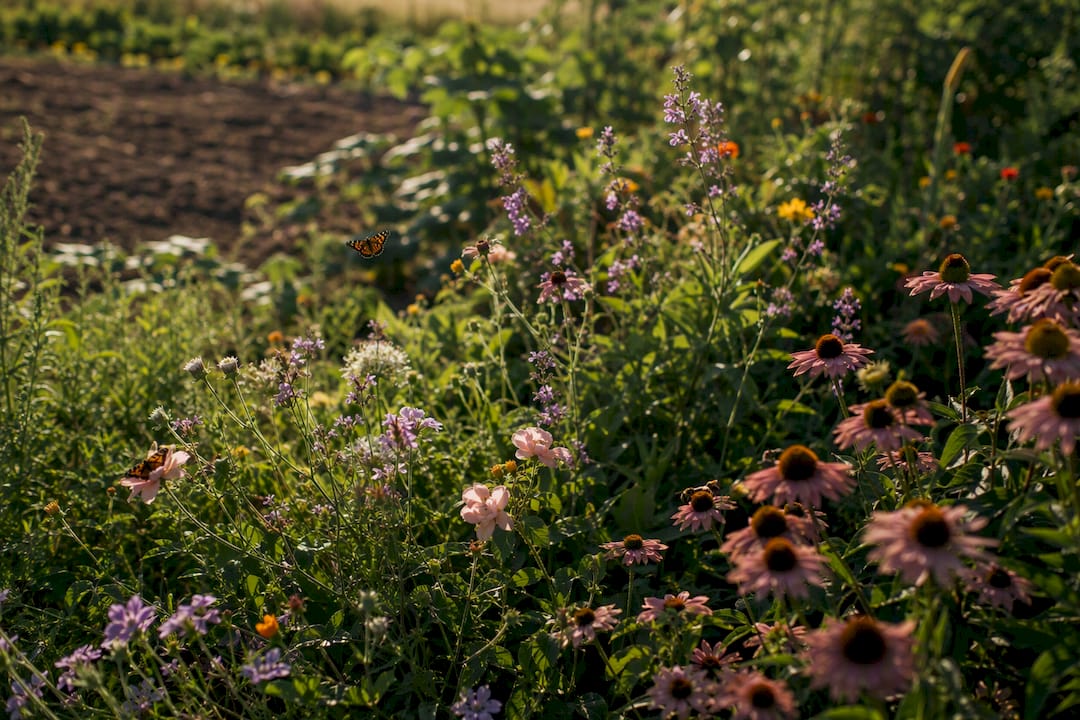
Peak gifting days make this worse. One estimate put Valentine’s Day flower shipping in the United States at roughly 9,000 tons of CO₂ in a single week, largely from air freight racing cut flowers to market before they wilt.
Two practical alternatives cut that footprint further:
- Farmers’ markets and flower CSAs let you buy directly from a grower, which builds in transparency that big retail supply chains rarely offer.
- Growing your own starter flowers (zinnias, cosmos, and sunflowers are forgiving for beginners) eliminates transport and most industrial inputs entirely, and it’s one of the lowest-impact options available to a home gardener.
Neither option replaces a florist for a same-day gift. But for everyday enjoyment, they’re worth building into your routine.
Materials That Undercut an Otherwise Sustainable Bouquet
Floral foam is the biggest offender in the industry, and most shoppers have never heard of it by name. It’s a green, spongy block florists use to hold stems in place, and it’s made from a non-biodegradable plastic that breaks down into microplastics rather than decomposing. A bouquet can check every other sustainability box and still be sitting in foam that will outlast the flowers by centuries.
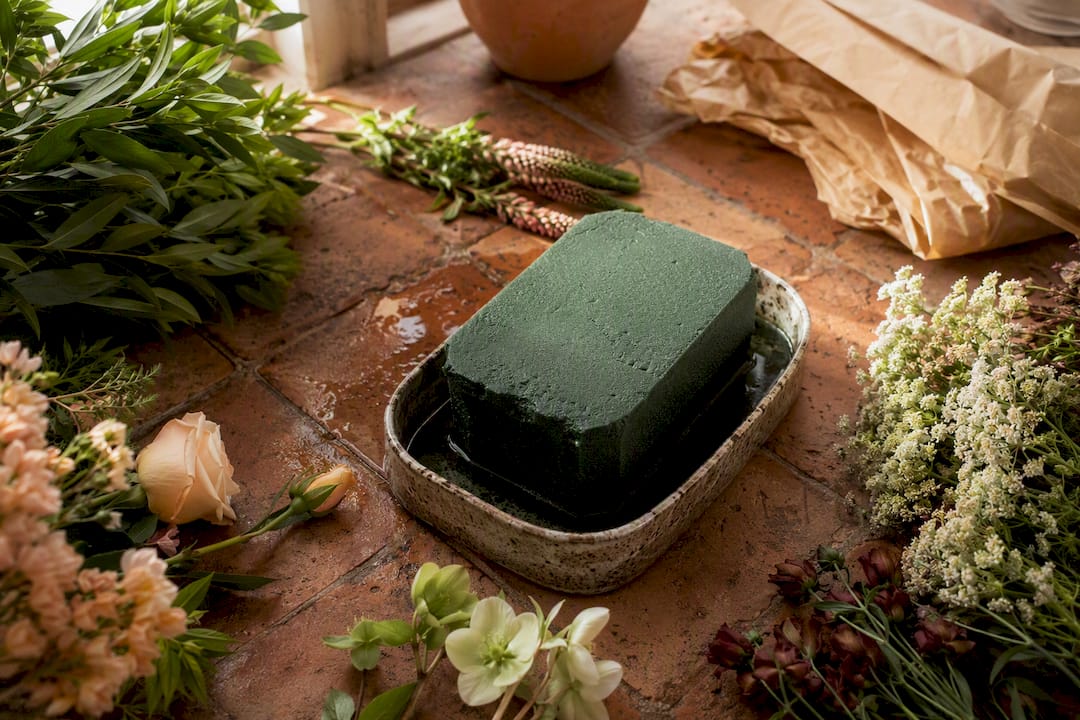
The alternatives are old techniques, not new inventions: chicken wire, flower frogs, water tubes, and simple vessels have held stems in place for as long as floristry has existed. Ask for one of these by name if you’re placing a custom order.
Packaging matters too. Look for compostable paper wraps, recyclable boxes, and minimal filler instead of shrink wrap and floral tape.
- Decline floral foam and ask for wire, frogs, or a vessel instead.
- Request compostable or recyclable packaging over plastic wrap.
- Ask whether stems can be composted after the arrangement fades, rather than tossed in the trash.
Pro Tip: Many studios will compost trimmings for you if you ask, or point you toward a local composting program. It costs them nothing and it keeps organic waste out of a landfill.
How Lafleurel Applies These Standards in Practice
Lafleurel builds its arrangements around locally-sourced, naturally-grown blooms, and every order ships same-day within Valley Village and the surrounding Los Angeles area. That combination matters for the same reason the local-versus-imported math does above: shorter supply chains mean fresher flowers and a smaller transport footprint, whether the order is a romantic garden arrangement or a classic bouquet built for a same-day gift.
Locally-sourced, naturally-grown blooms aren’t a marketing line, they’re the standard every arrangement gets measured against before it goes out the door.
You can apply the same scrutiny to any florist’s site that you’d apply here. Look for:
- A clear statement of where flowers are sourced, not just a generic “quality flowers” claim.
- Product pages, like Lafleurel’s rose bouquets, that describe the actual flowers rather than stock photography with vague copy.
- Any mention of composting, waste reduction, or packaging choices on the site or blog.
If a florist’s page can’t answer those three points, that’s the gap worth asking about directly.
Verifying Labor Practices Beyond a Certification Logo
A certification sticker tells you a third party reviewed a farm at some point. It doesn’t tell you what’s happening on that farm right now, and audits happen on a schedule, not continuously. If ethical labor matters to you as much as environmental impact, treat certification as a starting point rather than the finish line.
Ask a florist or supplier how often their growers are audited and by whom. A vague “we work with responsible farms” answer is worth less than a florist naming the specific certifying body and roughly when the last review happened. Farms that are proud of their labor standards tend to talk about them specifically: wages relative to local cost of living, safety equipment for pesticide handling, and whether workers have channels to report problems without retaliation.
Farm size and structure matter too. Smaller, family-run or cooperative farms sometimes can’t afford formal certification but treat workers well because the owner works the same fields. Certification costs money, and that cost can price out smaller operations that would otherwise qualify. Don’t assume the absence of a logo means poor labor practices, and don’t assume the presence of one means the story ends there.
The most reliable signal remains directness: a grower or florist willing to discuss wages, hours, and safety without deflecting to a certification badge as the entire answer.
A Seasonal Guide to Buying Local Flowers
Buying in season is the single easiest way to guarantee a flower didn’t travel far or get forced into bloom in an energy-intensive greenhouse. Seasonal windows shift by region and climate, but the general pattern holds almost everywhere temperate.
Spring brings tulips, daffodils, ranunculus, and peonies, most of which have short but intense local seasons that run just a few weeks. Summer is the most generous season almost anywhere: zinnias, dahlias, sunflowers, cosmos, and garden roses all thrive in warm months and are usually the cheapest and most abundant local option you’ll find at a market. Fall shifts toward chrysanthemums, dahlias holding on late, and ornamental grasses. Winter is the hardest season for genuinely local flowers in most of the country, which is exactly when imported, air-freighted stems dominate grocery store shelves.
If you’re shopping in winter, that’s the season to lean hardest on certification and sourcing transparency rather than the word “local,” since true local options shrink dramatically. Checking what’s blooming at a nearby farmers’ market before you order is a quick habit that pays off in both cost and impact. A florist that adjusts its offerings by season, rather than running the same catalog year round, is usually paying attention to this.
What Happens After the Bouquet Fades
A flower’s environmental footprint doesn’t end at delivery. What happens after it wilts matters almost as much as how it was grown.
Cut flowers are organic material, which means they’re compostable in almost every case, stems, leaves, and all. Tossing a spent bouquet in the regular trash sends it to a landfill, where it decomposes slowly under anaerobic conditions and produces methane rather than breaking down cleanly. Composting it, whether in a backyard bin, a municipal green-waste program, or through a local drop-off, returns those nutrients to soil instead.
Some florists take this further. Composted stem trimmings and spent arrangements can go back to farms as soil amendment, closing a loop that starts and ends in the ground. That’s a meaningfully different outcome than a landfill, and it’s worth asking a florist whether they have any arrangement like it.
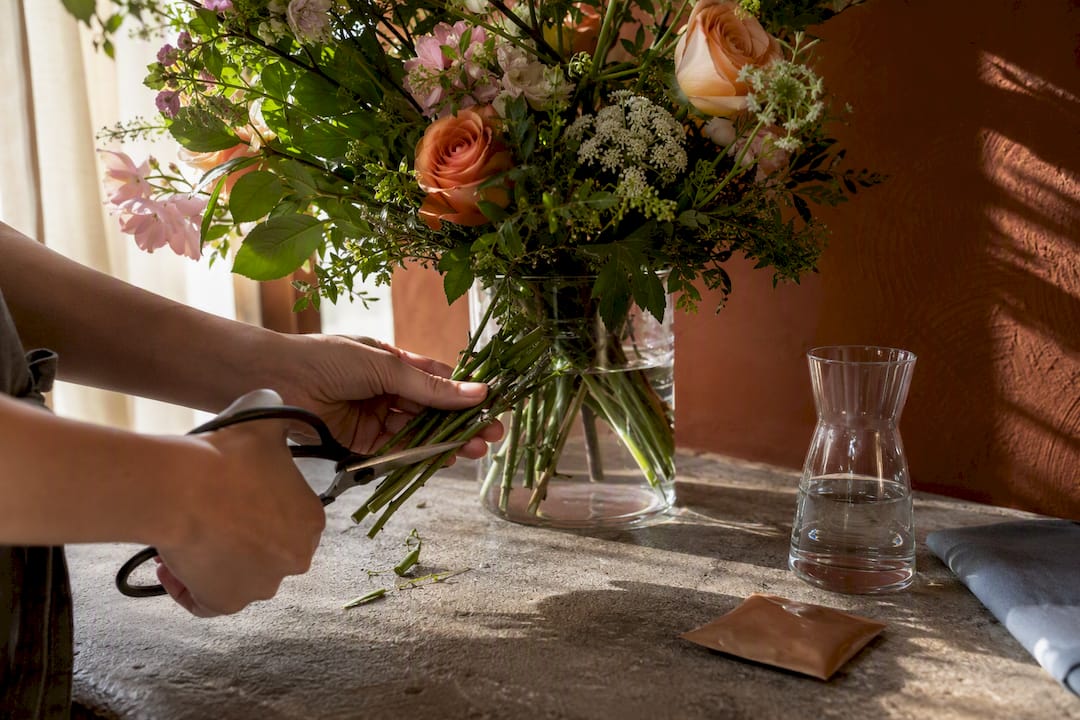
A few practical habits stretch a bouquet’s life and reduce waste on the front end, too: trim stems at an angle every few days, change the water, and keep arrangements away from direct heat or fruit bowls (ripening fruit releases ethylene gas that speeds up wilting). When flowers do fade, composting takes minutes and keeps the entire lifecycle, from farm to soil, closed.
Greenhouse-Grown vs. Field-Grown: The Environmental Trade-offs
Greenhouses solve one problem and create another. Growing flowers under glass or plastic lets a farm produce blooms out of season, which is exactly how roses show up in January regardless of climate. That control comes from heating, artificial lighting, and often more intensive irrigation systems, all of which add energy costs that field-grown flowers simply don’t carry.
Field-grown flowers, grown outdoors during their natural season, generally use less energy per stem because they rely on sunlight and ambient temperature instead of climate control. The trade-off is availability: field-grown flowers exist only when the season allows, which is exactly why the seasonal guide above matters so much to anyone trying to shop with a lighter footprint.
Neither model is automatically better in every case. A well-managed greenhouse using renewable energy and efficient water systems can outperform a field-grown farm relying on heavy pesticide use and wasteful irrigation. But as a general rule, a flower grown in its natural season and climate, without artificial heating or lighting, carries a smaller energy footprint than the same flower forced into bloom out of season under glass. When in doubt, seasonal and field-grown is the safer default.
The Part of This Conversation Most Guides Skip
Most advice on buying eco-friendly flowers stops at “look for a certification,” and that’s not wrong, it’s just incomplete. Certifications verify a snapshot, not an ongoing relationship. The more useful skill is learning to ask a florist direct questions and noticing whether the answers get specific or stay vague.
The conventional advice also treats local and certified as competing options, when they’re really answering different problems. Local solves for transport emissions and transparency. Certification solves for growing practices and labor conditions in places you can’t easily verify yourself, especially for anything grown out of season or imported. The strongest choice usually combines both: local when it’s genuinely available, certified and transparent when it isn’t.
If you take one thing from all this, prioritize the direct question over the label. A florist willing to tell you exactly where a peony came from and what happens to the trimmings afterward is doing more to earn your trust than any logo on a card. That’s the standard worth holding every florist to, including the one you order from next.
— Ovannes
Order Locally-Grown Flowers With Same-Day Delivery
Lafleurel is built around the exact criteria this guide walks through: locally-sourced, naturally-grown blooms, arranged by hand, with same-day delivery across Valley Village and the surrounding Los Angeles area. You’re not choosing between a fast option and a sustainable one here, both come standard.

Every arrangement is built to order rather than pulled from a mass-produced catalog, which means you can ask the same sourcing questions covered above and get a real answer. Browsing a romantic garden arrangement with peonies or a classic red rose bouquet shows you exactly what’s going into the design before you order.
If you need something custom, whether it’s a specific color palette, a corporate event, or a same-day delivery for a last-minute occasion, reach out through Lafleurel’s site to start that conversation directly. Same-day delivery within Valley Village means you don’t have to trade sustainability for speed.
Sources
- Sustainable Flowers | Washington University in St. Louis
- MSU Extension floristry guidance (avoid floral foam)
- Picking sustainable flowers: essential answer | Stanford Magazine