

Recut every stem at a 45 degree angle underwater, then submerge drooping blooms in lukewarm water for a period suitable to severity, generally about half an hour to an hour. Scrub the vase, refill it with fresh preservative water, and re-cut the stems one more time before arranging. Most roses firm back up within a few hours, though timing may vary. That said, revival buys you extra days, not a second full life.
TL;DR:
- Soaking severely wilted roses in lukewarm water for 20 to 60 minutes can often revive them, especially if they are drooping due to dehydration.
- Recutting stems underwater at a 45 degree angle and cleaning the vase thoroughly with a preservative water mixture prevents bacteria buildup that causes wilting.
- Do not waste time soaking roses with dark, shriveled stems or dry, discolored cut surfaces, as they are unlikely to recover.
- Maintaining the vase in a cool place, recutting stems every few days, and avoiding direct heat or fruit nearby can extend a rose’s revived lifespan.
- Acting immediately at the first sign of drooping increases the chances of extending a rose’s freshness by several days, making prompt care essential.
Table of Contents
- How to Revive Wilted Roses: The Full Rescue Routine
- When and How to Soak a Rose Correctly
- Why Recutting and Cleaning Actually Fix a Wilted Rose
- Vase Hygiene and Preservative Mixes That Actually Work
- When a Rose Is Past Saving
- Keeping Revived Roses From Wilting Again
- Florist Notes on Handling Roses Before and After Delivery
- A Florist’s Honest Take on Reviving Wilted Roses
- If Your Roses Don’t Bounce Back, Order Fresh From Lafleurel
- Sources
How to Revive Wilted Roses: The Full Rescue Routine
A drooping rose is not dying. It is thirsty, air-blocked, or sitting in bacteria-fouled water, and every one of those problems has a fix. Work through the steps in order rather than skipping ahead, because each one sets up the next.
- Strip the stems. Pull off any leaves that will sit below the water line, and trim away bruised or browning petals. Submerged foliage rots fast and feeds bacteria that clog the stem.
- Cut underwater at 45 degrees. Use sharp garden shears, hold the stem under running water or in a bowl, and remove at least an inch. The angled cut exposes more surface area for water uptake and keeps the base from resting flat against the vase floor.
- Soak the whole rose if it’s badly wilted. Lay the stem and flower head in a clean sink or tub of lukewarm water for 20 to 60 minutes. This is the step most people skip, and it’s the one that actually rescues a severely drooping bloom, according to florist Melinda Myers’s rehydration method.
- Clean the vase while the roses soak. Wash it in hot, soapy water, then fill it with fresh water and a dose of flower food, or a DIY preservative if that’s what you have on hand.
- Re-cut and re-arrange. Pull the roses from the soak, trim the stems again (underwater if you can manage it), and place them straight into the clean vase. Check the water every one to two days and top it off or replace it as it clouds.
Skip the vase cleaning step and you undo most of the good the soak just did. Bacterial water buildup is a common cause of roses wilting again soon after revival.
When and How to Soak a Rose Correctly
Submersion isn’t for every droopy bouquet. Save it for roses that came through a rough delivery, sat dry for hours before you got them in water, or are wilting hard enough that a simple re-cut and fresh water alone probably won’t cut it.
Water temperature matters more than most people assume. Lukewarm water tends to speed up uptake because warmer water moves through stem tissue faster than cold, though some florists lean cool to protect delicate outer petals from bruising. Lukewarm is the safer default for most home setups.
- Soak time runs 20 to 60 minutes depending on severity. Mild droop needs less; a rose that’s been out of water for hours needs the full hour.
- If you’re soaking several stems at once, loop a rubber band loosely around the bunch so they don’t tangle or snap against each other.
- Lift heavy-headed roses out slowly and support the bloom with your palm. A waterlogged head is heavier than it looks and snaps necks easily.
- If the neck stays shriveled and dark after a full soak, that stem likely isn’t coming back. Move on rather than repeating the soak.
Pro Tip: Don’t crowd the sink. Give each stem room to float freely, otherwise petals bruise against each other and you’ll trade wilting for bruising.
Why Recutting and Cleaning Actually Fix a Wilted Rose
Roses wilt for a boring but fixable reason: something is blocking the xylem, the thin tubes that pull water up the stem. Cut a stem in open air and a tiny air bubble often gets sucked into that opening, forming a lock that stops water from moving past it. Cutting underwater prevents that air pocket from ever forming in the first place.
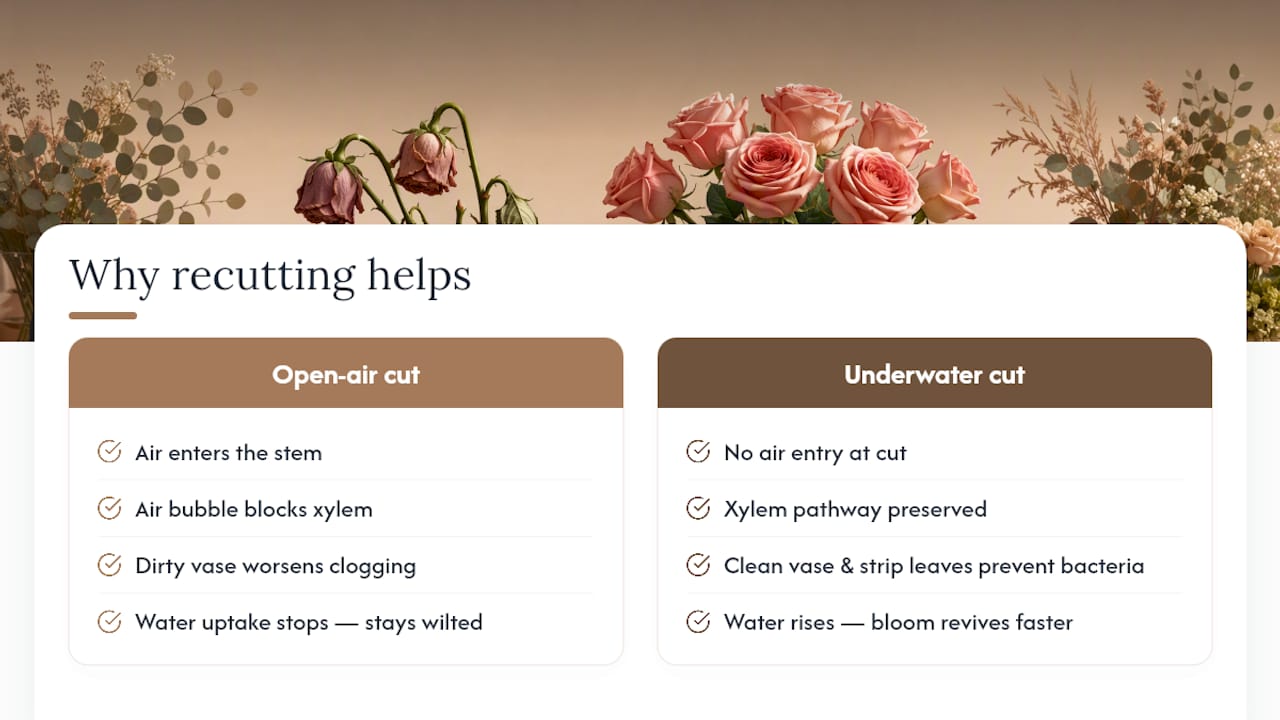
Dirty vase water compounds the problem. Bacteria multiply in stagnant water and clog the same xylem tubes from the inside, which is why cleaning the vase and stripping submerged leaves matters as much as the cut itself. Warmer water speeds transpiration and uptake, which is part of why a lukewarm soak often revives a bloom faster than cold water does.
Vase Hygiene and Preservative Mixes That Actually Work
A slimy vase undoes every other step on this list. Wash it in hot, soapy water first. For buildup that won’t budge, a vinegar and baking soda soak or a very light bleach rinse (a teaspoon of bleach per quart of water, followed by a thorough rinse) strips away the biofilm that harbors bacteria, a method backed by wikiHow’s flower revival guide.
Commercial flower food isn’t just sugar water. It combines three things: sugar to feed the stem, an acidifier to help water move upward, and a biocide to keep bacteria from taking hold, a formula detailed in Purdue Extension’s cut flower guide. If you’re out of packets, a DIY version gets you close.
- Mix 2 tablespoons of sugar and 2 tablespoons of white vinegar per quart of water for a workable substitute.
- Skip aspirin and skip strong bleach. If you use bleach at all, keep it to the light dilution above; anything stronger burns stem tissue.
- Change the water and refresh the preservative every 1 to 2 days, even if it still looks clear.
Florist reporting suggests that acting on a wilting bouquet right away, rather than waiting a day to see if it “fixes itself,” can extend a rose’s usable life by several days.
When a Rose Is Past Saving
Some roses won’t come back, and it’s worth knowing the difference before you spend an hour soaking a lost cause. A neck that’s turned dark, shriveled, and won’t firm up after a full soak is usually done. Same with stems that feel mushy or slimy rather than firm.
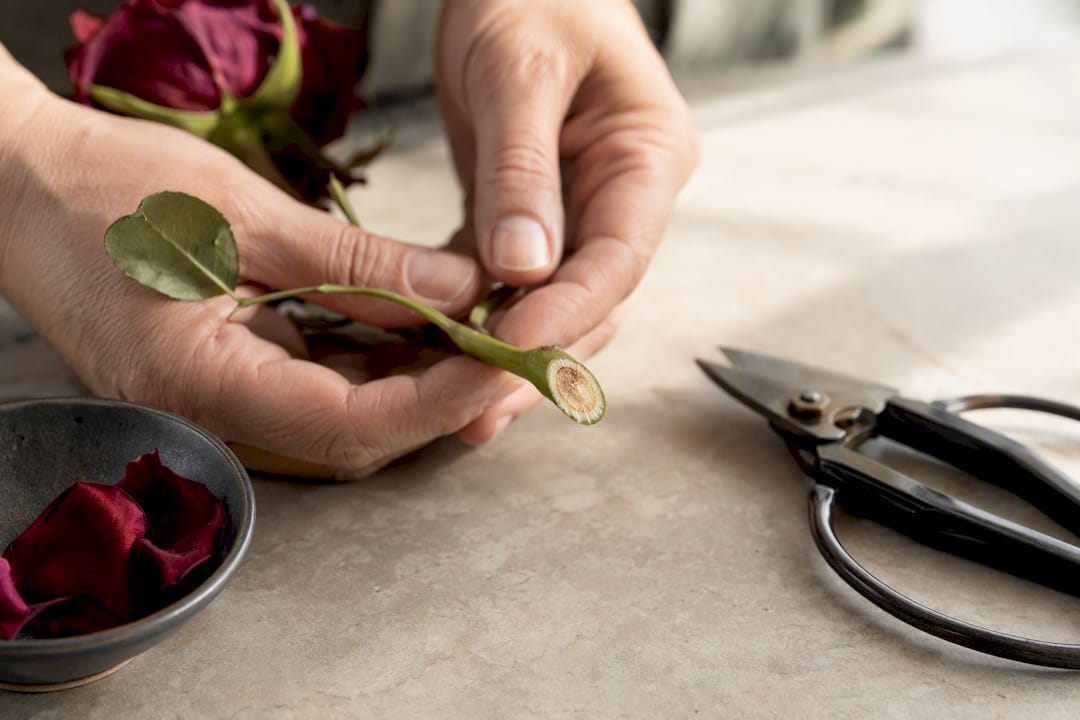
A quick check: snip a small piece off the stem base. If the cut surface looks dry rather than moist, water isn’t moving through it anymore. At that point your options are deadheading for a bowl of petals, pressing a few blooms to dry, or ordering a fresh replacement if the bouquet needs to look its best for a specific event.
Keeping Revived Roses From Wilting Again
Getting a rose to perk back up is only half the job. Where you put it afterward decides whether it lasts three more days or wilts again by tomorrow.
- Keep the vase in a cool room, away from direct sun, heating vents, and a fruit bowl. Ripening fruit releases ethylene gas, which speeds up petal drop.
- If your kitchen runs warm, move roses to the refrigerator overnight for a few hours at a time, as long as there’s no fruit sharing the shelf. Cooler temperatures slow water loss through the petals.
- Re-cut the stems every two to three days and swap in fresh preservative water each time. Pull out any petals that drop into the vase before they start to rot.
Garden roses still on the bush follow different rules entirely: deep, infrequent watering and a layer of mulch do more for wilting prevention than anything you’d do for a cut stem.
Pro Tip: A light mist on the petals once a day keeps them from drying out between water changes, especially in a heated room during winter.
Florist Notes on Handling Roses Before and After Delivery
Every bundle that leaves Lafleurel gets its stems freshly cut and hydrated right before packaging, which is part of why our handcrafted rose arrangements tend to arrive firmer than roses that sat boxed for a day in transit. That head start matters: a rose that begins hydrated wilts slower and responds better to a revival attempt later.
Customers who follow the soak-and-recut routine typically see two to four extra days of good color and shape, though results vary with how far along the wilting was to begin with.
A Florist’s Honest Take on Reviving Wilted Roses
Try the rescue the moment you notice drooping. Waiting a day to “see if it gets better on its own” is the single most common reason a salvageable rose turns into a lost one. But if the bouquet is for a wedding, an anniversary dinner, or a funeral tomorrow, don’t gamble an hour of soaking against a moment that only happens once. Sometimes the smarter move is simply ordering fresh.
— Ovannes
If Your Roses Don’t Bounce Back, Order Fresh From Lafleurel
Sometimes a rose is past the point a soak and a clean vase can fix, and when that bouquet was meant for something that matters, waiting around isn’t worth the risk. This florist handcrafts every arrangement from locally sourced, naturally grown blooms and offers same-day delivery in its local service area, so a replacement can be on someone’s doorstep the same afternoon instead of days later.

If roses are the whole point, our Quicksand Beige Roses arrangement or a classic dozen makes a clean swap for a bouquet that didn’t make it. For anything beyond roses, from birthdays to sympathy arrangements, browse what’s available and place an order through Lafleurel’s Valley Village delivery service to get something fresh moving your way today.
Sources
- Make cut flowers last | Purdue Extension
- Reviving wilted cut flower roses | Melinda Myers
- Why your rose plant is wilting and how to revive it | The Spruce
- 3 Ways to Revive Roses - wikiHow