

The strongest lobby floral strategy pairs one large statement installation at the main focal point with two to four smaller supporting arrangements near the desk, lounge, and elevators. Build the palette around orchids, hydrangeas, garden roses, dahlias, and one sculptural branch element, then run a preserved baseline with fresh weekly highlights so the space never looks static or overdone.
TL;DR:
- Preserved floral installations last from one to three years without maintenance, making them ideal for permanent lobby statements.
- Fresh arrangements should be refreshed weekly, with a trial period of four to six weeks recommended to assess site-specific durability.
- Using local flowers reduces carbon footprint, improves longevity, and supports sustainable sourcing practices.
- Optimal flower choices depend on property style, with classical, modern, boutique, and wellness spaces requiring distinct arrangements and vessel materials.
- Avoid strongly fragrant or allergenic flowers near guest seating, and prioritize low-maintenance, toxicity-free options like preserved or premium faux stems.
Table of Contents
- Hotel Lobby Flower Ideas Mapped to Property Style
- Placement and Scale: Where Arrangements Belong
- Maintenance, Refresh Cadence, and Budget Planning
- Preserved vs. Fresh vs. Faux: What Actually Works Long-Term
- Seasonal Palettes That Shift the Mood Without a Full Redesign
- Sustainability and Sourcing Choices for Lobby Programs
- Keeping Public Floral Displays Safe and Allergy-Aware
- What Most Hotels Get Wrong About Lobby Flowers
- Bring La Fleurel’s Local Floral Program to Your Lobby
- Sources
Hotel Lobby Flower Ideas Mapped to Property Style
The right flowers depend on what the building is trying to say before a guest reaches the front desk. A grand hotel with marble floors needs a different floral vocabulary than a 40-room boutique property with reclaimed wood accents, and matching stems to architecture is where most in-house attempts go wrong.
Classical luxury properties lean on white phalaenopsis orchids and garden roses in dense, rounded silhouettes. Crystal or polished metal vessels reflect chandelier light and reinforce the formality guests expect at check-in.
Modern sculptural lobbies benefit from tall, architectural lines rather than volume. Phalaenopsis orchids, calla lilies, and bare or budding branches in hand-thrown ceramic or blown glass containers echo the clean geometry of contemporary interiors.
Boutique garden-style hotels do best with looser, less symmetrical arrangements. Garden roses and seasonal dahilas mixed with textured foliage in terracotta or vintage-inspired vessels feel collected rather than ordered, which suits properties built around a residential, local feel. La Fleurel’s own garden-style arrangement with peonies is a close model for this look.
Spa and resort lobbies call for restraint. Potted orchids, eucalyptus, and lavender in low, calming groupings support the wellness positioning without competing with diffused scent or soft lighting.
Two additional options round out the toolkit:
- A preserved floral signature installation works well as a permanent statement piece near a grand staircase or elevator bank, holding its color and form for one to three years with no watering or replacement.
- A premium faux arrangement earns its place in low-light corridors or high-traffic secondary areas where fresh stems would wilt fast and preserved florals would need frequent dusting; choose silk or latex-petal stems with realistic texture, not stiff polyester blooms that read as plastic under lobby lighting.
Placement and Scale: Where Arrangements Belong
Scale and location decisions matter as much as the flowers themselves, since even a beautiful arrangement fails if it blocks a sightline or crowds a walking path.
- Main statement table or console. This is the anchor piece, typically 30 to 48 inches tall including the vessel, sized to be seen from the entrance doors without overwhelming the console it sits on.
- Reception desk. Keep arrangements low, generally under 14 inches, so they never block eye contact between staff and arriving guests.
- Lounge and cocktail tables. Compact arrangements in the 8 to 12 inch range work best here, and unscented stems matter most near seating where food or drinks will be served.
- Concierge and bell desk. A small, tidy accent piece signals attention to detail without competing for counter space needed for luggage tags and key cards.
- Corridors and elevator landings. Slim profile pieces or wall-mounted arrangements avoid narrowing already tight walkways.
- Bar areas. Low, low-fragrance arrangements protect the sensory experience of guests ordering drinks nearby.
Vessel material should echo the building’s own finishes: crystal or polished metal for classical properties, hand-thrown ceramic or blown glass for modern ones, terracotta or curated vintage finds for boutique spaces. A mismatched vessel can undercut an otherwise well-designed arrangement faster than the wrong flower choice.
Maintenance, Refresh Cadence, and Budget Planning
A weekly refresh is the standard cadence for hotel lobby arrangements, with premium properties upgrading to twice-weekly service or mid-week touch-ups when foot traffic is heavy enough to shorten a bloom’s usable life.
Before locking into a full contract, request a four to six week trial period. Site-specific light exposure, air conditioning airflow, and traffic patterns all affect how long particular stems actually hold up, and a short trial catches problems before they’re written into a year-long agreement.
Cost drivers worth planning around:
- Number of locations across the property (lobby, restaurant, spa, meeting foyers)
- Scale and height of the statement installation
- Seasonal stem availability and holiday supplement weeks
- Delivery timing and installation complexity, especially early-morning access needs
Pro Tip: Ask any vendor bidding on a contract program for proof of insurance and a single named point of contact. Losing a delivery window or a liability document mid-contract is far more disruptive than a flower substitution.
Contract programs built around a site visit tend to hold cost steady because the florist maps scope, vessel rotation, and seasonal palette changes in advance rather than reacting week to week.
Preserved vs. Fresh vs. Faux: What Actually Works Long-Term
Each option solves a different problem, and the properties that get this right usually blend more than one.
- Preserved flowers hold peak appearance for one to three years with no watering, no wilting, and no weekly delivery logistics, making them a strong, cost-effective baseline for a permanent lobby statement.
- Fresh flowers deliver scent, color saturation, and a sense of occasion that preserved stems can’t match, but they peak for roughly three to four days before decline sets in.
- Artificial flowers make sense in low-light corners or extremely high-traffic zones where nothing organic survives well, but only premium, realistic-texture faux stems read as intentional rather than cheap.
The hybrid most hospitality florists recommend: a preserved installation as the permanent baseline, with fresh arrangements layered in for weekends, VIP arrivals, and seasonal peaks. This concentrates the fresh-flower budget on the moments guests actually notice, instead of spreading it thin across every day of the month.
Seasonal Palettes That Shift the Mood Without a Full Redesign
Swapping stems for the season is table stakes. Where lobbies actually feel considered is in how the color story shifts with them, without touching vessels, furniture, or lighting.
Winter lobbies read warmer with deep burgundy, cream, and evergreen accents worked into an existing preserved base, while spring calls for a shift toward blush, soft yellow, and pale green that lightens the same footprint. Summer palettes can push brighter, coral and citrus tones paired with dahlias or garden roses, and fall works best with amber, rust, and burnt orange stems layered against warm wood or brass vessels already in the space.
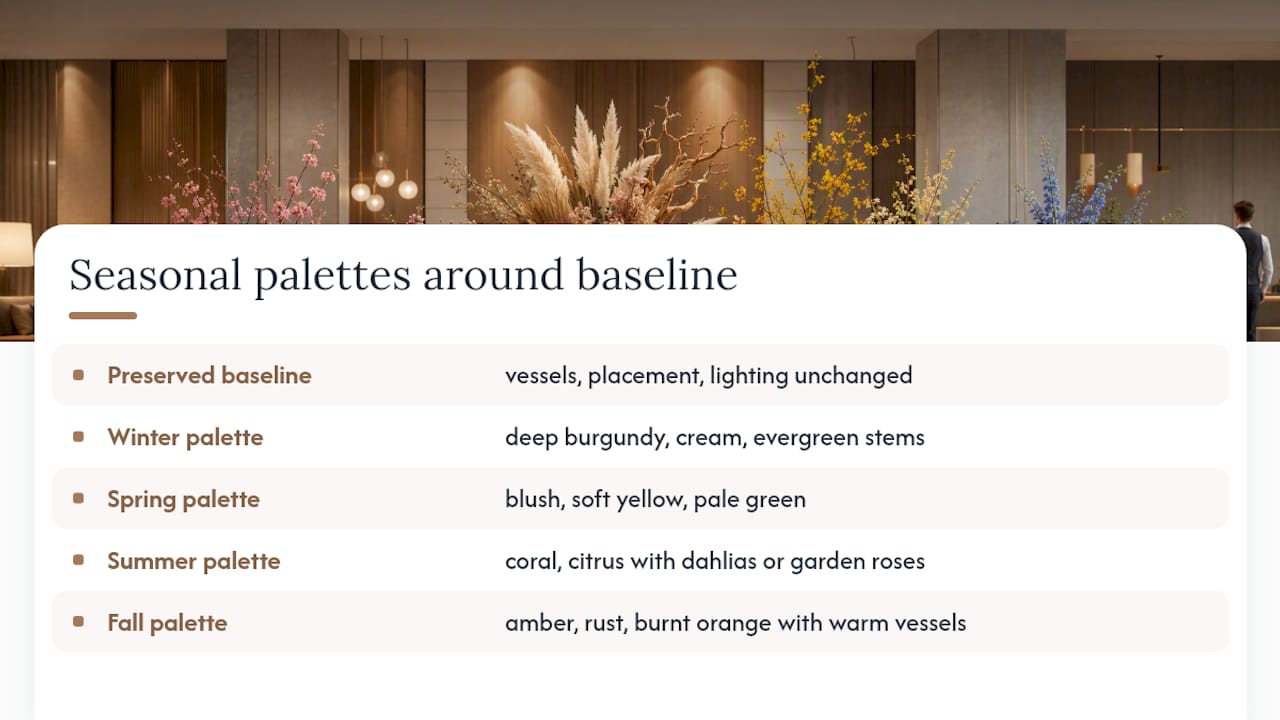
The trick is changing only the flowers and maybe the ribbon or accent foliage, never the vessel or the placement plan built earlier in the season. That keeps the visual identity of the lobby consistent while still signaling that the property pays attention to the calendar. A quick note in La Fleurel’s seasonal blog coverage on rotating palettes is a useful reference point for planning a full-year color calendar in advance, rather than scrambling every quarter.
Holiday supplement weeks (Thanksgiving through New Year, plus spring holidays) are the one exception worth budgeting separately, since demand and stem pricing both spike during those windows.
Sustainability and Sourcing Choices for Lobby Programs
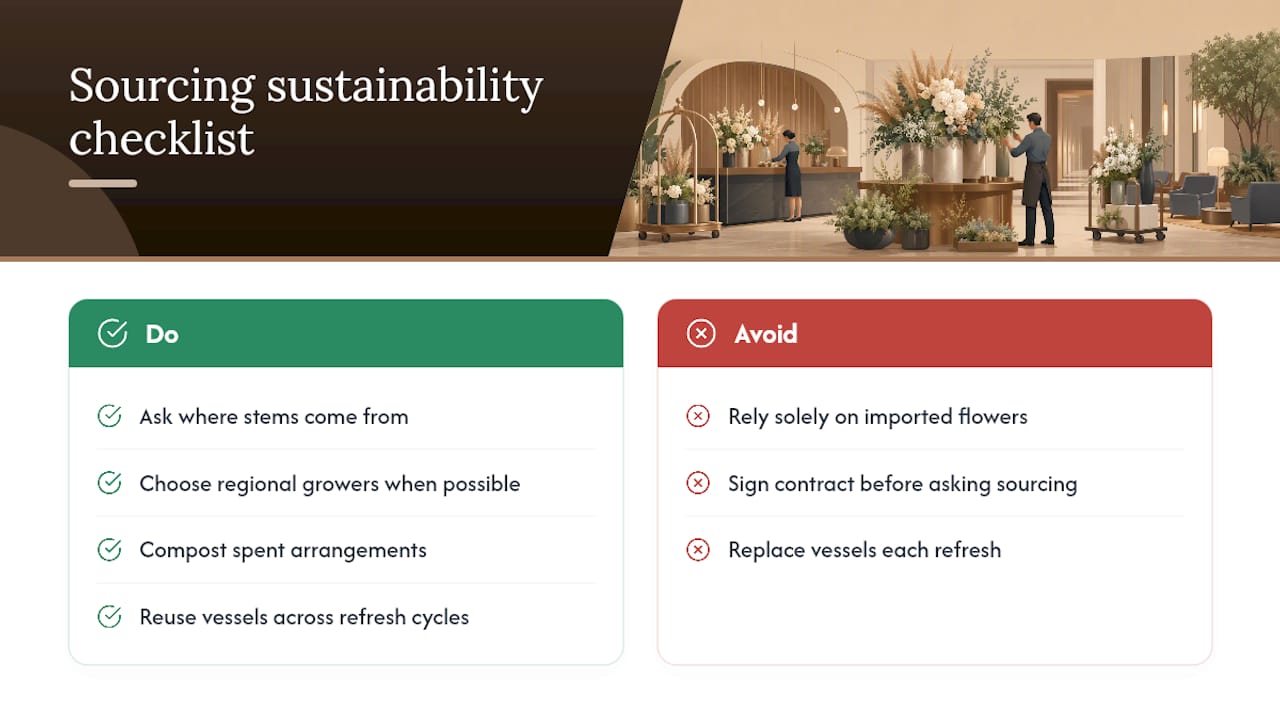
Local sourcing cuts down transport time and tends to produce sturdier, longer-lasting stems than flowers shipped across the country or internationally. It also shortens the gap between cutting and delivery, which matters directly for how long a fresh arrangement holds up in a lobby’s constant air conditioning and foot traffic.
Ask any florist bidding on a hotel contract where their stems actually come from. A vendor working with regional growers can usually speak specifically to seasonal availability, while one relying entirely on imported flowers often can’t tell you much beyond a wholesale order sheet.
Composting spent fresh arrangements, reusing vessels across refresh cycles instead of replacing them, and leaning on the preserved baseline strategy described earlier all reduce the waste footprint of a weekly floral program. Preserved installations in particular cut down on the packaging and transport emissions tied to constant fresh deliveries, since they’re replaced on a scale of years rather than days.
None of this requires a full sustainability audit. It just means asking sourcing questions during the vendor selection process instead of after signing a year-long contract.
Keeping Public Floral Displays Safe and Allergy-Aware
A lobby is a shared public space, and that changes what belongs in an arrangement compared to a private event.
Heavily fragrant stems like certain lilies or narcissus can trigger headaches or respiratory discomfort in sensitive guests, especially in an enclosed reception area with limited airflow. Keep strongly scented flowers away from dining areas, bars, and any seating meant for extended stays, and favor low-fragrance stems like orchids, hydrangeas, and most garden roses near those zones instead.
Pollen drop is a practical housekeeping issue as much as a health one. Lilies and certain branch varieties shed visibly onto marble or dark upholstery, so removing anthers before display or choosing pollen-light stems saves a cleaning headache down the line.
Toxicity matters where children or pets might have contact with arrangements at floor level, which rules out lilies and certain bulb flowers in lower lobby placements near seating areas. Preserved and premium faux arrangements sidestep both the allergen and toxicity questions entirely, which is part of why they work well as a permanent low-maintenance baseline in high-traffic public zones.
What Most Hotels Get Wrong About Lobby Flowers
Most properties treat the lobby arrangement as decoration first and operations second, and that’s backwards. The flowers that actually work long-term are chosen for how they survive a building’s specific light and airflow, not for how they look in a supplier’s catalog photo.
Working with hotel clients has made one thing obvious: the biggest failures aren’t aesthetic. They’re logistical, a delivery window missed on a Monday morning, or a stem that wilted by Wednesday because nobody accounted for the HVAC vent above the console table.
Pro Tip: Negotiate the trial period and the insurance paperwork before you negotiate the flowers. A gorgeous arrangement means nothing if the vendor can’t reliably show up.
— Ovannes
Bring La Fleurel’s Local Floral Program to Your Lobby
A practical alternative to a large event-floristry agency for hotels that want handcrafted, locally sourced arrangements without a rigid corporate contract. Every piece is built from naturally grown blooms sourced locally, with same-day delivery available when a lobby needs a fast turnaround before an inspection, a VIP arrival, or a photo shoot.

The florist offers a site visit to map your lobby’s scale and light conditions, a palette tailored to your property’s architecture, and a four to six week trial before any longer-term weekly service commitment. That trial period matters more than most vendors let on, since a stem that thrives in one lobby’s airflow can fail completely in another’s.
If your property needs a statement piece to start with, the Pure Elegance large arrangement is built for exactly that kind of reception counter or main-table placement. Reach out through La Fleurel’s Valley Village site to schedule a walkthrough and start a trial program.
Sources
- Hotel Lobby Flowers NYC: A Florist’s Weekly Service Guide for Manhatta – TJ Flowers & Events
- Contract Flowers For Hotels: A Complete Guide | Blooming Haus
- The Complete Guide to Preserved Florals for Luxury Hotels | Nordblooms