

If you want the strongest, most reliable scent in a garden or bouquet, start with rose, jasmine, lavender, gardenia, tuberose, lilac, freesia, and heliotrope. Each earns its spot for a different reason: rose for classic depth in a vase, jasmine for evening porches, lavender for dry, sunny beds near a path, gardenia for a single stem that fills a whole room, tuberose for wedding bouquets that need to be smelled from across a room, lilac for a two-week spring flood of scent, freesia for a light citrus note in mixed arrangements, and heliotrope for a cherry-vanilla surprise in containers by a door.
Placement decides half the outcome, much like the expertly curated exhibits at the Philadelphia Flower Show that highlight the season’s most fragrant blooms. Fragrance lingers in sheltered, still-air spots like courtyards and entryways rather than dispersing in open wind, according to the Royal Horticultural Society. Plant your most fragrant species where people already stand, sit, or walk close by, not at the back of the border.
Key Takeaways
The strongest fragrance gardens combine proven scent-forward species with placement near doors and seating, layered bloom times across seasons, and named cultivars chosen for scent rather than appearance alone.
| Point | Details |
|---|---|
| Start with the proven eight | Rose, jasmine, lavender, gardenia, tuberose, lilac, freesia, and heliotrope anchor most fragrance gardens. |
| Plant close to people | Sheltered spots near doors and seating let scent accumulate instead of dispersing in open wind. |
| Layer bloom times | Mixing early bulbs, spring shrubs, and night bloomers stretches fragrance across most of the year. |
| Buy named cultivars | Ask for scent-specific cultivars like Gertrude Jekyll roses or Hidcote lavender, since many modern varieties trade fragrance for looks. |
| Order fragrance ready-made | Lafleurel delivers handcrafted, fragrance-forward bouquets same day across Valley Village, CA when you want scent without the growing season. |
Table of Contents
- The Fragrant Flowers List: 20 Species Worth Planting or Buying
- Why Some Fragrant Flowers Smell Stronger Than Others
- A Gardener’s Take on Planting for Scent
- Bring That Fragrance Indoors With La Fleurel
- Frequently Asked Questions
- Sources
The Fragrant Flowers List: 20 Species Worth Planting or Buying
This is the working shortlist florists and garden writers return to again and again. Roundups from Epic Gardening and the Chicago Botanic Garden consistently name roses, lavender, jasmine, gardenia, lilac, tuberose, hyacinth, and freesia as the backbone of any serious fragrance garden. What follows adds the supporting cast: shrubs, bulbs, annuals, and a few underused workhorses that extend the scent calendar from late winter through fall.
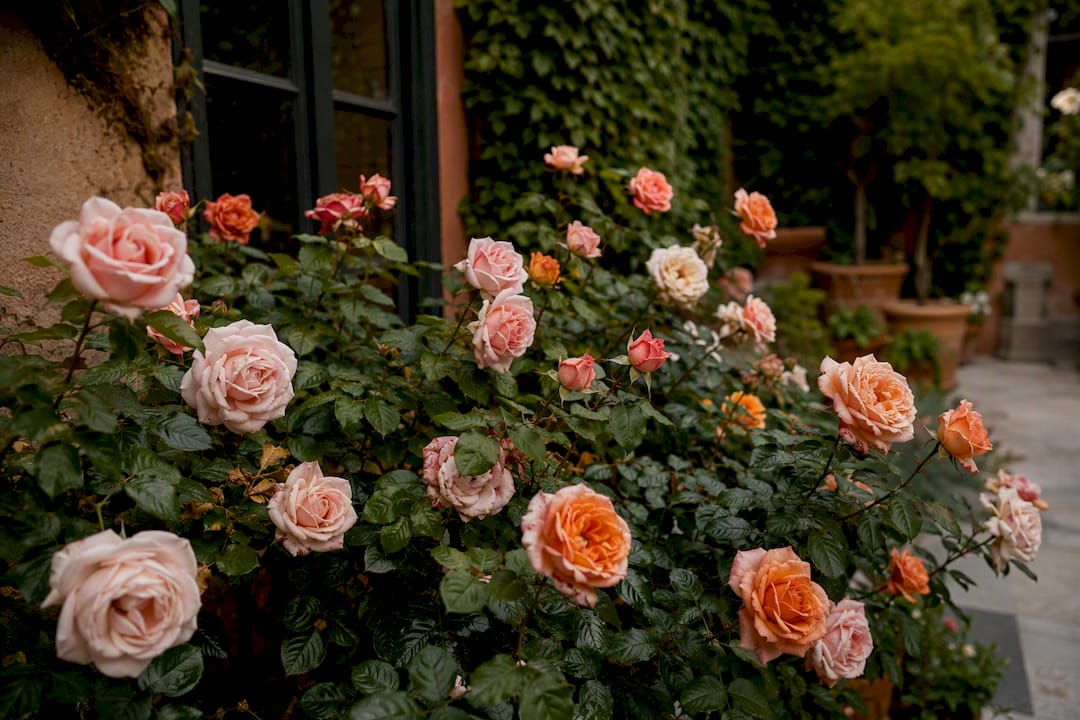
Rose (Rosa spp.) carries the benchmark fragrance most people picture when they hear “flower smell.” Peak bloom runs late spring into early summer, with repeat bloomers going into fall. Not every rose smells like anything. Modern breeding has, in many cases, traded scent for petal count, bloom size, or disease resistance, so shop for named fragrant cultivars like Gertrude Jekyll rather than trusting the tag alone, a point Johnson’s Seeds and a Kansas State rose guide both flag. Roses want full sun and thrive in USDA zones 5 through 9 depending on variety. Bees and hoverflies work them hard. For bouquets, a dozen red roses still outsells almost every other single-flower arrangement.
Jasmine (Trachelospermum or Jasminum spp.) releases its heaviest scent after dusk, which makes it the go-to vine for a trellis near a bedroom window or evening seating area. It flowers through summer, tolerates partial shade, and suits zones 7 through 10. Star jasmine (Trachelospermum jasminoides) is the hardier, more commonly planted option in home gardens.
Gardenia (Gardenia jasminoides) produces a single creamy bloom so concentrated it can perfume an entire patio. It flowers in late spring and summer, needs acidic soil and consistent moisture, and struggles below zone 8 without container protection. Gardenias are notoriously fussy about temperature swings, so keep them out of drafty spots.
Lavender (Lavandula angustifolia) is the low-maintenance champion of this whole list. It blooms early to midsummer, wants full sun and lean, well-drained soil, and handles zones 5 through 9. The cultivar Hidcote holds scent especially well and stays compact enough for containers by a front door. Bees adore it; deer generally leave it alone.
Hyacinth (Hyacinthus orientalis) is the earliest big hit of spring, often flowering while the ground is still cold. A handful of bulbs near a doorway will announce spring before anything else in the yard. Hyacinths also force well indoors in water or soil for winter fragrance, a trick HGTV recommends for gardeners who want scent months before the ground thaws.
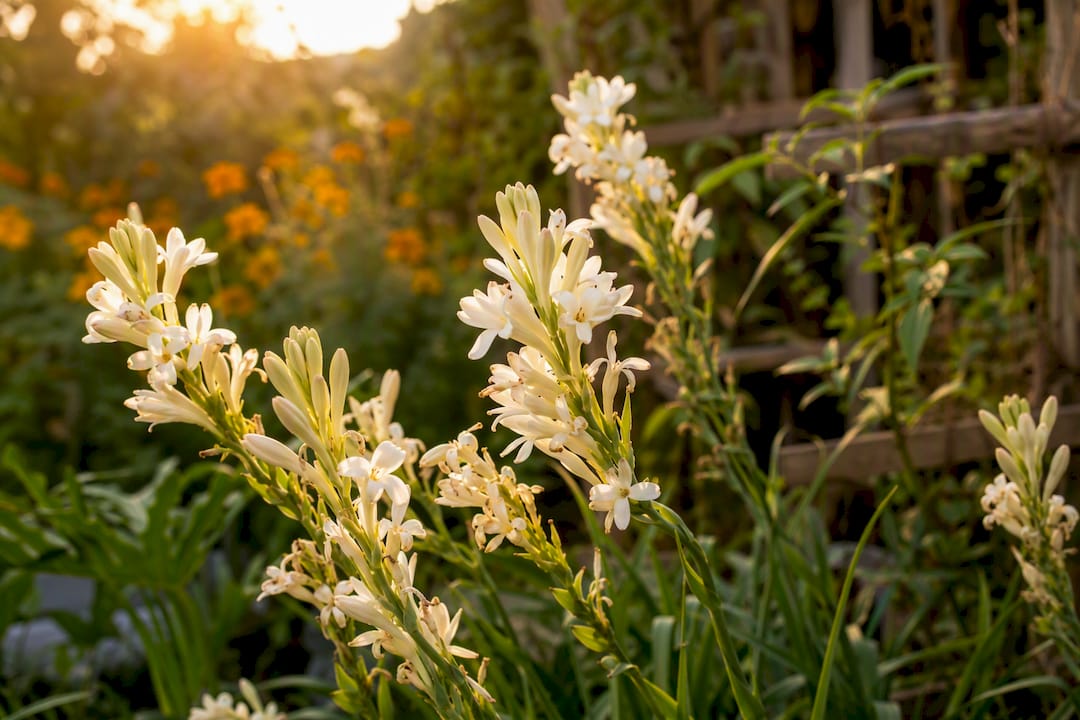
Tuberose (Polianthes tuberosa) is the flower wedding florists reach for when a bouquet needs to carry across a room. It blooms in summer, needs full sun and warmth, and only survives outdoors year round in zones 8 through 11 elsewhere it gets dug up and stored like a dahlia. Its scent intensifies dramatically at night.
Lilac (Syringa vulgaris) delivers a short, intense burst of fragrance in mid to late spring, then goes quiet for the rest of the year. It wants full sun, cold winters (zones 3 through 7), and gets leggy without regular pruning right after bloom. The compact cultivar Bloomerang Dwarf Pink fits small yards and reblooms lightly in fall.
Lily of the Valley (Convallaria majalis) thrives in shade where almost nothing else smells good, spreading as a low groundcover with tiny white bells in late spring. Every part of the plant is toxic if eaten, so keep it away from areas where pets graze.
Freesia (Freesia spp.) brings a light, citrus-sweet note that reads as fresh rather than heavy, which is why florists lean on it to soften rose-forward or peony-forward bouquets. It blooms in spring, prefers full sun, and is grown from corms that need lifting in cold climates.
Heliotrope (Heliotropium arborescens) smells like cherry pie with a vanilla edge, an unexpected scent for a small purple bloom. It flowers all summer in containers or beds, wants full sun, and works best planted close to seating since the fragrance doesn’t travel far on its own.
Sweet pea (Lathyrus odoratus) climbs a trellis fast and rewards you with ruffled blooms that smell like honey and orange blossom. It’s a cool-season annual, best planted early spring for late spring bloom before summer heat shuts it down. Cutting stems regularly keeps the plant producing more flowers.
Nicotiana (Nicotiana spp.), also called flowering tobacco, saves its strongest perfume for after sunset, drawing in moths as pollinators. It blooms all summer in sun or light shade and self seeds readily, so expect volunteers the following year.
Honeysuckle (Lonicera spp.) is a vigorous vine that scents entire fence lines through summer evenings. It handles part shade, tolerates a wide range of zones, and needs sturdy support or annual cutting back to stop it from swallowing nearby shrubs.
Plumeria (Plumeria spp.) is the flower behind Hawaiian lei fragrance: sweet, tropical, and strongest in warm humid air. It blooms summer through fall, needs full sun, and only survives outdoors in zones 9 through 11, though it does well in pots that overwinter indoors.
Peony (Paeonia spp.) offers a rich, rose-like fragrance in late spring for roughly two to three weeks, which is exactly why florists sell so many peony-forward arrangements during that narrow window. It wants full sun and cold winters (zones 3 through 8) and resents being moved once established.
Magnolia (Magnolia grandiflora) produces enormous creamy blooms with a lemon-and-spice scent, mostly in late spring and summer. This is a large evergreen tree, so it suits bigger properties rather than small front yards, and it thrives in zones 6 through 10.
Dianthus, including carnations and Sweet William, smells distinctly of clove, a scent people either love instantly or don’t notice at all. It blooms spring through summer in full sun, tolerates zones 3 through 9 depending on type, and makes an excellent, long-lasting cut flower.
Stock (Matthiola incana) carries a spicy clove fragrance that intensifies in the evening, making it a favorite for cutting gardens. It’s a cool-season bloomer, best in spring or fall in mild climates, and prefers full sun with rich soil.
Sweet alyssum (Lobularia maritima) is a low, sprawling annual with a honeyed scent that works best planted along path edges where you brush against it walking by. It blooms nearly continuously in cool weather and self seeds generously.
Aromatic clematis, such as Clematis armandii, climbs fast and covers a fence or arbor with vanilla-scented white blooms in late winter to early spring. It needs full sun on top growth with shaded roots and suits zones 7 through 9.
A few honorable mentions round out the scent calendar without needing their own full write up: mock orange (Philadelphus) for a citrus blast in early summer, daphne for a shockingly strong perfume from a small winter shrub, crown imperial (Fritillaria imperialis) for an unusual musky spring note, garden phlox for a sweet summer haze at dusk, anise hyssop for a licorice edge that pollinators love, Korean spice bush (Viburnum carlesii) for clove-scented spring flowers, and winter-flowering viburnum (Viburnum tinus) for rare cold-season fragrance. Scented geraniums (Pelargonium) deserve a container spot too, since brushing the leaves releases rose, lemon, or mint depending on the variety, no bloom required.
Pro Tip: Before buying any rose, lavender, or lilac, crush a leaf or lean into an open bloom at the nursery. Tags describe color reliably; they rarely describe scent honestly.
Why Some Fragrant Flowers Smell Stronger Than Others
Flowers release fragrance through volatile organic compounds that evaporate off petals into the air, and heat speeds that process up. Warm afternoons and humid evenings carry scent farther than cold, dry, windy conditions, which is why gardenias smell muted on a chilly morning and overwhelming on a still August night.
Placement does more work than most gardeners assume. Sheltered courtyards, covered entryways, and any spot with still air let fragrance accumulate instead of blowing away, a pattern the RHS has documented across scent-forward planting schemes. Plant your strongest performers within a few feet of a front door, a patio chair, or a path you walk daily. A gardenia at the back fence is wasted; the same plant by a porch step earns its place every evening.
Layering bloom times matters just as much as placement. A garden that leans entirely on lilac smells incredible for two weeks and forgettable the other fifty. Mixing early bulbs like hyacinth, spring shrubs like lilac and mock orange, summer perennials like lavender and phlox, and night bloomers like nicotiana and jasmine stretches fragrance across most of the year, a strategy Blooming Expert recommends when ranking flowers by scent strength and season.
A short maintenance checklist keeps scent production going:
- Deadhead spent blooms on roses, lavender, and stock to push out new fragrant flowers instead of seed production.
- Water roses and other fragrant shrubs at the soil level rather than overhead, which cuts down on fungal disease that stresses plants and reduces bloom.
- Stop fertilizing roses about six weeks before your first fall frost, since tender new growth pushed too late gets damaged by cold, a practice detailed by University of Illinois Extension.
- Prune lilac immediately after bloom, since it sets next year’s flowers on old wood within weeks of finishing.
- Group fragrant plants in odd-numbered clusters near seating rather than scattering single plants across a bed, which concentrates scent instead of diluting it.
Cultivar choice remains the wildcard nobody warns you about enough. Breeding programs often prioritize color, bloom size, or vase life over fragrance, which is how a rose or a carnation can look picture perfect and smell like almost nothing. Ask nursery staff which specific cultivar they’d plant for scent, not just which one photographs best.
A Gardener’s Take on Planting for Scent
I keep coming back to one lesson: fragrance rewards proximity, not abundance. A single potted heliotrope by a doorstep does more for how a garden feels than a whole bed of scentless annuals planted for color alone. Most people plant fragrant flowers the way they plant everything else, scattered wherever there’s a gap, and then wonder why they never actually smell anything.
My go-to move in a small space is training jasmine on a trellis that catches the evening breeze near where I sit outside. It costs almost nothing and changes the whole feel of a patio after sunset. If you only make one change this season, move your most fragrant pot within arm’s reach of a chair you actually use.
Bring That Fragrance Indoors With La Fleurel
Growing a fragrant garden takes seasons to mature, but a fragrance-forward bouquet on your table takes a same-day order. Lafleurel builds handcrafted arrangements from locally sourced, naturally grown blooms and delivers them the same day across Valley Village, CA, so you get scent-forward flowers without waiting for a single bulb to sprout.

If you loved the peony, rose, or freesia entries above, you can request those exact notes in a custom order. Peony season is short outside the garden too, so a peony-forward arrangement is worth grabbing while stems are available, and classic rose bouquets stay in stock year round for anyone who wants that benchmark fragrance without the pruning schedule. Reach out through Lafleurel to check same-day availability or request a fragrance-focused mix built around whatever’s blooming best this week.
Frequently Asked Questions
What is the most fragrant flower for a small garden? Lavender and heliotrope both deliver strong scent in a compact footprint, making them the best picks when space is limited to a bed or a container by the door.
How long do roses last in a vase? Fresh-cut roses typically last five to seven days in a vase when the water is changed every two days and stems are recut at an angle. Using a floral preservative packet extends that further.
What is the best water for roses in a vase? Room-temperature water works better than cold, since roses absorb it more easily, and adding a floral preservative helps prevent bacterial buildup that shortens vase life.
Which fragrant flowers bloom at night? Nicotiana, jasmine, tuberose, and evening primrose all release their strongest scent after sunset, which makes them ideal near patios used in the evening.
Do all rose varieties smell the same? No. Fragrance varies enormously by cultivar, and many modern roses bred for color or bloom size carry little scent at all, so shop by named fragrant variety rather than by looks.
Sources
- Fragrant plants | RHS Advice
- 12 Plants for a More Fragrant Garden
- 43 Most Fragrant Flowers to Grow in Your Garden
- Top Ten Most Fragrant Flowers for Your Garden