

The color of a rose carries a conventional emotional message that most people intuitively half know: red for romantic love, yellow for friendship, white for purity or reverence, and everything else falling somewhere on that spectrum. Shade and stem count then sharpen that signal, turning a general color meaning into something closer to a specific sentence. A single blush pink stem reads very differently from two dozen deep red ones, even though both are technically roses.
TL;DR:
- Red roses primarily symbolize romantic love and passion, with shades like bright red for new relationships and deep crimson for long-term devotion.
- Pink and peach roses communicate admiration and sincerity, with lighter shades suited for innocence or gratitude, and darker shades for energy and appreciation.
- White and ivory roses stand for purity, reverence, or new beginnings, often used in weddings or funerals, while yellow roses now mainly signify friendship and joy after cultural shifts.
- Blue and green roses, created artificially or through dyeing, symbolize mystery, rarity, renewal, and good health, but carry more personal or context-dependent meanings.
- Stem count, from one to hundreds, emphasizes different messages, with a single rose being personal and a dozen or more representing devotion or milestone celebrations; context and recipient knowledge remain crucial.
Table of Contents
- Rose Color Meanings at a Glance
- Red Roses: Love, Passion, and the Weight of Shade
- Pink and Peach Roses: Admiration, Gratitude, and Gentle Romance
- White, Ivory, and Cream Roses: Purity, Reverence, and New Beginnings
- Yellow Roses: Friendship, Joy, and a Meaning That Flipped
- Orange, Coral, and Salmon Roses: Enthusiasm and Celebration
- Purple and Lavender Roses: Enchantment and Love at First Sight
- Blue and Green Roses: Rarity, Mystery, and Personal Meaning
- Black and Burgundy Roses: Endings, Devotion, and Why the Card Matters
- What Mixed Bouquets Actually Say
- What Rose Counts Mean: 1, 3, 12, 24, and Beyond
- From Victorian Floriography to Today’s Bouquet
- A Quick Checklist for Choosing the Right Color
- How a Florist Actually Applies These Rules
- Do Rose Color Meanings Change Across Cultures?
- Why Rose Colors Trigger Real Emotional Reactions
- Rose Colors in Floral Design vs. Individual Gifting
- Stop Overthinking the Symbolism, Start Thinking About the Person
- Order the Right Rose Color, the Same Day You Need It
- Sources
Rose Color Meanings at a Glance
Before the deeper explanations, here’s the quick version for anyone standing in a flower shop with a short time to decide.
- Red: romantic love, passion, deep commitment
- Deep red or burgundy: unconscious beauty, intense passion, or grief
- Light pink: innocence, gentleness, first affection
- Medium pink: gratitude and appreciation
- Deep or hot pink: admiration and enthusiasm
- White: purity, reverence, new beginnings
- Ivory or cream: elegance, thoughtfulness, quiet richness
- Yellow: friendship, joy, congratulations
- Orange or coral: enthusiasm, desire, celebration
- Peach: sincerity, modest appreciation
- Purple or lavender: enchantment, royalty, love at first sight
- Blue: mystery, the unattainable, uniqueness
- Green: renewal, good health, quiet fortune
- Black (usually dyed deep red): endings, farewell, dramatic devotion
- Mixed bouquets: a blended message, read by whichever color dominates
Rare or artificial shades like blue and black carry looser, more personal meanings, so a short note helps the recipient read them correctly. On counts: one stem is direct and personal, three says “I love you,” and a dozen signals devotion.
Red Roses: Love, Passion, and the Weight of Shade
Red is the default romantic choice for a reason. It’s the universal symbol of romantic love, passion, and commitment, and it has held that meaning for so long that giving red roses barely needs explanation. But not all reds say the same thing.
- Bright, true red: classic romance, the safest choice for anniversaries and first “I love you” moments
- Deep crimson: a more serious, almost solemn form of passion, better for long relationships than new ones
- Burgundy: unconscious beauty or deep, unspoken devotion, sometimes used at memorials
One red rose says “I love you” outright. Three communicates the same phrase with more ceremony, and a dozen is the traditional shorthand for devotion. Pair red with eucalyptus or baby’s breath to soften the intensity, or keep it monochrome for maximum impact. If you’re writing the card yourself, skip the generic “thinking of you” and name the specific thing you love. A red rose bouquet does most of the talking anyway.
Pink and Peach Roses: Admiration, Gratitude, and Gentle Romance
Pink is the color people underestimate. It expresses admiration, gratitude, and sweetness, but the exact message shifts hard depending on how saturated the shade is. Light pink reads as innocence, almost childlike affection, which makes it a strong choice for a new baby or a young relationship still finding its footing. Medium pink is the gratitude shade, the one you send after someone genuinely helps you through something. Deep or hot pink pushes toward admiration and energy, closer to a compliment than a confession.
Peach and coral sit just below pink on the intensity scale, signaling sincerity and modest appreciation rather than full romantic weight. That makes peach the better pick for a thank-you to a coworker, a gift for new parents, or a low-key romantic gesture that doesn’t want to announce itself too loudly.
White, Ivory, and Cream Roses: Purity, Reverence, and New Beginnings
White roses do double duty. At weddings they signal purity and new beginnings; at funerals the same white rose shifts to reverence and peace. It’s one of the few colors whose meaning depends almost entirely on the occasion surrounding it rather than the flower itself.
Ivory and cream carry a softer nuance: elegance, generosity, and a kind of quiet thoughtfulness that pure white doesn’t quite capture. A white Vendela rose bouquet works well for both weddings and sympathy arrangements, which says something about how flexible this color family really is. Choose pure white when the moment calls for solemnity or ceremony. Choose cream when you want warmth without romantic implication, like a gift for a mentor or a retiring colleague.
Yellow Roses: Friendship, Joy, and a Meaning That Flipped
Yellow is the safest non-romantic rose you can send, and modern usage backs that up: yellow roses symbolize friendship, joy, and new beginnings. That’s a fairly recent development. In Victorian floriography, yellow roses actually signaled jealousy, a meaning that has almost completely reversed over the past century.
That flip matters more than it seems. It proves flower meanings aren’t fixed by nature. They shift with culture, marketing, and repeated use, the same way yellow’s jealousy association gave way to friendship once florists and greeting card companies started pushing the cheerier version. Today, yellow is your go-to for a platonic thank-you, a congratulations bouquet, or a “get well soon” that shouldn’t be mistaken for a romantic overture.
Orange, Coral, and Salmon Roses: Enthusiasm and Celebration
Orange roses live in the space between friendship and romance, carrying enthusiasm, desire, and outright fascination. That in-between quality makes them a smart pick for early-stage romance, the kind where red feels premature but yellow feels too platonic.
Orange also works for high-energy congratulations: a promotion, a graduation, a big win someone’s been chasing. Coral and salmon tones tone down the intensity, making them a safer bet for professional settings or mixed-audience gifts where you want warmth without anyone reading it as a declaration. If you’re sending flowers to a work event or a group celebration, coral tends to land better than saturated orange, which can feel a little loud in a shared office space.
Purple and Lavender Roses: Enchantment and Love at First Sight
Purple and lavender roses carry some of the most specific symbolism in the entire color range. They connote enchantment, royalty, and, in some traditions, love at first sight, which makes them an unusual but effective choice when red feels too obvious.
Lavender leans toward subtle enchantment, a quieter version of admiration that suits an early crush or a gift that wants to feel a little mysterious. Deep purple reads more regal, appropriate for celebrating an achievement or expressing genuine astonishment at something someone accomplished. Reach for purple when you want to say “I’m impressed” or “I can’t believe you did this” rather than a straightforward romantic message.
Blue and Green Roses: Rarity, Mystery, and Personal Meaning
Blue roses don’t occur naturally. They’re typically created by florists through dyeing or, more rarely, biotechnology, which is exactly why their meaning feels looser than a red or white rose’s. Because blue doesn’t come from tradition the way red does, its symbolism leans on mystery, the unattainable, and a general sense of uniqueness rather than one fixed message.
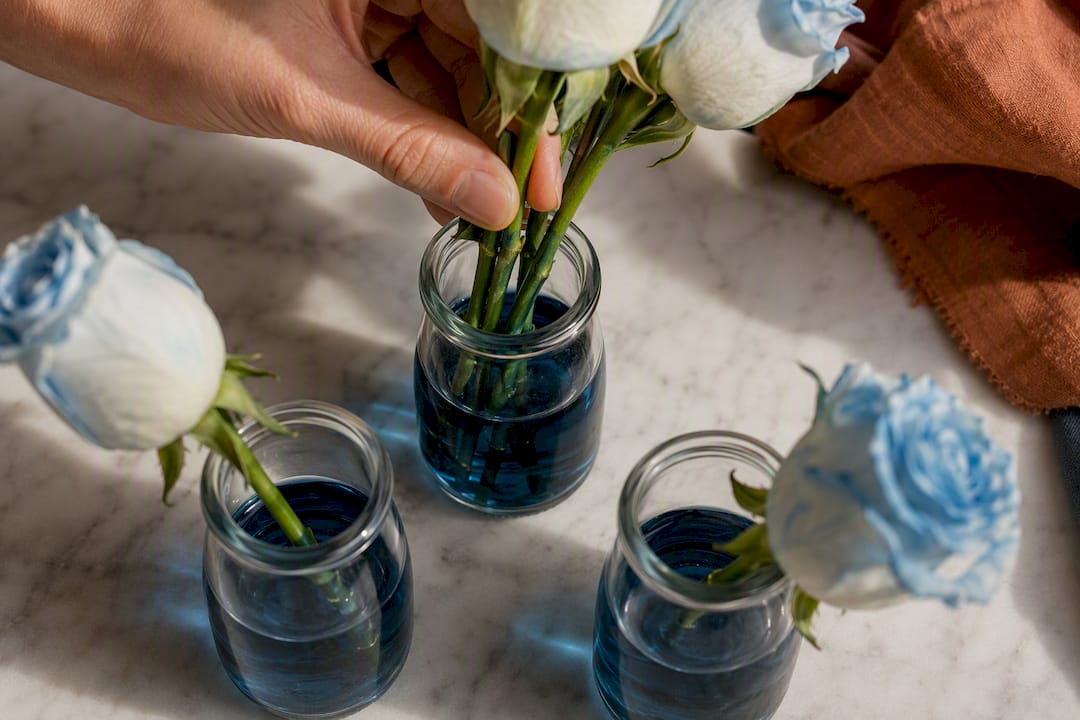
Green roses point toward renewal, good health, and quiet good fortune, making them an offbeat but thoughtful choice for a “get well soon” or a housewarming gift. Non-natural colors like blue and black tend to have meanings that are more context-dependent, so they work best for recipients who already appreciate novelty over convention. If your gift recipient is more traditional, stick with the established color families. If they’d love something a little unexpected, blue or green roses give you room to be creative, especially paired with an unconventional rose mix that leans into that same spirit.
Black and Burgundy Roses: Endings, Devotion, and Why the Card Matters
Black roses almost always start as deep red or dark burgundy blooms dyed to an even deeper shade, since a truly black rose doesn’t exist in nature. Symbolically, black leans toward endings, rebirth, and sometimes mourning, which is why it shows up more at farewells and dramatic gestures than at birthday parties.
Burgundy, meanwhile, keeps its natural color and carries a heavier, more intense version of passion, closer to deep commitment than casual romance. Because both shades can be read multiple ways, florists suggest including a short card whenever you send black or heavily saturated burgundy roses, just so the recipient doesn’t mistake devotion for a somber message, or vice versa.
What Mixed Bouquets Actually Say
A mixed bouquet reads through its dominant color first, with supporting colors adjusting the tone. Red and white together signals unity paired with love, a common combination at weddings. Pink and peach reads as gratitude layered with sincerity, useful for a thank-you that also carries warmth. Yellow and orange together lean into celebration built on friendship, ideal for a graduation or new job.
Mixing colors deliberately is one of the easiest ways to avoid sending a message that’s too intense or too vague for the relationship you actually have.
What Rose Counts Mean: 1, 3, 12, 24, and Beyond
Stem count changes the message almost as much as color does. The most practically significant counts in Western gifting are one, three, twelve, and twenty-four, each with its own shorthand.
A single stem is direct and personal, often used for a first date or a simple, quiet gesture. Three stems traditionally say “I love you,” one word per rose. A dozen signals full devotion and is the standard romantic gift for anniversaries. Two dozen pushes that further into “thinking of you every hour” territory. Fifty or a hundred stems, like a Classic Red fifty-rose box or a hundred-rose wrapped bouquet, are reserved for major milestones: proposals, big anniversaries, grand apologies. Match the count to both the relationship and your budget. A well-chosen dozen says more than an oversized bouquet sent to the wrong person for the wrong reason.
From Victorian Floriography to Today’s Bouquet
Rose color symbolism traces back largely to Victorian floriography, a formal “language of flowers” that let people communicate sentiments too delicate to say out loud. Many of those meanings held steady, but not all of them. Yellow’s shift from jealousy to friendship shows how cultural usage and modern marketing can rewrite a flower’s reputation over a century or so.
What hasn’t changed much is the core logic: color still maps to feeling, and Western meanings remain broadly consistent across romance, friendship, sympathy, and congratulations. That stability is exactly why a red rose still means the same thing it meant a hundred years ago, even as fringe colors like yellow evolved around it.
A Quick Checklist for Choosing the Right Color
- Identify the relationship and occasion first. Romantic partner, friend, coworker, and grieving family member all call for different color families entirely.
- Pick the color family, then the shade. Red for romance, yellow or orange for friendship, white or cream for sympathy and weddings, purple for admiration or milestones.
- Decide on stem count and whether you need a card. A dozen red roses needs no explanation. A dozen black or deep burgundy roses probably does.
Pro Tip: If you’re unsure which shade to pick, err lighter. A lighter pink or peach undersells a message far less awkwardly than a deep red overshoots one.
Red flags worth remembering: sending romantic red roses to a coworker almost always reads as inappropriate, no matter the intent. Yellow, peach, or orange keep things safely platonic. When in doubt, a card explaining the gesture in your own words beats hoping the color does all the work.
How a Florist Actually Applies These Rules
At Lafleurel, color conversations come up on nearly every order, especially when a client isn’t sure what they’re trying to say. The usual approach: confirm the occasion first, then narrow shade by relationship, then adjust stem count to fit both sentiment and budget. When a requested color isn’t in season, a close substitute in the same family, deep pink for red, cream for pure white, keeps the intended message intact.
Wedding clients often lean toward white or ivory. Sympathy orders tend toward white, cream, or soft pink. Last-minute romantic gifts default to red, adjusted by count depending on how much ceremony the moment calls for.
Do Rose Color Meanings Change Across Cultures?
Western floriography treats red as romance and white as purity almost universally, but that consistency breaks down once you look beyond Europe and North America. In several Asian cultures, white flowers, roses included, carry stronger associations with mourning and funerals than with weddings, which is the near opposite of the Western wedding bouquet tradition. In parts of the Middle East, red carries similar romantic weight to the West, but the emphasis on floral gifting overall differs by region and occasion.
Yellow is where the biggest cultural split shows up. Western markets have largely rehabilitated yellow into a friendship color, but in some cultures, particularly parts of Latin America, yellow flowers still carry associations with infidelity or grief, closer to yellow’s old Victorian meaning of jealousy than its modern American rebrand.
None of this means color meanings are arbitrary. It means they’re regional dialects of the same underlying language, shaped by local funeral customs, wedding traditions, and decades of marketing that didn’t happen uniformly everywhere at once. If you’re sending flowers to someone from a culture different from your own, or gifting internationally, a quick check on regional norms is worth the two minutes it takes. Getting it wrong isn’t catastrophic, but getting it right shows a level of thought that a generic bouquet doesn’t communicate on its own.
Why Rose Colors Trigger Real Emotional Reactions
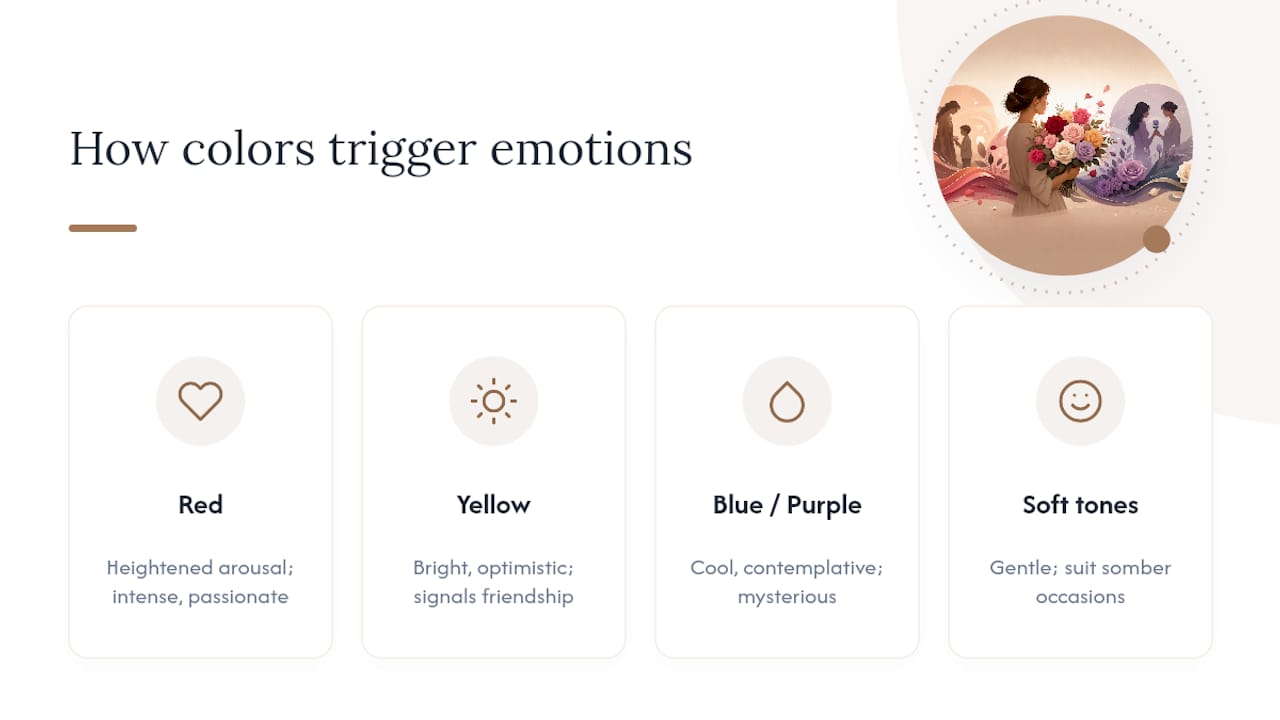
Color psychology isn’t just marketing language slapped onto a flower shop website. Red genuinely triggers heightened arousal and attention in most people, which is part of why it reads as intense and passionate rather than calm. Yellow tends to register as bright and optimistic almost instantly, which lines up with its friendship and joy associations. Blue and purple, being rarer and cooler toned, tend to read as contemplative or mysterious, reinforcing exactly the symbolic meanings florists already assign them.
This is worth knowing because it means rose color meanings aren’t purely cultural inventions. They’re partly built on how human eyes and brains process color in general, then layered with centuries of tradition on top. That’s also why a bouquet’s emotional impact can register before the recipient consciously thinks about what the color “means.” Someone opens a box of deep red roses and feels something immediate, warmth, intensity, romance, often before they’ve processed the symbolism intellectually.
This matters for gift-giving in a very practical way. If you’re trying to comfort someone grieving, a bouquet of bright orange or hot pink roses can feel jarring even if you didn’t intend a mismatched message, simply because the color itself doesn’t match the emotional register of the moment. Softer, cooler tones like white, cream, or pale pink tend to feel more appropriate for somber occasions regardless of their specific symbolic meaning, because the color itself reads as gentler. Matching color intensity to emotional intensity is just as important as matching symbolic meaning to occasion.
Rose Colors in Floral Design vs. Individual Gifting
A single rose color means something fairly fixed when it’s the whole gift. Put that same rose into a larger arrangement or event design, and the meaning shifts based on context, composition, and what’s around it.
In wedding design, white and ivory roses often serve a structural role, filling out an arrangement’s shape and volume, rather than carrying the same weighty “purity” symbolism they’d carry as a standalone gift. A romantic arrangement built around peonies might use blush roses purely for texture and color balance, not as a deliberate symbolic statement.
Event and corporate decor works differently again. A florist styling an office lobby or a gala centerpiece is usually thinking about color harmony with the venue, lighting, and brand palette first, symbolism second. Orange or coral roses might get chosen purely because they pop under warm lighting, not because someone’s trying to say “enthusiasm.”
Individual gifting is the one context where symbolism carries full weight. When a rose color is the entire message, meaning matters more than aesthetics. When it’s one element in a larger design, symbolism becomes background texture rather than the main point. Knowing which context you’re in changes how much weight you should put on color meaning versus simple visual preference.
Stop Overthinking the Symbolism, Start Thinking About the Person
Most guides to rose color meanings treat the topic like a fixed dictionary: red means this, yellow means that, case closed. That framing undersells how much shade, count, and context actually do the heavy lifting. A pale pink rose and a hot pink rose aren’t variations on the same theme. They’re closer to two different words that happen to share a root.
The bigger blind spot in most advice is treating color choice as more important than recipient knowledge. A recipient who has no idea that yellow once meant jealousy isn’t going to feel betrayed by a yellow bouquet. But a recipient who knows their partner well enough to know they hate showy gestures will feel a hundred red roses as excessive rather than romantic, regardless of what the color technically symbolizes.
My honest read: symbolism is a useful starting point, not a strict rulebook. Use it to narrow your options, then let what you actually know about the person and the occasion make the final call. The florist behind the counter has seen thousands of these decisions play out and can tell you, in about thirty seconds, whether your instinct is landing in the right neighborhood. That’s worth more than any color chart.
— Ovannes
Order the Right Rose Color, the Same Day You Need It
Reading a color chart only gets you halfway. The other half is having someone put it into an arrangement that actually looks like it means what it’s supposed to mean, and getting it there before the moment passes. Some florists offer handcrafted arrangements built from locally sourced, naturally grown blooms and provide same-day delivery services in Valley Village and the surrounding Los Angeles area.

Whichever message you’re sending, there’s a bouquet style built for it. A handheld red rose bouquet covers straightforward romance, a beautiful day arrangement works for lighter, joyful occasions, and a Quicksand beige roses arrangement offers a quieter, elegant option for sympathy or understated gratitude. If none of the standard color combinations quite fits what you’re trying to say, a custom arrangement consultation lets you build the exact palette and message you need. Head to Lafleurel to place a same-day order or start a custom request before your deadline arrives.
Sources
- Red rose meaning & history of love and passion — Gardenia
- Rose color meanings — Better Homes & Gardens
- Rose Meaning: All 15 Colours Decoded — Blooming Expert