

The strongest restaurant flower decor pairs one or two visible statement pieces (entrance, ceiling, or bar) with small, low-profile table vases that never block sightlines. Choose durable or preserved stems for daily service and skip heavily scented flowers at the table. Set a weekly delivery cadence, tie every palette back to your brand, and adjust before you scale.
TL;DR:
- Use statement pieces at the entrance, ceiling, or bar to create impactful first impressions without blocking sightlines at tables.
- Choose flower materials based on location and maintenance needs, with fresh blooms near natural light and preserved or artificial options elsewhere.
- Maintain a weekly delivery schedule with midweek checks and reuse vessels to keep floral displays fresh and cost-effective.
- Keep daily tasks simple and focus on consistency by using a limited seasonal palette to reinforce your brand identity.
- Start with a small floral pilot, such as a host-stand centerpiece and table vases, before expanding to a full program to gauge guest response.
Table of Contents
- Where Restaurant Flower Decor Makes the Biggest First Impression
- What Table Arrangement Format Fits Your Floorplan?
- Fresh, Preserved, or Artificial: Which Flowers Actually Hold Up?
- How Much Does a Restaurant Flower Program Cost to Run?
- Matching Flower Choices to Your Restaurant’s Brand
- What a Florist Partnership Actually Looks Like Week to Week
- Start Small Before You Commit to a Full Program
- Try a Starter Floral Package Before You Commit Fully
- Sources
Where Restaurant Flower Decor Makes the Biggest First Impression
Not every square foot of your dining room deserves the same floral budget. Guests register three zones before they even sit down: the entrance, the ceiling or overhead sightline, and the bar. Get those right and the table flowers become a supporting detail rather than the whole show.
A sculptural host-stand arrangement does more work than people expect. It’s the first thing a guest photographs, and it sets the tone before a server says a word. Keep it tall enough to see from the door but narrow enough that it doesn’t crowd the stand itself.
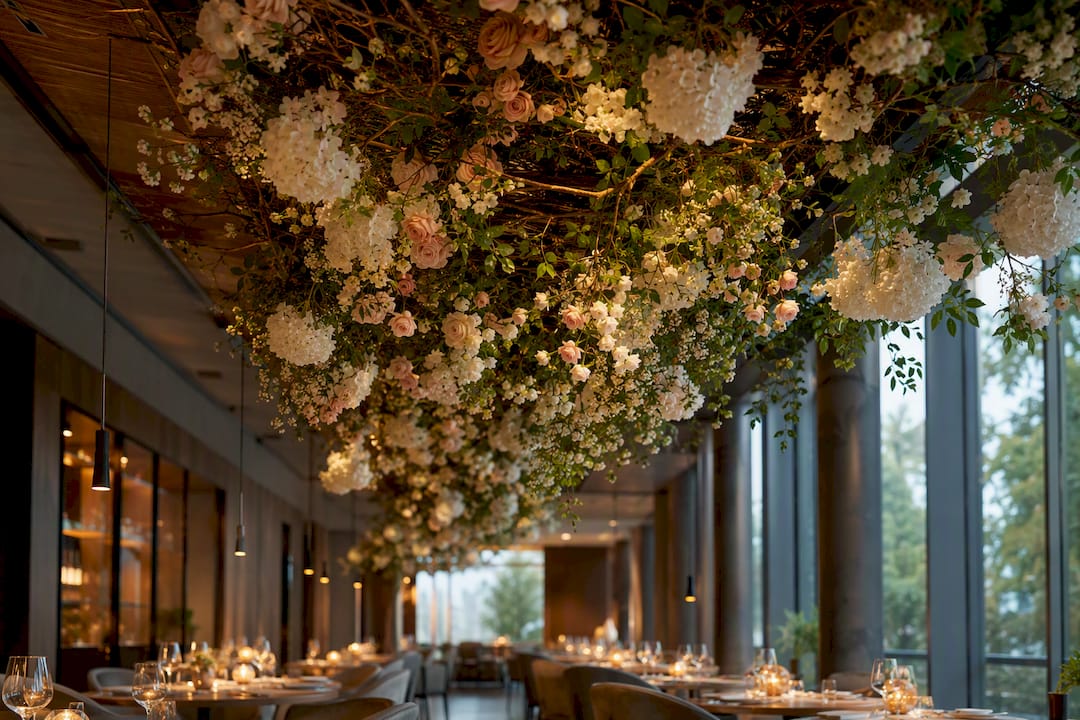
Ceiling canopies and hanging installations create the kind of immersive moment that gets a restaurant tagged on social media, but they carry real engineering weight. A recent full-ceiling bougainvillea installation covered by IVY CRUZ shows how ambitious these builds can get, and it also shows why they need structural planning and fire-code sign-off before installation, not after.
Bar runs are the most underused opportunity in most dining rooms. A low, elongated floral run along the bar top or a few clustered arrangements at the service end register clearly from across the room, even at half the scale of a table centerpiece.
Photo-op flower walls work best positioned away from service aisles, ideally in a corner or near a private dining entrance where guests can pause without blocking staff paths.
- Entrance: one sculptural piece, sized to the host stand, refreshed weekly
- Ceiling: reserve for signature spaces; requires engineering review and lighting coordination
- Bar: a continuous low run or a few clustered vases, visible from the dining floor
- Photo wall: placed off the main traffic line, near a natural pause point
Statistic Callout: Weekly fresh floral programs are often built around a Monday delivery with a weekend-ready check, and midweek visits near heat or windows keep the statement pieces looking sharp through service.
What Table Arrangement Format Fits Your Floorplan?
Table flowers exist to serve the meal, not compete with it. Design standards used by hotels and dining brands consistently favor compact, low-profile formats that protect sightlines and don’t slow down a table reset.
- Compact single-stem vases work best in fine dining, where guests need an unobstructed view across the table and servers need clear space to plate.
- Low-profile centerpieces suit casual dining. They read as intentional without demanding much clearance, and they survive a fast turnover.
- Distributed small elements spread across communal or banquet tables avoid the single-obstruction problem you get from one large centerpiece blocking half the table.
- Move floral weight off the table entirely when a room leans toward large parties or tight spacing; put the visual impact into the entrance or bar instead.
Repetition across tables isn’t a limitation, it’s the point. Designers lean on a small number of repeatable formats specifically because consistency becomes part of the brand language guests start to recognize.
Fresh, Preserved, or Artificial: Which Flowers Actually Hold Up?
The choice isn’t fresh versus fake, it’s matching the material to the location and the maintenance budget. Fresh flowers deliver seasonal quality and support local sourcing, and they’re worth the extra care where turnover and budget allow, typically the entrance and any table close to a window with natural light.
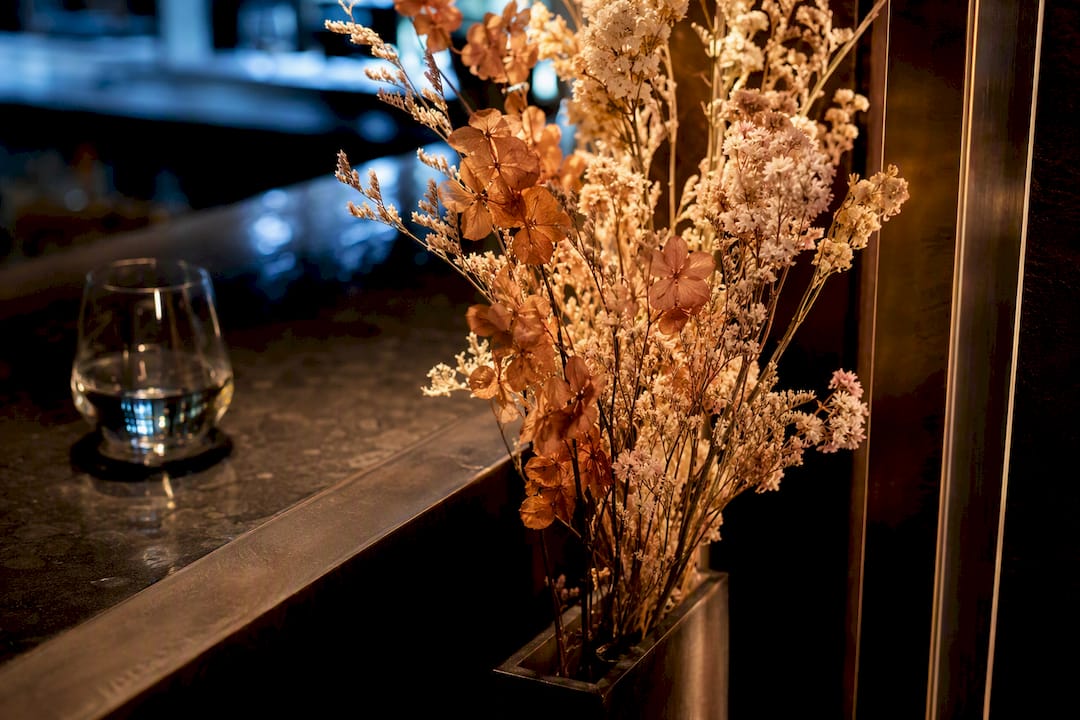
Preserved flowers solve a different problem. They hold consistent color and shape across multiple locations, need almost no daily attention, and cost less to maintain over time than fresh stock, which makes them a practical pick for bars, hallways, and restrooms.
Artificial flowers earn their place in ceiling installs and other long-term builds where daily servicing isn’t realistic. Quality matters here more than anywhere else. Cheap synthetic stems look cheap under restaurant lighting; higher-grade silk or foam-based blooms hold up.
Most operators land on a mixed approach: fresh where it’s seen up close, preserved or artificial where it isn’t, which balances appearance against labor cost across the whole space.
For durability and low scent, favor:
- Roses and spray roses
- Alstroemeria
- Chrysanthemums
- Lisianthus
- Orchids
- Zinnias
Pro Tip: Skip heavily fragrant flowers like lilies or freesia at the table. Scent competes with food aromas, and low-odor varieties such as hydrangea and dahlias avoid that conflict entirely.
How Much Does a Restaurant Flower Program Cost to Run?
A floral program only works if it runs on a schedule your staff can actually follow. The typical rhythm is a weekly delivery, usually early in the week, with a midweek check in sunny or high-heat zones and everything refreshed before the weekend peak.
Budget scales with scope. A host-stand-only program costs the least and covers just the entrance piece. Adding the bar roughly doubles that scope. A full-room program, covering entrance, bar, and every table, runs highest but becomes far more predictable once it’s under a weekly contract instead of ad hoc orders.
Split the labor clearly. Daily staff tasks should stay simple: topping off water, pulling spent stems. Full swaps, reworks, and seasonal changes stay with the florist.
- Daily: water top-off, remove wilted stems
- Weekly: florist delivery and full swap
- Midweek: spot check in heat or direct sun
- Ongoing: reuse vessels, skip floral foam, and compost spent stems
Statistic Callout: Programs built around a weekly delivery plus midweek check cadence are the most common operational model cited across florist case studies for restaurants.
Matching Flower Choices to Your Restaurant’s Brand
Pick a limited seasonal palette, maybe three or four colors, and hold it steady for a full season instead of changing weekly. That restraint is what makes guests recognize your dining room as yours.
Private dining calls for a different scale. Go taller and more expressive there while keeping the everyday tables low and unobtrusive; nobody wants a six-inch centerpiece at a birthday party or a three-foot arrangement blocking a couple’s dinner conversation.
- Choose vessels and textures that echo your interior materials: matte ceramic for a warm, rustic room; brushed metal or glass for something sleeker
- Build a simple event add-on menu, such as an upgraded centerpiece tier or a one-time entrance sculpture for private bookings
- Keep the daily palette narrow; save bolder color and scale for events
If your restaurant works with an outside designer on a larger renovation or buildout, floral planning often overlaps with broader trade decisions; resources like the designer trade program guide from One Day Doors & Closets cover how those collaborations typically get structured.
What a Florist Partnership Actually Looks Like Week to Week
Lafleurel builds restaurant programs around handcrafted arrangements, same-day delivery, and dedicated event services. A typical engagement starts with a site visit, moves into a seasonal color framework, then settles into a weekly delivery schedule with on-call midweek swaps. Product examples map directly to restaurant zones: a host-stand sculpture, weekly table vases, and custom installs for private events.
Start Small Before You Commit to a Full Program
Pilot one statement piece plus a week of table vases before you scale. Watch social tags and ask staff what guests actually comment on. Adjust scale and cadence, then expand. If you want a second opinion, book a short consultation.
— Ovannes
Try a Starter Floral Package Before You Commit Fully
You don’t need to sign a full-room contract to find out if flowers move the needle in your dining room. Lafleurel is the practical alternative to guessing your way through a big floral buildout: start with one visible piece and a week of table vases, see how guests respond, then scale.

A sensible starter package pairs a host-stand centerpiece with a set of small, service-friendly table arrangements, something like A Beautiful Day Arrangement works well at this scale, run over a 30-day trial. Every piece is handcrafted from locally sourced, naturally grown blooms, and same-day delivery within Valley Village and the surrounding Los Angeles area means you’re never stuck waiting on a swap before a busy weekend. If your dining room needs something custom, a tailored arrangement consultation is the fastest way to get a plan built around your actual floorplan and brand palette. Ready to see it in your space? Get in touch through Lafleurel to schedule a starter package or a walk-through.
Sources
For deeper operational detail, see the weekly floral scheduling case study and preserved flower guidance for restaurants.
- Restaurant Flowers: How Weekly Florals Shape The Guest Experience | Blooming Haus
- Restaurant table flower design standards for hotels and dining brands | Sweetie Roses