

If you’re picking flowers for someone with allergies, choose orchids, tight double roses, tulips, hydrangeas, peonies, carnations, spray roses, snapdragons, and irises. These share one trait: their pollen tends to be heavy, sticky, or packaged so it typically doesn’t drift into the air.
The one-sentence rule that covers almost every case is to pick insect-pollinated flowers with double or tightly closed blooms, and skip open-centered, wind-pollinated varieties along with anything heavily scented if the recipient is scent-sensitive.
A few quick caveats before the shortlist. No flower is completely pollen-free, including the ones on this list. And fragrance can trigger a reaction that has nothing to do with pollen at all. It’s a separate sensitivity, and it matters just as much when you’re choosing what to send someone.
- Orchids — pollen stays locked in a waxy sac (pollinia), so it almost never becomes airborne.
- Roses (tight or double varieties, including spray roses) — dense petal structure hides the stamens.
- Tulips — closed-cup shape, sticky pollen that doesn’t travel.
- Hydrangeas — most cultivated varieties are sterile or near-sterile, producing very little pollen.
- Peonies — heavy, insect-carried pollen, especially in double-bloom varieties.
- Carnations — a florist standby precisely because they’re so low-risk.
- Snapdragons — tightly closed flower structure limits pollen release until forced open.
- Irises — pollen is sticky and insect-dependent, not wind-dispersed.
Key Takeaways
The safest approach to hypoallergenic flowers is choosing insect-pollinated, double, or tightly closed blooms like orchids, roses, tulips, and peonies while avoiding open-centered, wind-pollinated varieties and heavy fragrance.
| Point | Details |
|---|---|
| Top three safest picks | Orchids, tight double roses, and peonies carry the lowest airborne pollen risk of any common cut flower. |
| One buying rule | Choose insect-pollinated, double, or tightly closed blooms and skip open-centered, wind-pollinated flowers. |
| Handling tip | Change vase water every one to two days and keep arrangements out of bedrooms to limit exposure. |
| Ordering tip | Ask your florist directly whether stamens can be removed and whether double or tightly petaled varieties are available. |
| Fragrance is separate | Scent sensitivity doesn’t track with pollen levels, so request fragrance-free arrangements when that’s the concern. |
| Lafleurel’s approach | Lafleurel builds allergy-friendly arrangements from locally-sourced peonies, roses, and orchids, with stamen removal available on request. |
Table of Contents
- What “Hypoallergenic Flowers” Actually Means
- The Best Low-Pollen Flowers, Compared Side by Side
- High-Pollen and Heavily Scented Flowers to Avoid
- How to Order Hypoallergenic Flowers Without Guessing
- Reducing Allergy Symptoms Once the Flowers Are Home
- Is Any Flower Actually Pollen-Free?
- How Lafleurel Builds Allergy-Friendly Arrangements
- Order an Allergy-Friendly Bouquet Today
- Sources
What “Hypoallergenic Flowers” Actually Means
“Hypoallergenic” doesn’t mean zero pollen. It means a flower is unlikely to release pollen into the air where you’d breathe it in, or its pollen is packaged in a way that keeps it from spreading.
There are really three separate mechanisms at play, and mixing them up is how people end up with the wrong bouquet. Some flowers produce very little pollen to begin with. Others produce plenty, but it’s heavy and sticky, built to hitch a ride on a bee rather than float on a breeze. And a few, like orchids, keep pollen bundled into a compact structure called a pollinium, a detail the American Orchid Society documents in its reproductive biology guides. That packaging is why orchids show up on nearly every allergist-approved list.
The distinction that matters most for allergy sufferers is wind-pollinated versus insect-pollinated. Wind-pollinated plants, think ragweed, grasses, and some trees, evolved to broadcast massive amounts of light, dry pollen into the air because that’s their only way to reach another plant. Insect-pollinated flowers evolved the opposite strategy: heavy, sticky pollen that clings to a bee’s legs and goes nowhere on its own. The Allergy & Asthma Foundation of America identifies pollen as one of the most common allergy triggers, and dispersal mechanism, not raw quantity, is what determines whether you’ll ever actually inhale it.
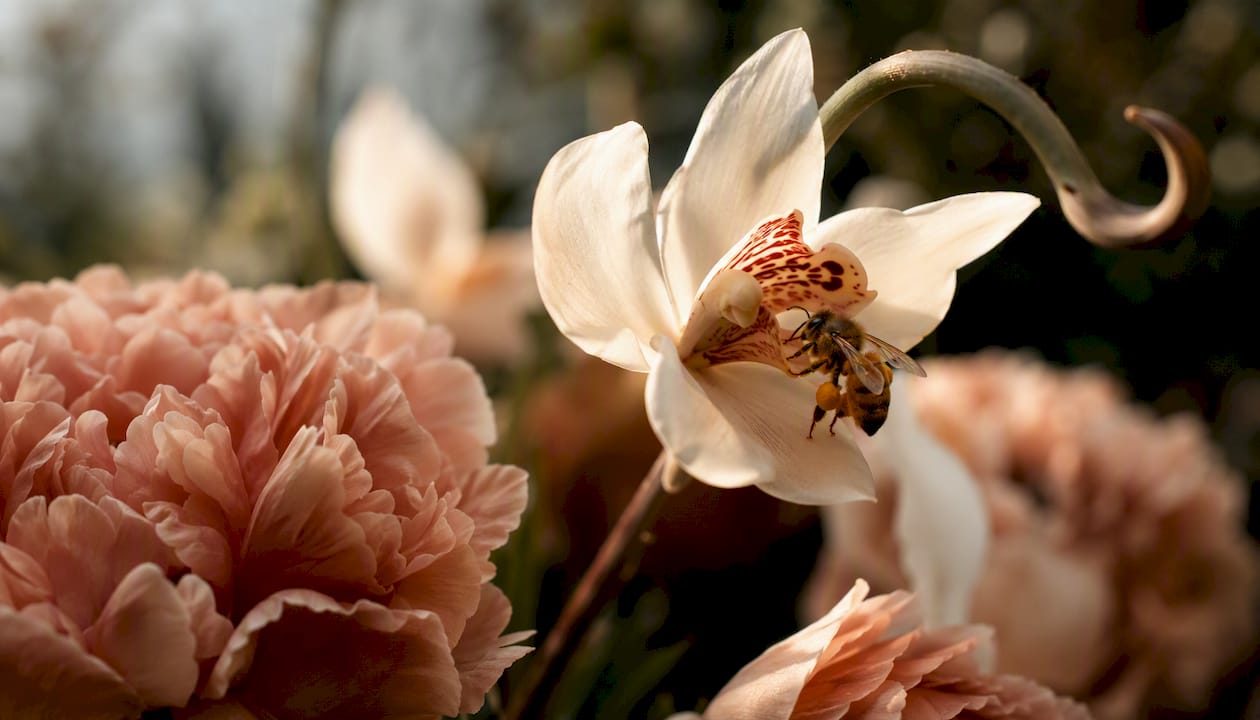
Scent is its own category entirely. A flower can produce almost no airborne pollen and still trigger headaches, sneezing, or skin irritation through fragrance compounds alone. If you’re shopping for someone with a fragrance sensitivity rather than a classic pollen allergy, cross strongly scented lilies and freesias off the list regardless of their pollen profile.
Pro Tip: If pollen exposure indoors is a concern beyond the flowers themselves, the EPA notes that HEPA filtration removes small airborne particles, including pollen, from a room. A HEPA unit near a floral display in a shared space is a low-effort backup.
The Best Low-Pollen Flowers, Compared Side by Side
Once you know the mechanism, picking specific stems gets a lot easier. Here’s how the nine most recommended hypoallergenic flowers stack up against each other.
A few of these need special handling notes the table can’t capture on its own.
- Orchids hold their pollen in that pollinium sac mentioned earlier, so as long as no one pokes directly into the flower’s center, it stays contained. Don’t remove or disturb the column at the flower’s core.
- Roses vary by variety. Old-fashioned single-petal garden roses expose more stamens than tight florist hybrids or spray roses, so ask specifically for the closed, layered kind.
- Hydrangeas are essentially sterile in most cultivated forms, which is exactly why they produce so little pollen. The big round blooms you see are mostly modified sepals, not reproductive parts.
- Peonies shed a little pollen as they fully open, so buying them as tighter buds and letting them bloom in a low-traffic room reduces contact.
- Begonias work best as a potted option indoors rather than a cut stem, since the plant itself produces minimal pollen and stays contained in soil rather than a vase.
High-Pollen and Heavily Scented Flowers to Avoid
Some flowers show up in almost every mixed bouquet and cause almost every allergic reaction. Knowing their names before you order saves you a phone call to the florist later.
- Lilies — exposed, rust-colored stamens drop visible pollen on tablecloths and clothing; among the most common triggers in floral allergy complaints.
- Daisies and asters — open, flat centers expose pollen directly to airflow.
- Sunflowers — large open centers and high pollen volume, wind-assisted dispersal in outdoor settings.
- Chrysanthemums — related to ragweed botanically, and cross-reactive for some ragweed-sensitive people.
- Baby’s breath (gypsophila) — a filler most people don’t even register as “a flower,” but it sheds fine pollen readily and hides in nearly every grocery store bouquet.
Baby’s breath is the sleeper problem in floral allergies. It rarely appears on anyone’s radar because it reads as background texture, not a featured bloom, yet it’s tucked into the majority of mixed arrangements sold at general retailers.
A clinical allergy practice that studies flower-related symptoms recommends removing pollen-heavy stems and changing vase water regularly to cut down on indoor exposure, guidance that applies directly to lilies and daisies if they’re already part of a bouquet you’ve received. The simplest fix, though, is prevention: tell your florist up front to leave these five off the order, and ask them to strip stamens from anything borderline before delivery.
How to Order Hypoallergenic Flowers Without Guessing
Ordering online or over the phone puts you at the mercy of whatever’s listed on the page, unless you ask the right questions first.
Start with the pollination question directly: “Is this insect-pollinated or wind-pollinated?” A florist who knows their stock will answer without hesitation. Follow up with, “Can you remove the stamens before delivery?” This works especially well for lilies if someone insists on including them for sentimental reasons. And ask whether they carry double or tightly petaled varieties of whatever you’re set on, since a double rose and a single-petal garden rose look similar in a photo but behave very differently once they’re sitting on a kitchen table.
When you’re scanning an order page rather than talking to a person, watch for two things. First, check the ingredient list (most florists list stems included) for gypsophila, baby’s breath, or “filler greens” that might include hidden allergenic stems. Second, look for any arrangement marketed as “garden style” or “wildflower,” since those tend to lean on the open-centered daisies and asters that cause the most trouble.
A few more buying habits worth building:
- Potted plants, when the occasion allows for them, expose far less airborne pollen than cut stems since the reproductive parts stay lower and more contained.
- Request a fragrance-free arrangement explicitly if scent sensitivity is the concern rather than pollen.
- Ask about delivery handling: flowers left in a hot, enclosed car pick up moisture that encourages mold, and unwrapping them the moment they arrive matters more than people expect.
Pro Tip: If a design absolutely calls for lilies, ask your florist to swap them for peonies or garden roses instead. Both mimic the same full, romantic shape without the exposed stamens that make lilies such a common trigger.
Reducing Allergy Symptoms Once the Flowers Are Home
Buying the right flowers only solves half the problem. What you do with them in the first 24 hours matters almost as much.
- Remove visible pollen before arranging. A dry paper towel run gently across open blooms, especially anything with exposed stamens, picks up loose pollen before it settles into fabric or carpet.
- Trim stems under running water rather than in a sink of standing water, which limits how much debris and pollen mixes into the vase.
- Change vase water every one to two days. Standing water breeds mold spores fast, and mold is its own separate allergen entirely, one that flowers can inadvertently deliver alongside pollen.
- Keep bouquets out of bedrooms. This is the single easiest fix and the one most people skip. A stunning centerpiece belongs on a dining table or entryway, not six feet from where someone sleeps eight hours a night.
- Place arrangements away from HVAC vents. Airflow from a vent can carry loose pollen further into a room than it would travel on its own.
- Remove decaying petals promptly. Wilting petals drop debris and mold spores faster than fresh ones.
A clinical allergy source backs the water-and-placement habits specifically, noting that cut flowers indoors carry pollen inside whether or not the plant looks fully open, and that limiting how long flowers stay in a bedroom or poorly ventilated room reduces symptom flare-ups for sensitive people.
Pro Tip: Florists who deliver in person often rinse petals lightly with a spray bottle right before setup if a client has mentioned allergies ahead of time. It’s a thirty-second step that knocks loose pollen off without damaging the bloom, and it’s worth asking for if you’re placing a large order for an event.
Is Any Flower Actually Pollen-Free?
No. But a handful come close enough in practice that the distinction barely matters.
Orchids are the best example: their pollen sits inside the pollinium, a waxy, compact packet that stays put unless something physically breaks it open. In normal display, arranging, or even brushing past an orchid, that packet never releases. Some sterile hybrid roses and terry-form hydrangeas behave almost the same way, producing flowers that are structurally incapable of significant pollen output because their reproductive parts have been bred down or eliminated.
The practical examples worth remembering:
- Orchids in bud or newly opened carry the lowest measurable risk of any cut flower.
- Sterile hydrangea cultivars produce essentially no pollen since most of what you see is modified sepal tissue, not stamens.
- Fully double roses and peonies, where petal count has replaced stamen count through breeding, release far less pollen than their single-petal ancestors.
Even in these cases, “low pollen release” is different from “no allergenic potential.” A flower with virtually zero airborne pollen can still cause a skin reaction from direct contact, or trigger a headache through scent compounds that have nothing to do with pollen. If someone reacts to orchids at all, it’s far more likely fragrance or a contact sensitivity than an inhaled pollen response.
How Lafleurel Builds Allergy-Friendly Arrangements
Lafleurel sources locally-grown blooms in and around Valley Village, which gives our designers direct control over which varieties end up in an arrangement rather than relying on whatever a wholesale mix happens to include that week. When a customer flags an allergy concern, the selection process shifts toward the flowers covered in this guide: double roses instead of open garden varieties, tight peonies instead of anything with exposed stamens, hydrangeas and orchids as structural anchors instead of daisies or chrysanthemums.
Preparation matters as much as selection. Stems are trimmed fresh, stamens are removed on request for anything borderline, and arrangements go into clean water rather than whatever was left in a bucket from the day before. Because every order ships same-day within Valley Village and the surrounding Los Angeles area, flowers spend less time sitting in transit and more time freshly cut before they reach a doorstep, which limits how much pollen has a chance to shed before delivery.
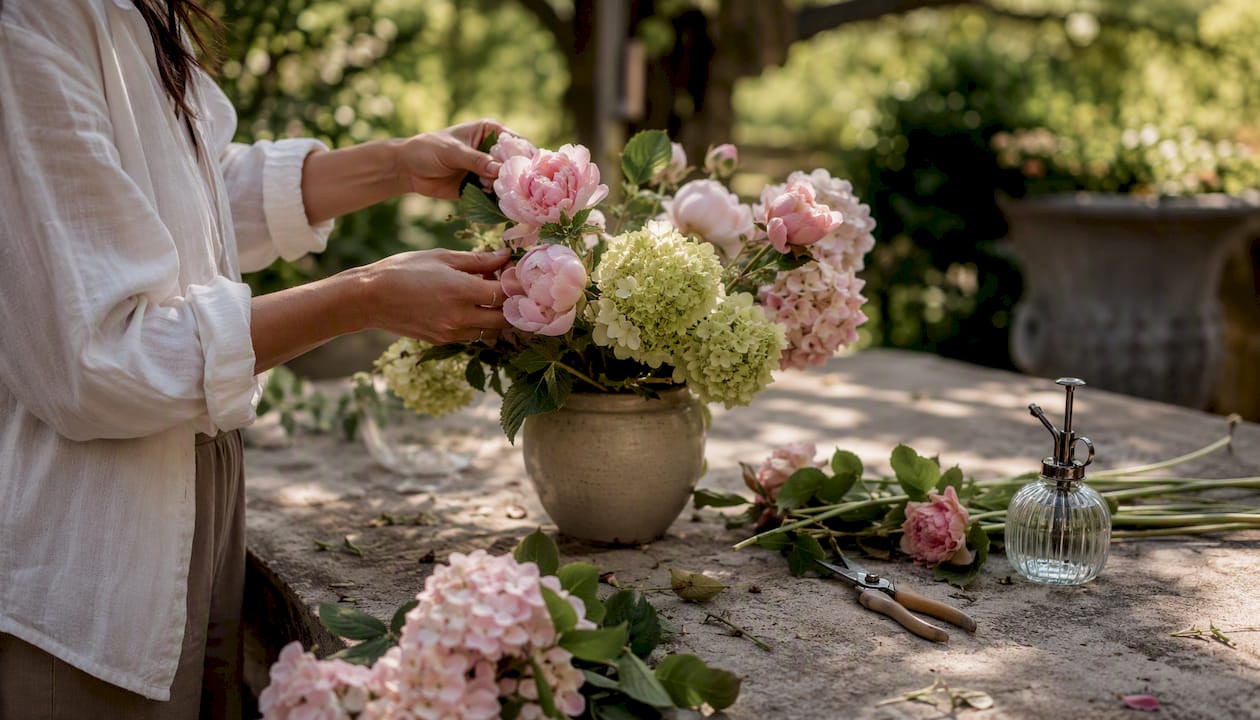
Pro Tip: At checkout, add a note requesting “allergy-friendly substitutions” and specify whether the concern is pollen, fragrance, or both. That one line lets a designer swap components before the arrangement is ever built rather than after.
A florist’s take on beauty without the sneezing
You don’t have to choose between a gorgeous arrangement and one that won’t set off a sneezing fit. Some of the most requested wedding and event designs already lean on peonies, garden roses, and hydrangeas, not because they’re hypoallergenic first and beautiful second, but because they happen to be both at once. The trick is knowing which substitutions preserve the look a client actually wants. Swap lilies for double roses in a similar blush tone, and most people never notice the difference in the finished photo, they just notice they made it through the reception without reaching for a tissue.
Order an Allergy-Friendly Bouquet Today
Skipping the guesswork on pollen means skipping straight to flowers you already know are safe, and Lafleurel builds several arrangements specifically around that shortlist. The Romantic Garden arrangement with peonies leans on tight, double blooms with minimal pollen shed, and the Quicksand Beige Roses arrangement uses closed, layered rose varieties rather than open garden types.

Every product page allows a checkout note, so you can ask for stamen removal, request that any filler greens or baby’s breath be swapped out, or specify a fragrance-free build if scent is the bigger concern. Because Lafleurel sources locally and delivers same-day across Valley Village and the surrounding Los Angeles area, arrangements reach you freshly cut, with less time for pollen to accumulate before they’re in your hands. If peonies or roses aren’t quite the occasion, browse the full Valley Village flower delivery catalog and add an allergy note to any order, our designers will build around it rather than around a standard template.
Sources
- Allergy Facts | Allergy & Asthma Foundation of America (AAFA)
- What is a HEPA filter? | US EPA
- Vanilla — Orchids A to Z | American Orchid Society
- Flowers & Pollen Allergy | Premier Allergy