

Choose fresh flowers when you need peak color, fragrance, and same-day emotional impact, and choose dried flowers when longevity and low upkeep matter more than that first burst of scent. The real trade-off comes down to timing: fresh peaks fast and fades in 5 to 14 days, while dried holds its look for an extended time. Gifts and weddings usually lean fresh; keepsakes and everyday decor usually lean dried. The checklists below sort out the in-between cases.
TL;DR:
- Dried flowers typically last between one and three years, while fresh flowers only stay vibrant for five to fourteen days, depending on care.
- Dried arrangements are more suitable for long-term decor and low-maintenance settings, whereas fresh flowers are ideal for immediate impact and fragrant gifts.
- The break-even point where dried flowers become more cost-effective than repeatedly buying fresh blooms ranges from two to four months, influenced by climate and sourcing.
- Dried flowers lose most scent and shift toward muted tones, making fresh flowers preferable for romantic, scented, or photo-focused occasions.
- Carefully selecting flowers like statice, lavender, or eucalyptus enhances longevity in dried arrangements, while tulips and irises generally do not dry well.
Table of Contents
- Dried Flowers vs Fresh: A Quick Comparison
- How Long Do Dried Flowers Last Compared to Fresh?
- Is Dried or Fresh the Better Value Over Time?
- Which Looks and Smells Better: Dried or Fresh?
- Should You Choose Fresh or Dried for Gifts and Weddings?
- What Are the Most Common Care Mistakes?
- Which Flowers Dry Well and Which Should You Skip?
- Quick Checklist: How Do You Decide Between Dried and Fresh?
- A Florist’s View on Choosing Between Dried and Fresh
- Need Fresh Flowers Today? Here’s a Faster Path
- Sources
- FAQ
Dried Flowers vs Fresh: A Quick Comparison
Here’s how the two stack up on the factors that actually change a buying decision:
- Lifespan: Fresh lasts 5 to 14 days; dried lasts 1 to 3 years with reasonable care.
- Maintenance: Fresh needs daily water changes and trimming; dried needs occasional dusting and nothing else.
- Cost over time: Fresh is cheaper per bouquet but repeats every one to two weeks; dried costs more upfront but stops recurring.
- Color and vibrancy: Fresh delivers full-saturation color and glossy texture; dried shifts toward muted, textured tones.
- Fragrance: Fresh carries a live scent that dried mostly loses, apart from a few stems.
- Best use case: Fresh suits gifts and wedding-day moments; dried suits keepsakes, installations, and steady home decor.
The break-even point where a dried arrangement pays for itself against repeated fresh purchases typically lands between two and four months, depending on how often you’d otherwise be replacing wilted stems.
How Long Do Dried Flowers Last Compared to Fresh?
Fresh flowers hold their peak for 5 to 14 days, and that window stretches or shrinks based on stem care. Cool room temperature, a clean vase, and a fresh cut on the stem every few days can push a bouquet toward the longer end. Direct sun or a spot near a heating vent cuts that timeline fast.
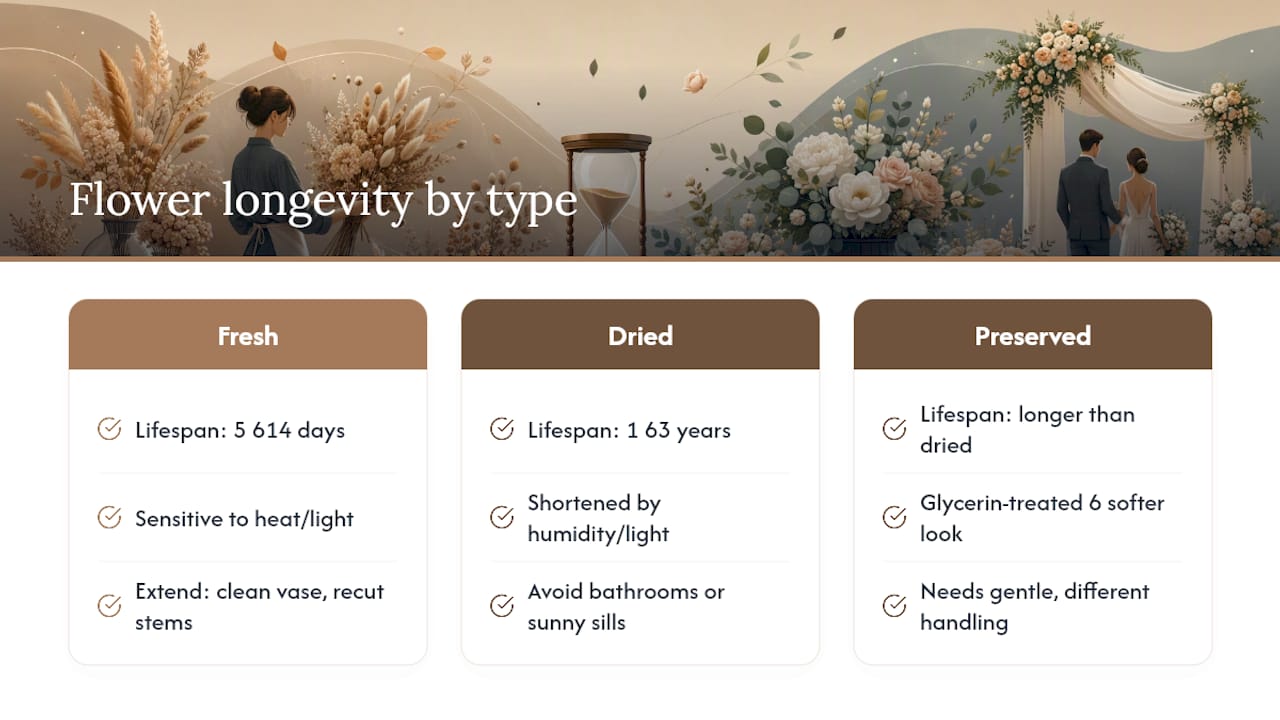
Dried arrangements last 1 to 3 years in the right conditions, but humidity and direct light are the two things that shorten that dramatically. A bathroom or a sunny windowsill will fade or mold dried stems within months.
Preserved flowers, treated with glycerin rather than simply air-dried, keep a softer, more supple look for longer than plain air-dried stems, though they cost more and need slightly different handling.
Is Dried or Fresh the Better Value Over Time?
A modest fresh bouquet usually runs less upfront than a comparable quality dried arrangement, but that fresh bouquet needs replacing every week or two. A dried piece is bought once and, barring damage, doesn’t need repurchasing for years.
That math tends to favor dried once you cross the 2 to 4 month break-even mark commonly cited for steady home display.
Where the math shifts:
- Infrequent buyers (holidays, occasional gifts only) rarely hit that break-even window, so fresh often stays cheaper overall.
- Humid climates or poorly ventilated rooms shorten dried lifespan, which erodes the long-term savings.
- Sourcing matters too: locally sourced fresh flowers carry a smaller footprint than imported dried arrangements shipped long distances, so the cheaper option and the more sustainable option aren’t always the same one.
Which Looks and Smells Better: Dried or Fresh?
Fresh flowers give you full-saturation color, glossy petals, and, for varieties like peonies and roses, a scent that fills a room. That sensory punch is exactly why fresh flowers dominate gifts and wedding-day moments: nothing dried replicates the smell of a fresh bouquet the moment it’s unwrapped.
Dried flowers trade saturation for texture. Statice, pampas grass, and bunny tails take on warm, muted tones that pair naturally with boho or minimalist interiors. Most dried stems lose their scent entirely, though lavender and eucalyptus hold onto a faint fragrance well after drying.
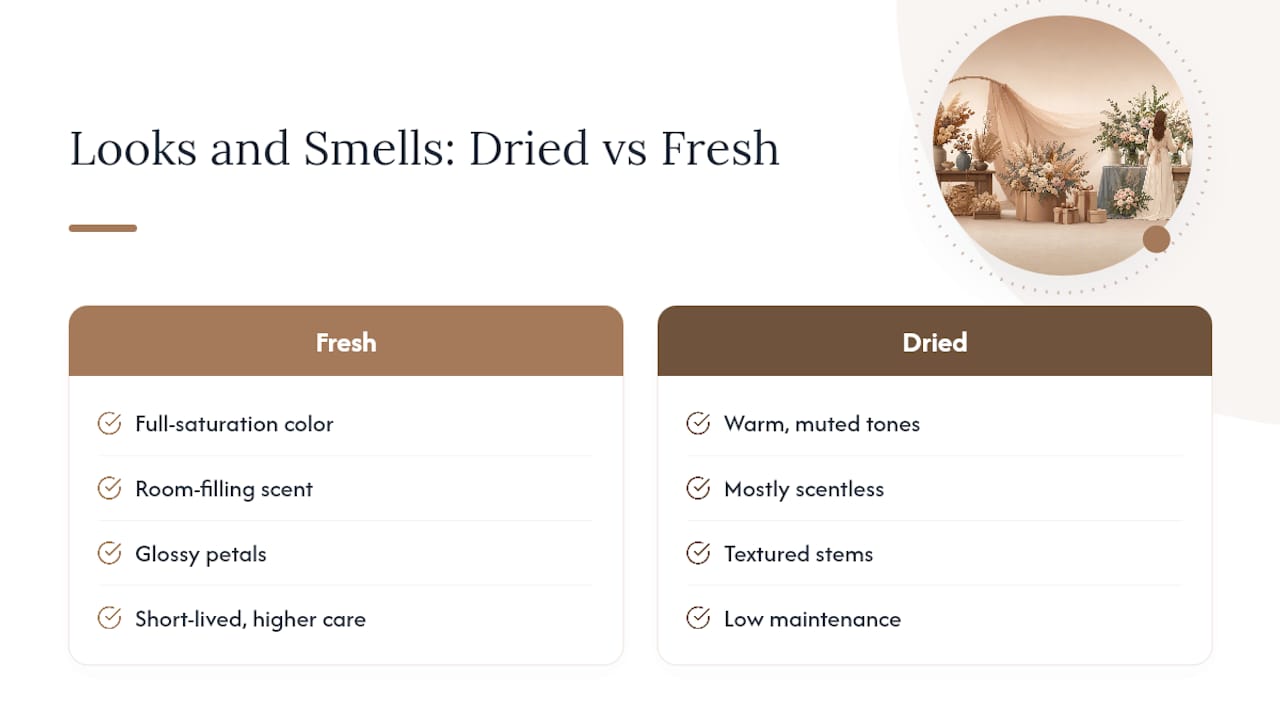
If you want romantic or traditional styling with real perfume in the room, fresh wins. If you want texture-forward, low-maintenance styling, dried fits better. You can browse examples of fresh arrangement styling to see how color and texture play out in practice.
Should You Choose Fresh or Dried for Gifts and Weddings?
- Gifts: A dried keepsake arrangement outperforms a short-lived bouquet when the occasion calls for something lasting, like a housewarming or a memorial gift. For birthdays and same-day surprises, fresh wins on impact.
- Weddings, bridal party: Fresh is almost always the right call for the bridal bouquet and personal flowers. That sensory hit, the scent, the color, matters most in photos taken hours after delivery.
- Weddings, installations and keepsakes: Dried florals let you prep arches, garlands, and centerpieces weeks in advance, removing the logistics risk of a last-minute delivery.
- Home decor: Entryways and living rooms suit dried arrangements that don’t need attention. Kitchens and dining tables, where scent and freshness matter more, suit fresh. Many rooms work well with both in the same vignette.
What Are the Most Common Care Mistakes?
Fresh flowers need water changed every two to three days, a fresh diagonal cut on the stems each time, and a spot away from direct heat. Flower food packets, the kind that come with most bouquets, genuinely extend vase life by a few days.
Dried flowers need almost nothing: an occasional gentle dusting with a soft brush or a low hairdryer setting, kept out of humidity and direct sun. Bathrooms and steamy kitchens are the worst placement for dried arrangements, since trapped moisture invites mold within weeks.
Mistakes that ruin arrangements fast:
- Mixing wet-stemmed fresh flowers into a dried arrangement’s vase, which introduces moisture that molds the dried stems.
- Placing dried florals near a bathroom vent or a steamy stovetop.
- Letting fresh stems sit in old water instead of changing it every few days.
Pro Tip: If you love the look of a dried piece but miss the scent, tuck a small bundle of fresh eucalyptus or lavender into the same vase instead of swapping the whole arrangement.
Which Flowers Dry Well and Which Should You Skip?
Not every bloom survives the drying process with its shape intact. Statice, lavender, hydrangea, pampas grass, bunny tails, and eucalyptus are reliable choices that hold their form and color for years. Tulips and irises, by contrast, tend to shrivel or lose structure, so they’re better enjoyed fresh and skipped for drying projects.
- Air-drying: Bundle stems, hang upside down in a dark, dry space for two to three weeks. Works well for lavender, statice, and eucalyptus.
- Silica gel: Bury more delicate blooms like roses in silica for a few days to preserve shape and some color, useful for flowers that would otherwise flatten.
- Preserved or glycerin-treated stems: A professional preservation process that keeps petals supple and closer to their fresh appearance, at a higher cost than DIY air-drying.
Quick Checklist: How Do You Decide Between Dried and Fresh?
Run through this before you order:
- Choose fresh if the occasion is same-day (birthday, apology, hospital visit) or if fragrance matters as much as looks.
- Choose dried if you want a low-maintenance keepsake, you’re prepping a wedding installation weeks ahead, or you’re outfitting a room you won’t tend to often.
- Mix both if you want a dried base arrangement with small fresh bunches swapped in seasonally for scent and color, a common designer approach for long-term vignettes.
For weddings specifically, order fresh bridal flowers on a tight timeline close to the event date, but build dried installations and favors a month or more in advance to reduce delivery-day stress.
Pro Tip: Start with a dried centerpiece as your anchor, then add one small fresh bouquet near the entrance. You get year-round structure and a burst of scent right where guests first notice it.
A Florist’s View on Choosing Between Dried and Fresh
The dried versus fresh debate isn’t really about which one is better. It’s about matching the material to the outcome you actually want. Treat dried flowers as their own category, not a lesser version of fresh, and the decision gets easier: buy dried for permanence, buy fresh for a moment.
Fresh arrangements built from locally sourced, naturally grown blooms help preserve freshness and longevity by careful handling before reaching the vase. Local sourcing can help maintain a fresh bouquet’s fragrance and color longer than alternatives shipped from far away.
— Ovannes
Need Fresh Flowers Today? Here’s a Faster Path
If your decision lands on fresh, and it will for most same-day gifts and wedding-day moments, Some florists handle the part that trips people up: getting a bouquet that’s fresh, arranged well, and delivered on time without customers needing to shop around. Every arrangement is built from locally sourced, naturally grown blooms, and orders placed in Valley Village and the surrounding Los Angeles area can go out with same-day delivery.

Whether you need something classic like the red roses hand-held bouquet, a peony arrangement for its fragrance, or a sympathy design for a harder occasion, you can also request a custom arrangement or add a video message at checkout. Browse the current collection and place your order for delivery today.
Sources
- A practical comparison of dried and fresh flowers (Nustad Family Ranch)
- Dried vs Fresh Flowers: Which Is Better for Gifts, Weddings & Home Décor? (Backbone Co.)
- Dried Flowers vs Fresh Flowers: Which Should You Choose? (Lockers Flowers)
- Dried florals vs. fresh flowers: which best suits your decor (Home Decor Write)
FAQ
Which Is Better, Fresh or Dried Flowers?
Neither wins outright. Fresh wins for gifts and wedding-day sensory impact, while dried wins for longevity, low maintenance, and advance-prep weddings or decor.
How Long Will Dried Flowers Last?
Dried flowers typically last 1 to 3 years in good conditions, though humidity and direct sunlight can shorten that considerably.
What Flowers Should Not Be Dried?
Tulips and irises tend to shrivel or lose their shape when dried. Better candidates include statice, lavender, hydrangea, pampas grass, and eucalyptus.
What Is the 3:5:8 Rule for Flowers?
This is an arrangement-design guideline for grouping stems in odd numbers (typically 3 or 5 of a kind) to create visual balance, not a rule specific to dried versus fresh flowers.
Can I Get Fresh Flowers Delivered the Same Day?
Yes. Lafleurel offers same-day delivery of handcrafted fresh arrangements within Valley Village, CA and the surrounding Los Angeles area.